Iffa Jayyana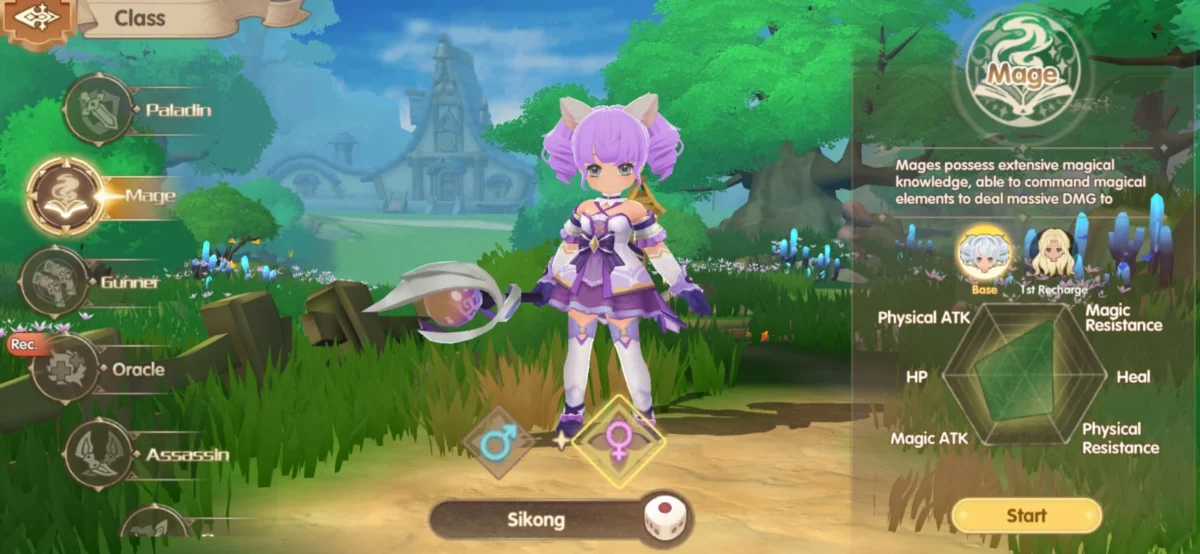
The mobile MMORPG landscape has been revitalized by the recent soft launch of Spirits of Aetheria, a title developed by NEOCRAFT LIMITED that masterfully marries high-octane action with immersive creature collection. Set in a vibrant, anime-inspired world, the game challenges players to engage in combat using a revolutionary "3-Spirit" rotation system.
With six distinct starting classes—Paladin, Mage, Oracle, Gunner, Assassin, and Ranger—and a revolutionary Class-Free Skill Tree, players are faced with a daunting degree of choice. This comprehensive guide serves as your definitive roadmap to navigating the meta, understanding the nuances of character progression, and constructing the ultimate hybrid builds.
Main Facts: Defining the Core Experience
Spirits of Aetheria differentiates itself from traditional MMOs by removing the restrictive "silo" class systems of the past. While your initial selection provides a foundational archetype, the game’s horizontal progression model allows for unparalleled flexibility.

The Six Archetypes
- Paladin: The bulwark of the battlefield, focused on damage mitigation and team utility.
- Mage: The primary source of area-of-effect (AoE) damage, capable of controlling the flow of combat.
- Oracle: The essential support unit, providing restorative healing and tactical buffs.
- Gunner: A stationary artillery expert focused on sustained, high-volume damage.
- Assassin: A high-risk, high-reward mobility specialist designed for surgical strikes.
- Ranger: The premier ranged damage dealer, emphasizing kiting and survivability.
The central pillar of the game’s mechanics is the 3-Spirit Rotation. Players can equip three magical companions, each offering unique passive and active effects that synergize with the class skill tree. Mastery of this system is the primary factor that separates top-tier players from the casual player base.
Chronology: The Evolution of the Soft Launch Meta
Since the onset of the soft launch, the community has seen a rapid shift in strategic focus. Initially, players gravitated toward the Mage for its ease of leveling. However, as developers began introducing more complex, high-difficulty dungeons, the "Meta" shifted.
- Week 1: The "Burst Meta." Players prioritized the Assassin and Mage, focusing solely on clearing mobs as quickly as possible.
- Week 2: The "Survivability Discovery." Players realized that endgame bosses were too punishing for glass-cannon builds, leading to the rise of the Paladin and Oracle in party compositions.
- Current State: The "Hybrid Era." The top players are currently ignoring pure-class builds, instead opting for "hybridization"—taking the survivability skills of a Paladin and grafting them onto the damage potential of a Ranger.
Supporting Data: Class Tier List
The following tier list is based on performance in both solo leveling efficiency and group utility in endgame dungeons.

| Tier | Classes | Key Strength |
|---|---|---|
| S (Elite) | Mage, Assassin | Unmatched AoE and single-target burst potential. |
| A (Reliable) | Paladin, Ranger | High survivability and consistent, safe DPS. |
| B (Situational) | Gunner, Oracle | Vital team support and sustained damage. |
The S-Tier: Dominating the Battlefield
The Mage remains the gold standard for solo play. With the ability to freeze targets using frost-based skills and follow up with devastating flame-based detonations, the Mage effectively controls the pace of any encounter.
The Assassin is the undisputed king of single-target damage. While its lack of defensive base stats makes it difficult for beginners, the ability to teleport and execute critical-strike combos makes it a nightmare for bosses.
The A-Tier: Stability and Consistency
The Paladin provides the highest "floor" for player performance. When tackling content that is above your character level, the Paladin’s ability to tank damage that would otherwise result in a wipe is invaluable.

The Ranger offers the safest path for players who prefer to keep their distance. By utilizing movement-speed buffs and kiting, the Ranger can clear maps without ever entering the "danger zone" of boss attack patterns.
The B-Tier: Niche Powerhouses
The Gunner excels in stationary combat. While it lacks the mobility of the Assassin, its ability to deploy traps and heavy weaponry makes it an excellent choice for defense-based objectives.
The Oracle is the most misunderstood class. While its leveling speed is statistically the slowest, it is the most "sought after" class in the game. Any player choosing to main the Oracle will find themselves with near-instant queue times for dungeons.

Official Developer Insights and System Implications
In recent communication, NEOCRAFT LIMITED emphasized that the "Class-Free" system is intended to reward curiosity. The developers noted that the skill tree is specifically balanced to prevent a "single optimal build."
The Implications of Hybridization
The game’s design implies that a "jack-of-all-trades" approach is actually the most efficient path. By mixing skill points, players can mitigate the weaknesses of their base class.
- The "Battle-Oracle" Build: By investing in some Ranger-based mobility skills, the Oracle can avoid being targeted by bosses while maintaining heals.
- The "Tank-Mage" Build: By incorporating Paladin-tier damage mitigation passives, Mages can sustain themselves in high-level dungeons without requiring a dedicated healer.
Strategic Tips for Hybrid Builds
To truly excel, you must look beyond the default skill recommendations. Here are three advanced strategies for maximizing your build:

- The "Spirit-Sync" Strategy: Always choose your Spirits based on your weakest attribute. If you are an Assassin, your three Spirits should focus entirely on defensive shields and life-steal to offset your "squishy" nature.
- Mobility Over Damage: Many players focus on increasing damage output through the skill tree. However, in Spirits of Aetheria, the ability to dodge an attack is often worth more than a 5% increase in attack power. Prioritize dash and blink skills early in your progression.
- The "Co-op Synergy" Rule: When playing in a group, identify which class your teammates are using. If your party has two Mages, stop trying to be a secondary damage dealer and invest in support skills or crowd control.
Conclusion: Crafting Your Legacy
The beauty of Spirits of Aetheria lies in its lack of permanence. If you find your current build lacking, the flexible skill tree allows you to pivot your strategy without needing to create a new character.
The Mage and Assassin are the clear winners for those who prioritize raw efficiency and leaderboard placement. However, the true "best" class is the one that fits the needs of your party and your personal comfort level with boss mechanics. Whether you stand at the front lines as a stalwart Paladin or rain death from afar as a nimble Ranger, the path to greatness is paved with experimentation.
As you progress, remember to monitor the evolving meta. As new patches drop and balance changes are implemented, the tier list will inevitably fluctuate. Stay flexible, keep your spirits upgraded, and never stop refining your skill tree. See you on the battlefield of Aetheria.

For the latest news and guides on Spirits of Aetheria, ensure you are following the official social channels and keeping an eye on community-driven forums for the most up-to-date patch information.


 Azzam Bilal Chamdy
 Muslim