

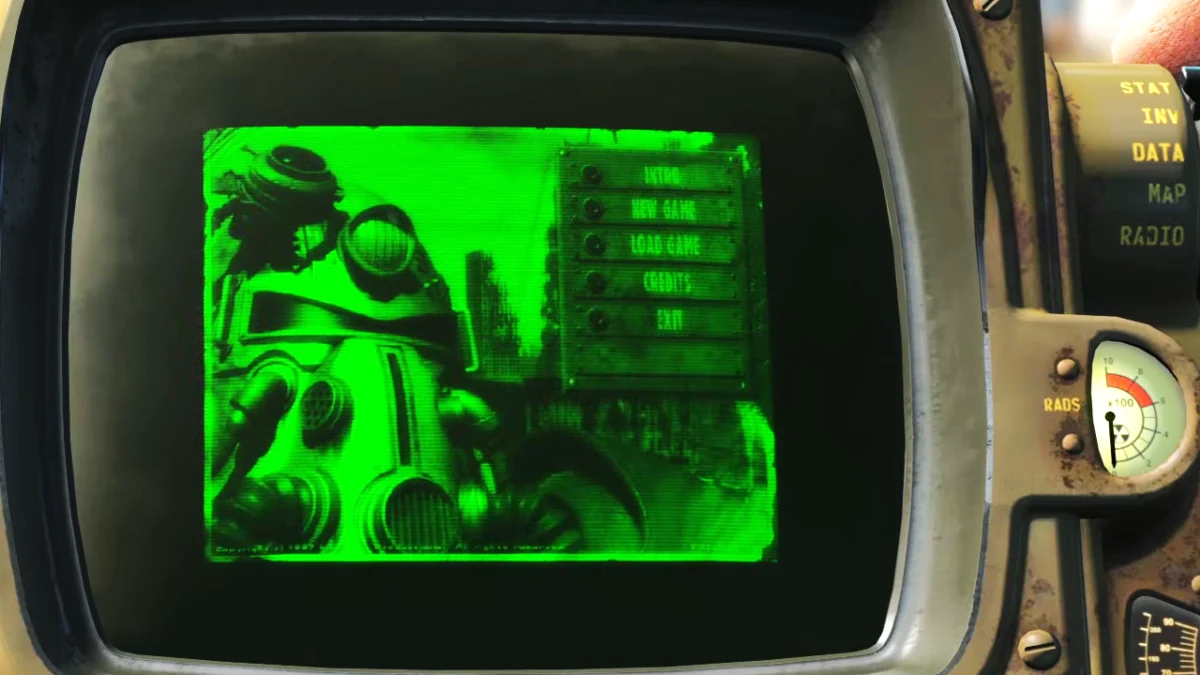
In the expansive world of PC gaming, the modding community has long served as the industry’s experimental laboratory, pushing the boundaries of what is technically possible within established game engines. Recently, one modder, known in the community as RPGKing117, has captured the attention of RPG enthusiasts by engaging in a feat of technical wizardry that feels less like a simple modification and more like a tear in the fabric of gaming reality. By successfully embedding the entirety of classic RPG experiences—specifically The Elder Scrolls III: Morrowind and now the original Fallout—into the in-game terminals and Pip-Boys of Fallout 4, RPGKing117 has transformed a modern wasteland into a meta-narrative playground.
The Main Facts: A Game Within a Game
The core of RPGKing117’s recent work involves utilizing the Fallout 4 Script Extender (F4SE) to bridge the gap between two disparate game engines. The process is a masterclass in software engineering, requiring the modder to effectively run two distinct executable files simultaneously. By tapping into the OpenMW source port for Morrowind—and presumably Alex Batalov’s "Fallout: Community Edition" for the Fallout 1 project—the modder can capture the output of one engine and pipe it directly into the texture-rendering pipeline of Fallout 4.
Essentially, the in-game Pip-Boy screen in Fallout 4 acts as a virtual monitor. When the player engages the device, the mod intercepts the framebuffer—the raw visual data sent from the GPU—and translates it onto the game’s virtual hardware. The result is a fully functional, playable version of a classic RPG running inside the screen of a handheld device in a different game, allowing players to scavenge the ruins of the Commonwealth while simultaneously playing through the isometric turn-based combat of the 1997 original Fallout.
A Chronology of Technical Audacity
RPGKing117’s rise to prominence within the modding community has been nothing short of meteoric, characterized by a rapid succession of "impossible" projects that have challenged the community’s understanding of engine limitations.
The Morrowind "Blasphemy"
The catalyst for this recent streak was the introduction of Skyrim-style quest markers into Morrowind. While seemingly simple, this mod ignited a firestorm of debate among purists who viewed the lack of hand-holding as a core pillar of the Morrowind experience. By adding objective markers, RPGKing117 demonstrated a willingness to disrupt the "sanctity" of legacy titles, a theme that would define their later, more complex work.
The Bethesda Convergence
Following the quest marker controversy, the modder turned their attention to the engine itself. In a project that seemed to defy the limitations of the Creation Engine, they succeeded in porting the entire landmass and logic of Morrowind into Fallout 4. This was not merely a visual recreation but a functional port, allowing players to navigate the island of Vvardenfell while standing in the middle of a Bostonian radioactive wasteland.
The Fallout 1 Integration
Most recently, RPGKing117 has set their sights on the genesis of the franchise they are modding. By bringing Fallout 1 to the monochrome terminals and Pip-Boys of Fallout 4, the modder has closed the loop. This latest endeavor represents the most thematic project yet, allowing the player to engage with the franchise’s roots in a literal, digital sense while navigating the modern entry. While a public release for this specific iteration is pending, early demonstrations on YouTube have already showcased the fluid transition between the host game and the emulated classic.
Supporting Data: How the Magic Happens
The technical framework for these mods relies on the maturity of open-source projects. For Morrowind, the use of OpenMW—a ground-up engine rewrite—provided the necessary hooks to make integration possible. Because OpenMW is designed for modularity, it allows for the external rendering of the game’s output.
When a player triggers the "Fallout 1" mod, the following sequence occurs:
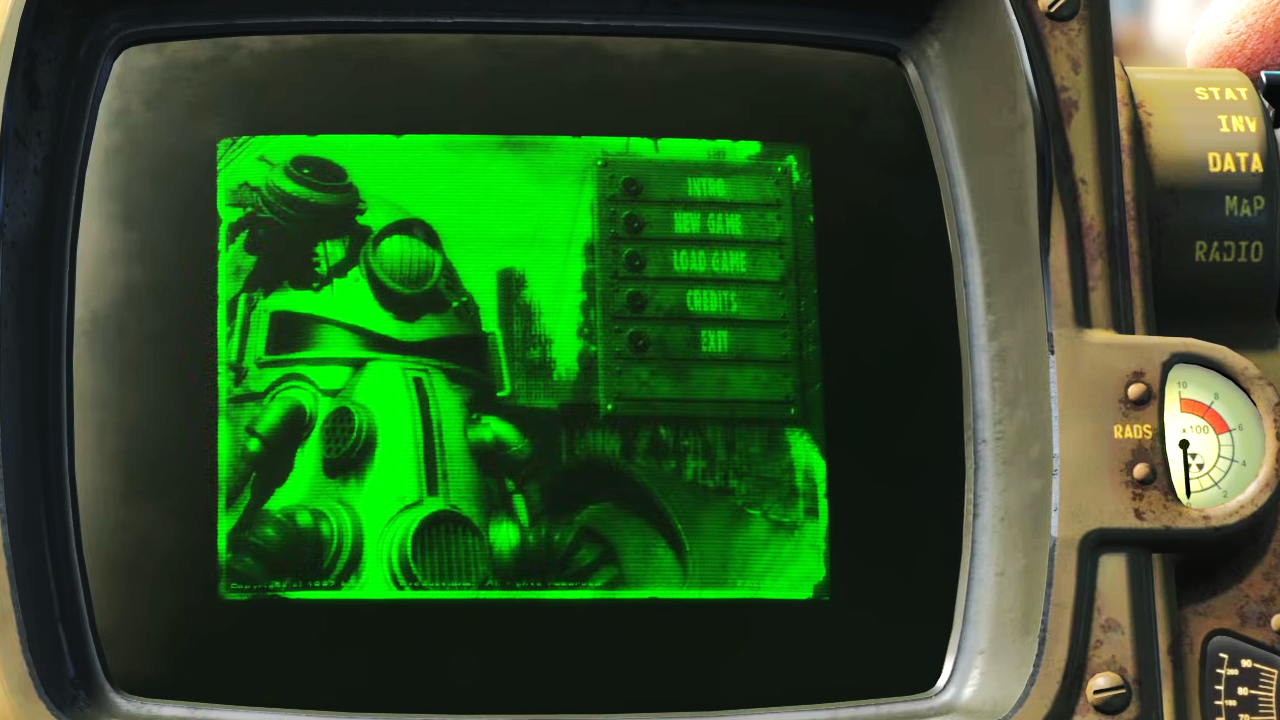
- The Bridge: The Fallout 4 Script Extender initializes, creating a persistent communication channel with the external process running the Fallout 1 engine.
- Input Redirection: The modder maps the keyboard and controller inputs of Fallout 4 to be interpreted by the Fallout 1 executable. This is perhaps the most complex aspect of the build, as the two games have vastly different control schemes (real-time vs. turn-based).
- Framebuffer Streaming: The GPU-side data is captured. Instead of being sent directly to the user’s monitor, the frames are scaled and rendered as a "texture" onto the Pip-Boy’s display model in Fallout 4.
- Synchronization: The mod must ensure that the "host" game (Fallout 4) remains stable while the "guest" game consumes significant system resources, a feat of optimization that suggests a deep understanding of memory management and threading.
Official Responses and Community Reception
The modding community’s reaction to these developments has been a mixture of awe and skepticism. Official channels at Bethesda Softworks have historically maintained a permissive stance toward modding, recognizing that the longevity of their titles—specifically Skyrim and Fallout 4—is largely attributable to the community’s efforts. While there has been no direct statement from Bethesda regarding RPGKing117’s specific projects, the company’s silence is generally interpreted as tacit approval.
Veteran modders have pointed out the inherent risks of such deep engine-level modifications. "You’re essentially asking for a memory conflict every time you launch," notes a prominent community developer. "The fact that it works consistently, even in a beta state, speaks to a level of coding expertise that goes well beyond the average hobbyist."
The general player base has been largely enthusiastic. On platforms like Nexus Mods, the Morrowind project saw record engagement, suggesting that there is a significant appetite for "meta-modding"—projects that don’t just add content, but change the nature of the medium itself.
Implications: The Future of "Doom on Anything"
RPGKing117’s work serves as a pivot point in the evolution of the "Doom on anything" trope. For decades, the gaming community has been obsessed with forcing Doom to run on calculators, printers, and ATMs. However, those projects are typically "read-only" or simplified emulations. What RPGKing117 is doing is fundamentally different: they are creating a bridge between two fully featured, complex 3D environments.
The End of Engine Silos
The implication of these mods is that game engines are becoming increasingly porous. If a talented individual can run a full RPG within a Pip-Boy, the future of modding may lie in "nested" gaming, where players can switch between titles within a unified interface. This could lead to a future where modders create "hubs" in modern games that allow access to the entire back catalog of a developer’s history.
The Preservation Argument
Beyond the novelty, these mods serve a secondary, accidental purpose: preservation. By porting classic games into stable, modern environments, RPGKing117 is ensuring that these older titles remain accessible to a generation of gamers who might otherwise find the dated UI and resolution limitations of 90s-era RPGs insurmountable. By framing them within the modern Fallout 4 UI, the modder makes the "retro" experience feel like an intentional, high-tech feature.
Ethical and Technical Hurdles
The path forward is not without challenges. As these mods become more complex, the risk of "feature creep" and instability increases. Furthermore, there is the ongoing question of how these mods interact with copyright and intellectual property. While the modder currently uses legitimate source ports, the line between "modifying an existing game" and "redistributing an engine" remains thin.
As we look toward the next generation of RPGs, the work of modders like RPGKing117 reminds us that the gaming experience is not limited to what the developers put on the disc. It is a collaborative, iterative, and increasingly interconnected web of creativity. Whether or not these mods become the new standard for the genre, they have undeniably raised the bar for what is expected of the modding community. The wasteland, it seems, is only getting bigger.











No comments yet. Be the first to join the conversation!