

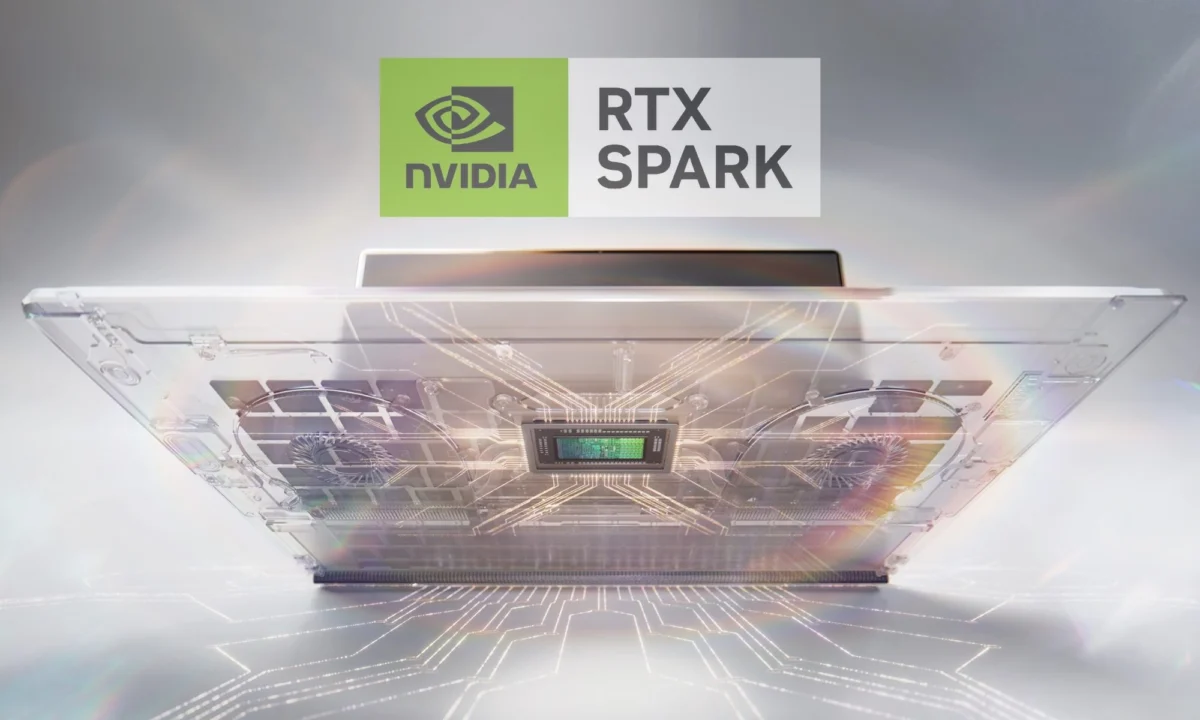
Microsoft has officially unveiled the Surface Laptop Ultra, a device that signals a definitive end to the company’s history of playing it safe. In a market often criticized for iterative, incremental updates, the Surface Laptop Ultra stands as a tectonic shift in computing philosophy. By integrating the revolutionary NVIDIA RTX Spark processor—the centerpiece of a new era in high-end mobile computing—Microsoft is not just updating a product line; it is attempting to redefine the role of the laptop in the modern, AI-augmented workflow.
This is, without hyperbole, the most potent machine ever to bear the Surface branding. With a architecture built around NVIDIA’s Blackwell GPU and a massive 128GB of unified memory, this machine is designed for those who live on the bleeding edge of software development, 3D content creation, and local AI model deployment.
The Technological Leap: NVIDIA’s RTX Spark
The heartbeat of the Surface Laptop Ultra is the NVIDIA RTX Spark chip. As previously detailed in our coverage of the platform, the RTX Spark represents a paradigm shift. For years, mobile computing has been defined by the separation of the Central Processing Unit (CPU) and the Graphics Processing Unit (GPU). The RTX Spark collapses this divide.
Equipped with 1 petaflop of AI compute power, the device allows for the execution of massive, 120-billion-parameter AI models directly on the hardware. This is a critical development for privacy-conscious developers and power users who require high-speed, local processing without the latency or security risks associated with cloud-based inference. By running these models entirely on-device, the Surface Laptop Ultra eliminates the need to transmit sensitive data, effectively turning the laptop into a private, self-contained data center.

Unified Memory: The End of the Bottleneck
Perhaps the most significant architectural win for the Surface Laptop Ultra is its implementation of unified memory. Historically, Windows machines have relied on segmented memory pools, where the CPU and GPU compete for resources. This often led to performance degradation during complex, multi-layered tasks.
By adopting a unified architecture—long heralded by Apple’s M-series chips—Microsoft is bringing a new level of efficiency to the Windows ecosystem. With 128GB of memory accessible dynamically by any part of the system, users can render complex 3D scenes while simultaneously training a local AI model and compiling massive codebases. The system intelligently allocates resources in real-time, ensuring that the most intensive workload receives priority, thus preventing the "stutter" often associated with high-demand professional tasks.
A Design Philosophy for the "World-Makers"
Microsoft’s marketing for the Surface Laptop Ultra targets "World-Makers"—a demographic that encompasses architects, game engine developers, AI researchers, and high-end visual effects artists. To accommodate these users, the hardware must be more than just powerful; it must be a tactile and visual masterclass.
The device features a 15-inch mini-LED PixelSense Ultra display. Boasting 2,000 nits of peak HDR brightness and a density of 262 pixels per inch, it is the most vibrant and accurate screen Microsoft has ever produced. For creators who spend hours color-grading or editing in high dynamic range, this display is a significant upgrade over previous Surface iterations.

Furthermore, in an era where port minimalism has often frustrated professional users, Microsoft has opted for a "no-dongle" approach. The inclusion of HDMI, USB-C, USB-A, an SD card reader, and a dedicated headphone jack shows that Microsoft understands the workflows of actual professionals who do not have the time to manage a collection of proprietary adapters.
Chronology of a Powerhouse
The journey to the Surface Laptop Ultra began in the labs of Santa Clara and Redmond months ago.
- Early 2026: Leaks surrounding the NVIDIA "N1-series" processors began to circulate, hinting at a new collaboration between Microsoft and the chip giant to bring server-grade AI capabilities to thin-and-light chassis.
- May 2026: NVIDIA officially announces the RTX Spark, focusing on the concept of "AI agents" that can handle complex multi-step workflows.
- Late May 2026: Microsoft officially announces the Surface Laptop Ultra, confirming it as the flagship vehicle for the RTX Spark silicon.
- Future Roadmap: With a release slated for late 2026, the industry is already watching to see how the software ecosystem—specifically Windows 12—will optimize for this specific hardware stack.
Official Stance and Market Positioning
Microsoft’s messaging regarding the device is clear: the era of "launching apps" is over. As Jensen Huang, CEO of NVIDIA, noted during the RTX Spark unveiling, "For forty years, you launched apps. Click. Type. With RTX Spark and Microsoft Windows, you ask, and the PC does the work."
Microsoft is leaning heavily into this narrative. The Surface Laptop Ultra is not designed to be a casual consumption device; it is a collaborative partner. The company is positioning the laptop as the primary interface for the future of "Agentic Computing," where the operating system itself is capable of executing complex logic, filing workflows, and automating development tasks via local, secure AI.

The Battery Life Question
One of the most pressing concerns for any machine with a petaflop of compute is thermal management and power consumption. Packing that much power into a mobile chassis usually results in a device that requires a wall tether.
Microsoft, however, claims the Surface Laptop Ultra offers "all-day" battery life. This is made possible by the ultra-efficient architecture of the RTX Spark and an aggressive power-management firmware within Windows. While independent benchmarks are pending, early reports suggest that the system is exceptionally efficient at idle and low-load states, only drawing the full power of the Blackwell GPU when the specific AI or rendering task demands it.
The Cost of Innovation
It would be remiss to ignore the elephant in the room: price. Microsoft has, in recent years, pivoted the Surface brand toward the ultra-premium tier, moving away from the more affordable mid-range laptops of the past.
Given the inclusion of 128GB of memory, the proprietary Blackwell-based silicon, and the top-tier mini-LED panel, the Surface Laptop Ultra will undoubtedly be one of the most expensive Windows laptops on the market. While official pricing is still pending, industry analysts suggest that it will likely challenge the price point of high-end workstations from companies like Dell and HP, and potentially exceed the cost of top-spec MacBook Pro models. For the target demographic—the professionals who stand to gain thousands of hours in productivity—this is likely a necessary investment rather than a deterrent.

Implications for the Industry
The launch of the Surface Laptop Ultra has several far-reaching implications for the broader PC industry:
- The Resurgence of Windows Hardware: For years, the narrative was that Windows laptops were chasing Apple’s silicon lead. With the RTX Spark, Microsoft has effectively leapfrogged the current standard, offering a level of AI compute density that currently has no direct, thin-and-light equivalent.
- The Rise of Local AI: By proving that 120-billion-parameter models can run locally, Microsoft is setting a new security standard. Corporate and government entities, which have been hesitant to adopt AI due to cloud-privacy concerns, now have a viable, air-gapped solution.
- Pressure on Competitors: Dell and other OEM partners are already scrambling. With the XPS line also undergoing massive refreshes to keep pace with the "AI PC" wave, we are entering a competitive arms race that will ultimately benefit the consumer.
Conclusion: A New Baseline
The Surface Laptop Ultra is a statement piece. It is Microsoft saying that it is no longer content to follow the market trends set by others. By integrating the NVIDIA RTX Spark, adopting unified memory, and doubling down on professional-grade hardware features, Microsoft has created a device that isn’t just a computer—it’s an infrastructure investment.
Whether the market is ready for a professional laptop that prioritizes local AI compute over thinness remains to be seen. However, for the developer or creator who has felt hampered by the limitations of traditional hardware, the Surface Laptop Ultra provides the necessary firepower to stop waiting for the cloud and start building the future locally. As we approach the release later this year, all eyes will be on how the software ecosystem matures to harness the immense potential of this hardware. The "World-Makers" finally have a machine built to match their ambition.












No comments yet. Be the first to join the conversation!