Asro
Asro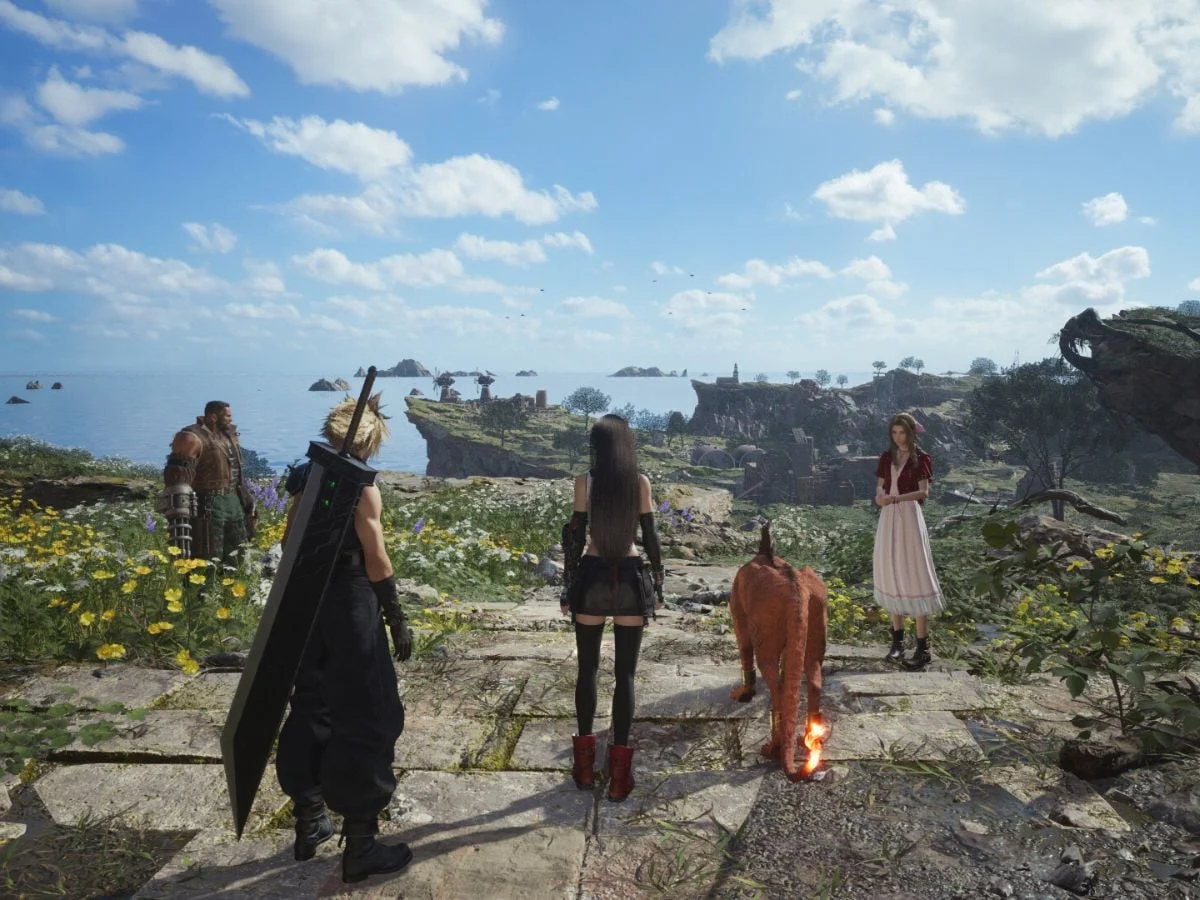
The landscape of modern gaming is often defined by the tension between developer intent and player agency. On June 2, Square Enix ignited a fresh spark in this ongoing debate by releasing a significant update for Final Fantasy VII Rebirth. By introducing features that essentially "unlock" the game’s difficulty, the developers have provided a pathway for busy players to experience the narrative without the traditional barriers of mechanical friction. However, as with any major shift in gaming accessibility, the update has met with a polarized reception, highlighting a growing divide in the gaming community regarding how we measure "achievement" in the digital age.
The Core Features: Breaking Down the Update
The latest patch for Final Fantasy VII Rebirth introduces two primary mechanics designed to dismantle the traditional difficulty curve that has long been a staple of the Final Fantasy series.
New Game – Head Start
The "New Game – Head Start" feature is a boon for those who have perhaps already conquered the title on console or who simply wish to bypass the initial "grind" of the early hours. This feature allows players to initiate a new campaign with a character already leveled to 65—just five levels shy of the game’s 70-level cap. Furthermore, these characters are equipped with enhanced gear, effectively granting the player a late-game power level from the very first encounter.
The Streamlined Progression Feature
The more controversial of the two additions is the "Streamlined Progression Feature." This is, for all intents and purposes, a suite of "god-mode" toggles. Players can activate unlimited HP and MP, guarantee a damage output of 9,999 per hit against enemies and within the game’s numerous minigames, and maximize their inventory of items. These tools are customizable, allowing players to curate their own experience. As stated in the official patch notes, the intention is to help players "advance through the game smoothly," whether it is their first time stepping into the world of Gaia or their fifth journey through the narrative.

A Chronology of Difficulty: From Arcade Roots to Modern Accessibility
To understand why this update has caused such a stir, one must look at the history of game difficulty. Historically, games were designed as tests of endurance and skill. In the arcade era, high difficulty was a monetization strategy: the faster a player lost, the faster they inserted another coin.
As gaming moved into the home console market, this philosophy shifted, but the "hardcore" identity remained. Throughout the 90s and 2000s, titles like the original Final Fantasy VII required players to master turn-based strategy, resource management, and grinding. If you couldn’t beat a boss, you had to farm experience points or refine your materia loadout.
By the 2010s, the rise of the "Souls-like" genre—exemplified by FromSoftware’s Dark Souls—re-popularized the idea that difficulty is a core component of the artistic vision. Players were expected to "get good."
The June 2025 update for Final Fantasy VII Rebirth represents a pivot away from this purist ideology. By providing an "off-ramp" for mechanical difficulty, Square Enix is acknowledging a changing demographic: the "dad-gamer" or the working professional who has significant disposable income but limited time. In this context, the game is no longer viewed strictly as a challenge to be conquered, but as a narrative medium to be consumed.

Supporting Data: Why "Streamlined" Appeals to the Modern Player
Data from industry analysts consistently shows that the average age of the gamer has risen significantly over the last two decades. With the average player now firmly in their 30s or 40s, the "time-sink" nature of JRPGs (Japanese Role-Playing Games) has become a hurdle.
According to various community polls on platforms like Reddit and the Steam community forums, a significant portion of players report abandoning games before completion due to "difficulty spikes" or "time requirements." The Final Fantasy VII Rebirth update addresses this directly. By allowing players to bypass the necessity of leveling or mastering complex combat systems, Square Enix is effectively increasing the "completion rate" of their software. For a studio, a player who finishes a game is more likely to purchase DLC, merchandise, or sequels. Accessibility, in this light, is not just a moral choice; it is a business strategy designed to respect the player’s time.
Official Responses and the Community Divide
The reception to these changes has been as passionate as it has been divided. On the Steam community discussion boards, the comments reflect a clash of ideologies.
One user wrote: "While the progression system is fine for those who want it, there should be a trade-off. Choosing this system should block gaining Achievements and Trophies. It feels like a disrespect to people who did the hardest challenges in the game the proper way." This sentiment captures the "achievement-oriented" mindset, where the value of a digital trophy is derived from its scarcity and the difficulty of its acquisition.

Conversely, others have criticized the inclusion of such features entirely. One disgruntled player remarked: "If the game is too hard, adjust it, but creating a whole ‘Game Shark’ thing built inside the game is just lame. A great part of the fun in this game is beating hard mode." This perspective views the developers’ intervention as a dilution of the core gameplay loop.
However, many others have lauded the change. For players with physical disabilities or those who struggle with the fast-paced, action-oriented combat of the modern Final Fantasy entries, these features are not a "cheat"—they are a lifeline. They provide the ability to engage with the story of Cloud Strife and Sephiroth without being gated by reaction-time requirements.
The Implications for the Industry
The implications of this update for the wider gaming industry are profound. If a flagship title like Final Fantasy VII Rebirth can incorporate such drastic "easy mode" options, it sets a precedent for other AAA developers to follow.
The Death of the "Hardcore" Standard?
Does this spell the end of the traditional difficulty curve? Likely not. Developers will continue to balance games for their intended difficulty. However, the move suggests that "difficulty settings" are evolving from simple "Easy/Normal/Hard" sliders into "experience-based" toggles. We are moving toward a world where players can choose to focus on combat, or narrative, or both.
The Psychological Value of Achievement
The concern raised by some players—that these options devalue trophies—is a valid psychological point. If the "platinum trophy" no longer represents mastery of the game’s systems, what does it represent? It represents time spent. The industry may soon have to find a way to separate "narrative completion" from "skill-based mastery," perhaps by introducing tiered achievement systems that reflect the method of play.
The Future of JRPGs
JRPGs have always been characterized by their length and their complexity. By providing "Streamlined Progression," Square Enix is modernizing the genre. It is an admission that the prestige of a game is no longer solely defined by how hard it is to play, but by how successfully it can deliver its story to the widest possible audience.
Conclusion
The Final Fantasy VII Rebirth update of June 2, 2025, serves as a litmus test for the modern gaming era. It is a bold, albeit polarizing, attempt to reconcile the traditional demands of a challenging RPG with the realities of modern life. While purists may lament the loss of a uniform experience, the broader implication is one of inclusion. By placing the controls in the hands of the player, Square Enix has ensured that the epic tale of the Shinra Electric Power Company and the fate of the Planet is accessible to everyone, regardless of their skill level or available time. Whether this move ultimately strengthens or weakens the Final Fantasy brand remains to be seen, but it is undoubtedly a turning point in the philosophy of game design.


 Laily UPN
 Siti Muinah