

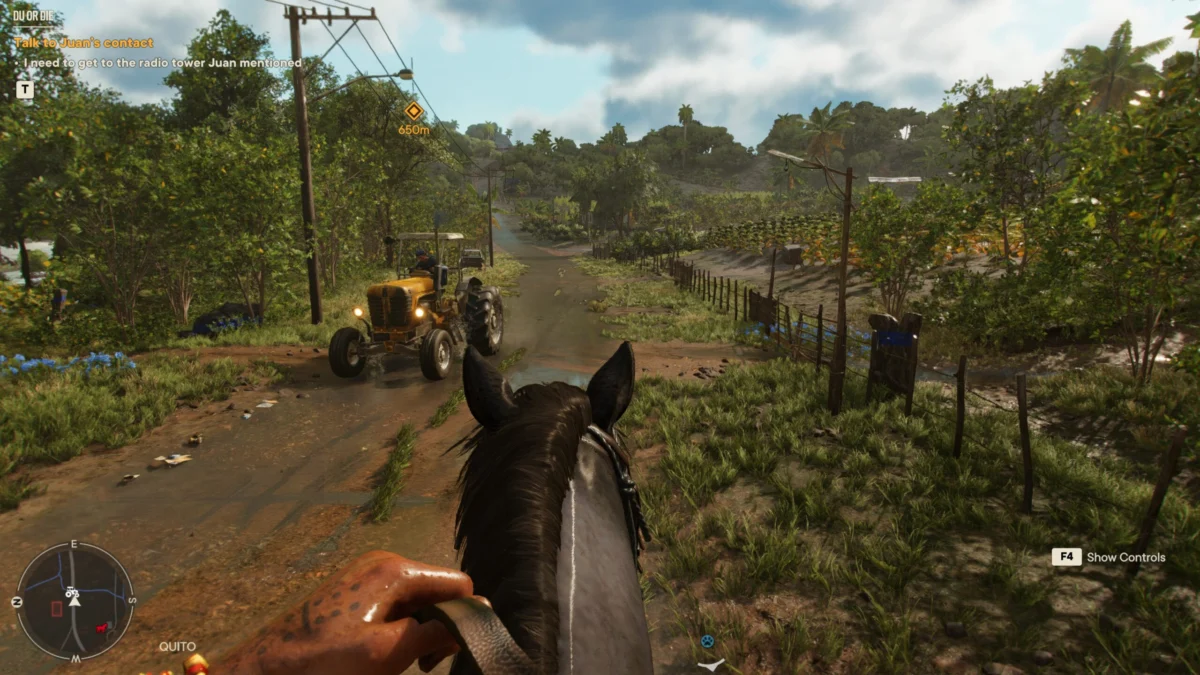
In the vast, saturated landscape of modern open-world gaming, few franchises occupy as much territory—both literally and figuratively—as Ubisoft’s Far Cry series. With the release of Far Cry 6, the developer has once again invited players to a sprawling, sun-drenched playground defined by political unrest, eccentric villains, and explosive emergent gameplay. Yet, for all its technical ambition and star power, Far Cry 6 stands as a testament to a series caught in a perpetual loop: refining its mechanics while struggling to evolve its core identity.
The Foundation: A Familiar Battlefield
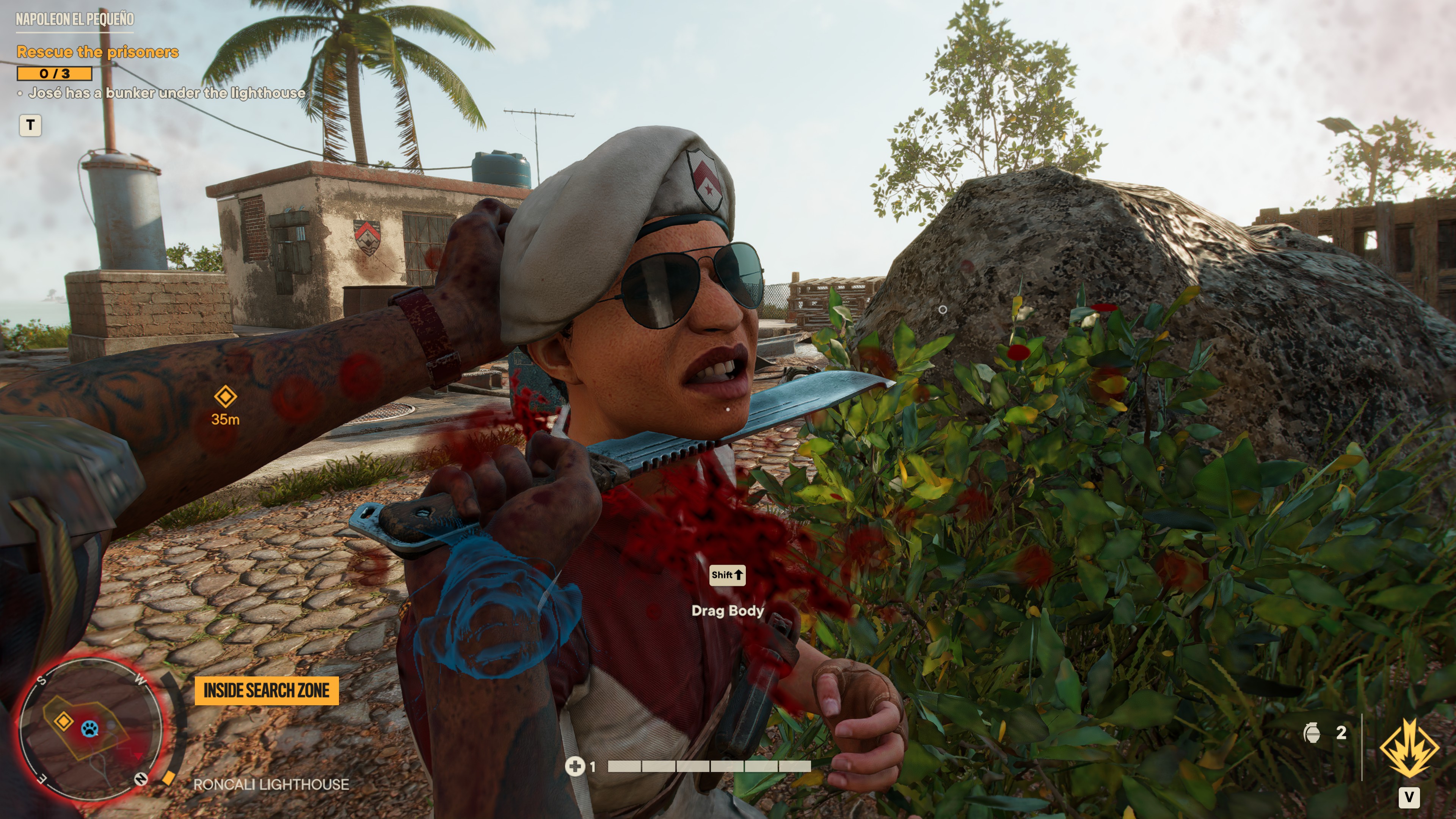
At its core, Far Cry 6 remains an uncompromisingly large-scale first-person shooter. For the uninitiated, the formula is well-trodden: you are dropped into a vast map, tasked with dismantling the control of a tyrannical regime by capturing checkpoints, liberating outposts, and engaging in frantic, often chaotic combat.
If forced to make a direct comparison, Far Cry 6 is a slightly more polished iteration of its predecessor, Far Cry 5. The gunplay feels tighter, the systems are more integrated, and the traversal options have been expanded. However, these improvements are subtle, often overshadowed by a persistent design philosophy that favors map-filling icons over organic discovery. The game offers a massive, vibrant sandbox, but one that occasionally feels like a checklist masquerading as a revolution.
Chronology of a Revolution: From Conscript to Liberator
The narrative of Far Cry 6 places the player in the boots of Dani Rojas, a former military conscript turned reluctant guerrilla fighter. The primary antagonist is Anton Castillo, the iron-fisted dictator of the fictional island nation of Yara. Castillo, portrayed with chilling, laconic precision by Breaking Bad veteran Giancarlo Esposito, is the narrative anchor of the experience.
The campaign, which spans roughly 30 to 50 hours of gameplay, follows a predictable trajectory. Players must undermine Castillo’s control across three distinct provinces, each governed by a secondary lieutenant. The overarching plot centers on a rather abstract and arguably weak premise: a "miracle" cancer-curing tobacco that requires a toxic, specialized fertilizer to cultivate. While the narrative ambitions are high—attempting to balance the somber weight of guerrilla warfare with the series’ signature, knockabout action-schlock—the story often struggles to find a consistent tone, ultimately feeling like a nonsensical, if visually striking, charade.
Supporting Data: Mechanics and Innovation
Despite the narrative unevenness, Far Cry 6 succeeds when it leans into the "magic" of its systems. The game introduces several new mechanics designed to capture the essence of guerrilla warfare, with varying degrees of success.
The Guerrilla Network
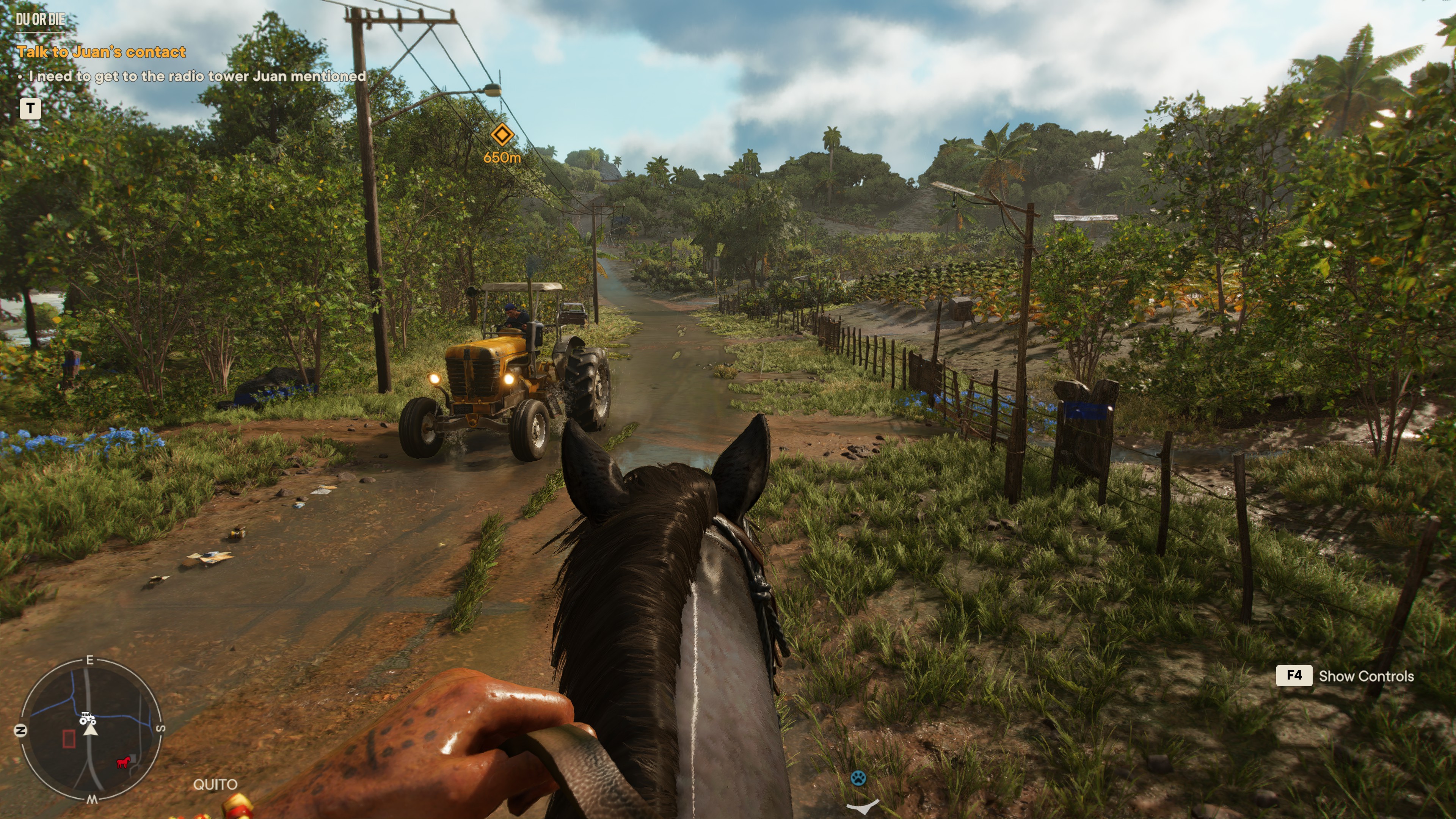
One of the most effective additions is the system of hidden guerrilla footpaths. These winding dirt tracks, marked by blue flowers, allow players to traverse the island away from the primary military roads. This encourages a more tactical approach, utilizing the jungle as a shield rather than just a backdrop. The navigation involves a satisfying blend of horseback riding, first-person platforming, and vertical exploration using a grappling hook.
The Holster System
The game also introduces the ability to holster weapons while roaming through towns. This effectively allows the player to blend in with the local population, walking right up to military checkpoints before pulling a sidearm and striking. While it adds a layer of social stealth, it occasionally undermines the high-tension, "strike and melt away" ethos that the game otherwise promotes.
Resolver and Supremo
Perhaps the most controversial additions are the "Resolver" and "Supremo" systems.
- Resolver Weapons: Crafted by the ingenious arms dealer Juan Cortez, these ad-hoc weapons range from a practical nailgun to a bizarre, disc-launching contraption. While some feel grounded, others veer into a "Mad Max" aesthetic that feels jarringly out of place in the lush, realistic world of Yara.
- Supremo Backpacks: These represent the most significant, and perhaps most divisive, departure from series tradition. These weaponized backpacks provide "press-to-win" capabilities, such as auto-targeting rocket barrages or devastating rings of fire. They inject a level of power fantasy that feels more aligned with a looter-shooter like Destiny than the grounded, improvisational combat the franchise was once known for.
Emergent Gameplay: Where the Magic Happens
Where Far Cry 6 truly shines is in its dynamic systems. When the player is left to their own devices, the game produces moments of unparalleled, chaotic brilliance.
Consider a scenario where a mission to destroy poisonous fertilizer planes goes sideways. A player might find their stealth approach compromised, leading to an aerial chase where they must hijack an enemy plane, destroy pursuing fighters, and finally crash their craft into the remaining ground targets. These are not scripted sequences; they are the result of the game’s deep interaction of systems—weather, fire propagation, AI behavior, and physics.
Smaller, accidental moments are equally compelling. A crocodile companion named Guapo might be ordered to attack a guard, only to be distracted by a pack of wild dogs. The guard, sensing an opportunity, might flee, only to run into the path of an oncoming vehicle. These emergent, unscripted outcomes are where Far Cry 6 justifies its existence, proving that even after years of iteration, the core "toy box" remains highly potent.
Implications for the Series
The existence of Far Cry 6 presents a paradox for the franchise. It is objectively a "better" game than its predecessor in terms of mechanics, polish, and scale. Yet, it suffers from an identity crisis. Ubisoft’s reliance on "map-filling" design—where the player is constantly bombarded with icons, crafting resources, and cryptic upgrade systems—often dilutes the experience.
The game’s reliance on these systems suggests a developer caught between two worlds: the desire to provide a deep, complex RPG-lite experience and the need to maintain the visceral, immediate appeal of a high-octane shooter. While the game provides moments of genuine brilliance, it also contains elements that feel dated or unnecessary.
Conclusion: A Worthy, If Flawed, Entry
If placed side-by-side with Far Cry 5, most players would likely gravitate toward the sixth installment. It is a more expansive, vibrant, and mechanically diverse experience. However, it is not the evolution that many long-time fans were hoping for. Instead, it is a refinement of the status quo.
Far Cry 6 is a game of extremes: it features some of the best gunplay in the series and some of the most frustrating, "silly" design choices. It is a title that can be deeply annoying at one moment and breathtakingly fun the next. For those who enjoy the chaos of the Far Cry sandbox, it is an essential play, provided they are willing to look past the clutter and embrace the mayhem that lies beneath. As the series moves forward, the challenge for Ubisoft will be to decide whether it wants to keep refining the formula or finally take the risk to reinvent the very world it has spent so long building.











No comments yet. Be the first to join the conversation!