

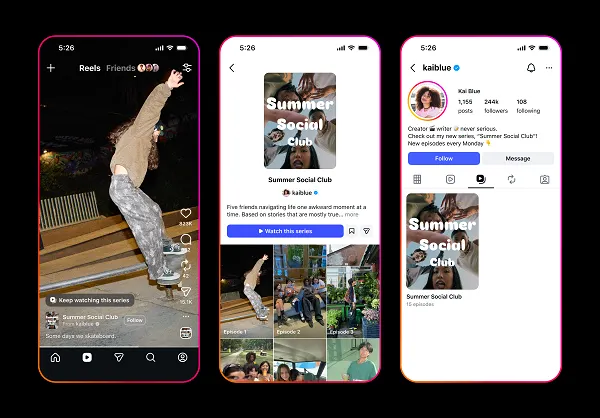
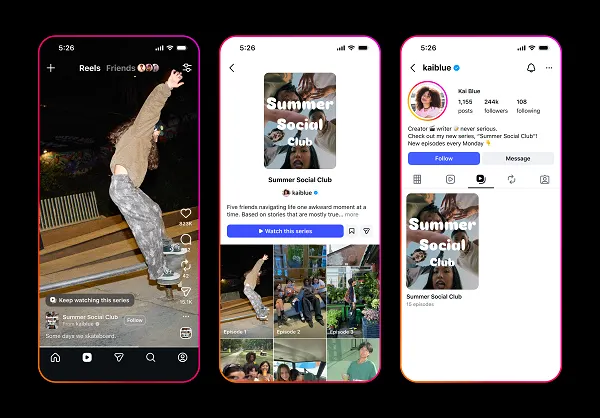
In a strategic shift that signals a departure from its singular focus on short-form viral videos, Meta is quietly testing a new "Series" feature for Reels across both Facebook and Instagram. This development marks a significant pivot for the tech giant, which has spent the better part of five years aggressively chasing the short-form dominance of TikTok. By introducing a way to link and categorize Reels into episodic collections, Meta is signaling its intent to evolve from a platform defined by fleeting, scrollable clips into a destination for more substantial, long-form storytelling.
Main Facts: The New “Series” Feature
The newly tested Series option allows creators to group individual Reels into a cohesive, episodic format. From a user experience perspective, this is implemented through intuitive link shortcuts embedded directly within the video playback window. Furthermore, creators can organize these collections on their profiles, allowing followers to binge-watch related clips in a logical, chronological order rather than hunting for scattered content across a profile grid.
This feature is designed to solve one of the primary criticisms of the Reels format: fragmentation. While Reels are excellent for reach and discovery, they often lack the narrative continuity required for deep audience engagement. By "stitching" themed clips together, Meta hopes to provide a structured viewing experience that encourages users to spend more time on the platform, effectively deepening the relationship between creator and consumer.
A History of Iteration: The “Back to the Future” Strategy
Meta’s move into long-form episodic content is not a novel invention, but rather a sophisticated revisit of past efforts. To understand where the company is going, one must look at its historical struggle to define its place in the video landscape.
The IGTV Era (2018–2021)
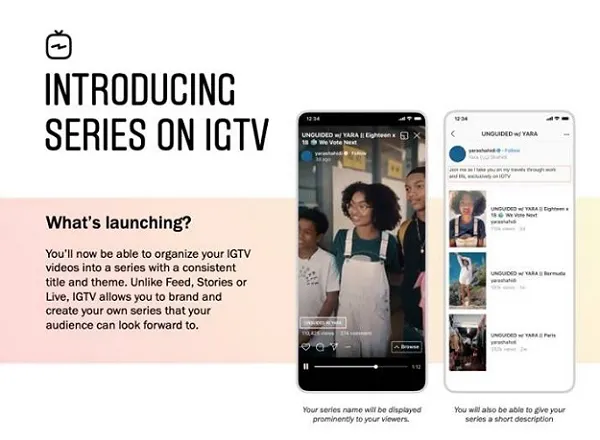
In 2018, Meta launched IGTV, a standalone app and a dedicated section within Instagram intended to compete directly with YouTube. IGTV allowed for long-form video uploads, and by 2019, the company introduced a "Series" option for the platform. It allowed creators to segment their content into dedicated, categorized collections. However, the project struggled to gain mass adoption, as users preferred the seamless, algorithmic feed of the main Instagram app. IGTV was eventually shuttered, its features folded into the broader video ecosystem that would later become Reels.
The Guides Experiment (2020)
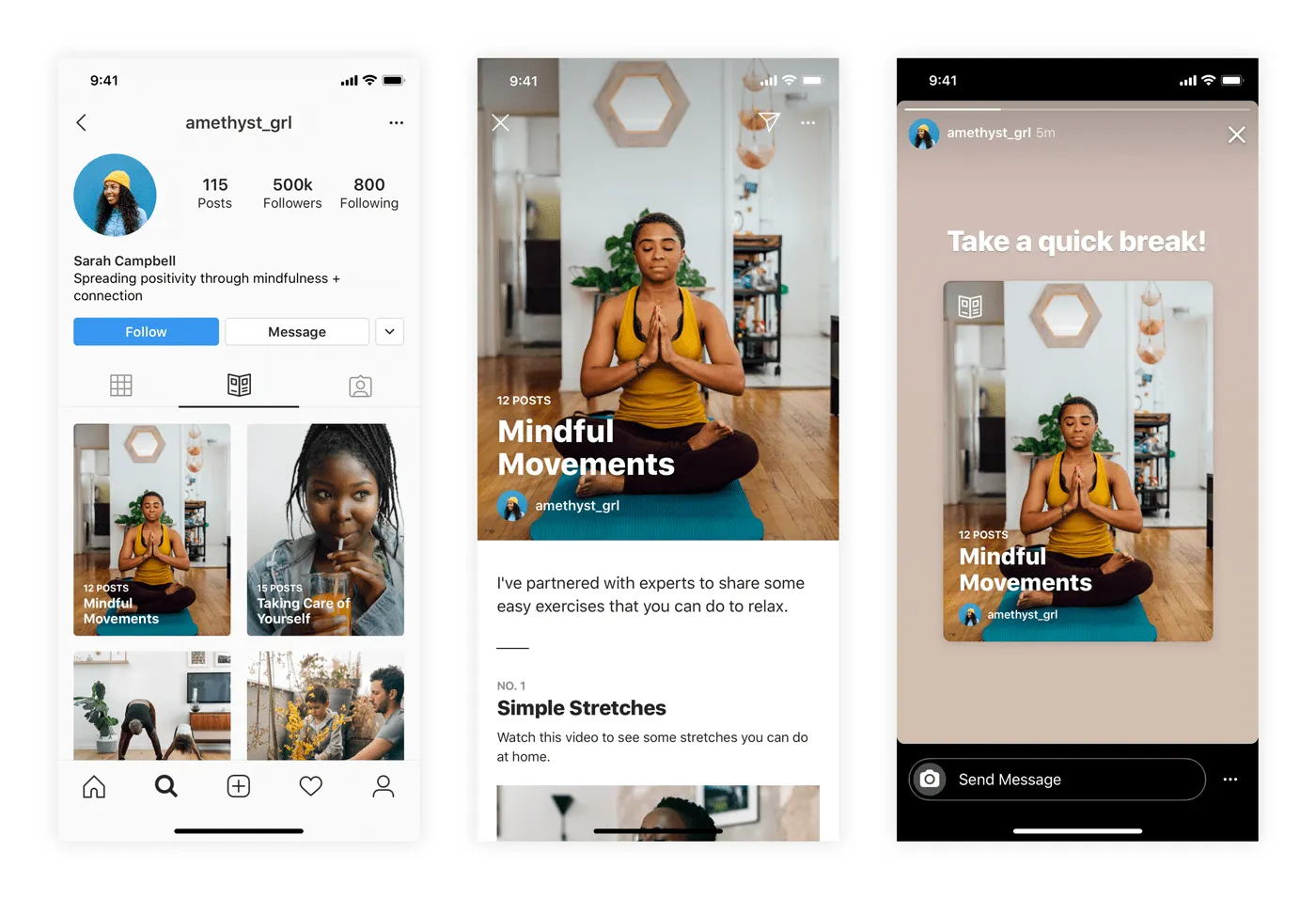
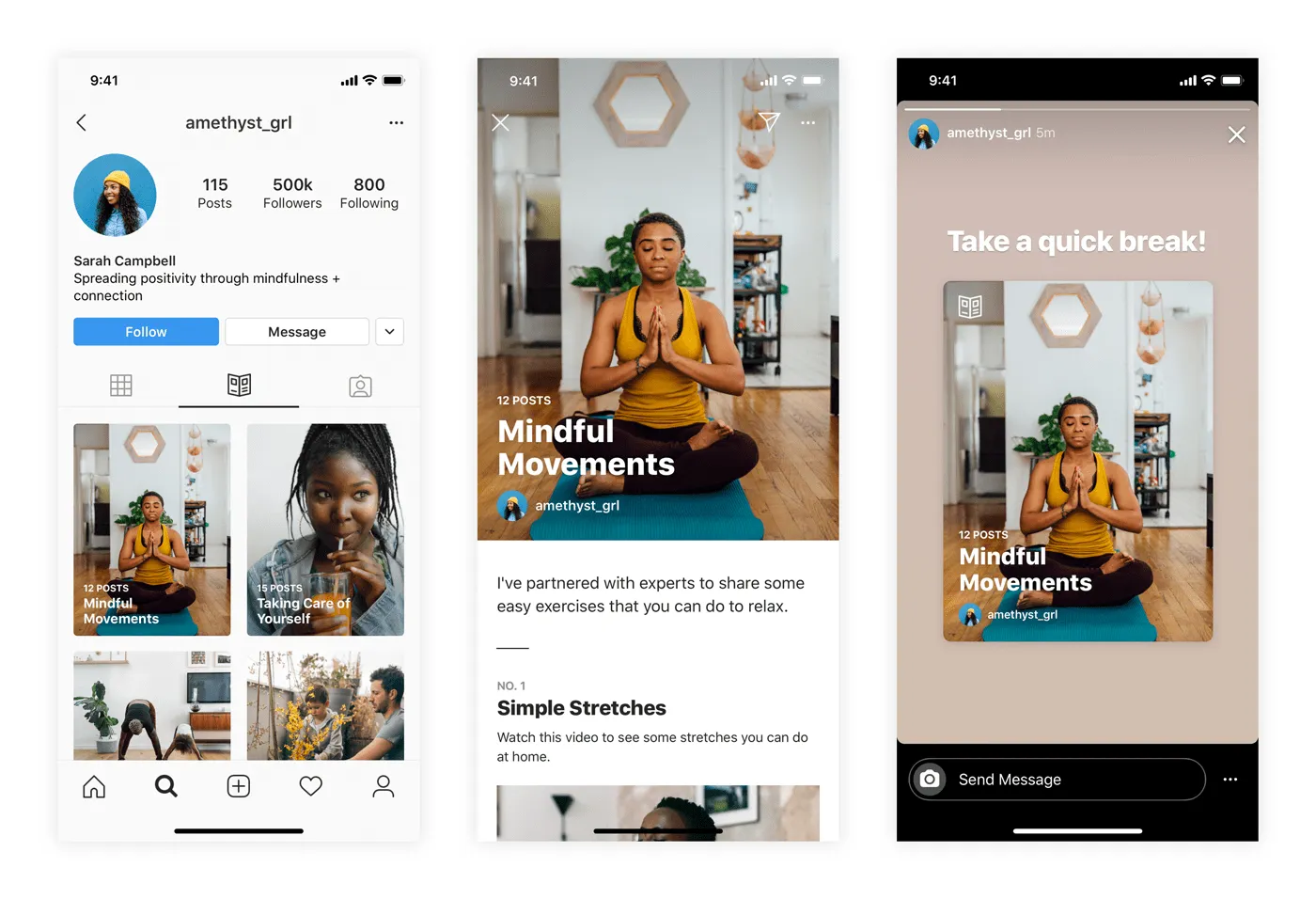
In 2020, Instagram introduced "Guides," a feature designed to facilitate topical engagement by allowing creators to curate posts and videos into scrollable, magazine-style layouts. While Guides found a niche among lifestyle and travel influencers, they never quite achieved the viral momentum Meta hoped for.
The current "Series" test for Reels effectively synthesizes the structural benefits of IGTV’s series categorization with the high engagement rates of the Reels format. It is a "back to the future" approach—learning from the structural failures of IGTV while leveraging the success of the current short-form video infrastructure.
Supporting Data: The Rise of the Mini-Drama
Meta’s strategic pivot is heavily influenced by the explosive growth of "mini-dramas"—a content format that has fundamentally altered the landscape of mobile consumption. These are essentially serialized, low-budget, high-hook soap operas, typically produced in short, vertical increments.
Data from the industry paints a compelling picture of why Meta is pivoting now:
- The Revenue Engine: According to industry reports, mini-dramas generated approximately $1.3 billion in revenue in the United States in 2025 alone. A significant portion of this income was derived from direct payments from viewers who paid to "unlock" subsequent episodes.
- Viewer Engagement: Platforms like TikTok have seen hundreds of millions of views on mini-drama content. The format is so successful that TikTok has even launched a dedicated app, "PineDrama," specifically to host these episodic, narrative-driven experiences.
- The CTV Connection: As consumption shifts toward Connected TV (CTV), Meta is looking for ways to capture the living room audience. Long-form, episodic content is inherently more "watchable" on a television screen than a 15-second loop of a dance trend.
Official Responses and Strategic Vision
The shift toward long-form was solidified during the recent Scaleable Summit, where Instagram’s Vice President of Product, Tessa Lyons, provided a rare glimpse into the company’s internal roadmap.
Lyons confirmed that Instagram is consciously moving away from a purely short-form strategy. Her vision for the platform is to become a "unique part of creators’ long-form strategy" in addition to their short-form content. This implies that Instagram wants to be the primary home for a creator’s entire ecosystem—not just the "trailers" or viral clips that drive discovery, but the deeper, narrative-heavy content that builds community and brand loyalty.
"We want to support creators in building expanded narratives," Lyons stated, hinting at a future that includes enhanced support for podcasts, live-streaming, and, notably, the episodic mini-dramas that are currently capturing so much market share on rival platforms.
Implications for the Creator Economy
The implications of this move are significant for both the platform and its users.
For Creators: Monetization and Retention
For creators, the "Series" feature offers a dual benefit. First, it provides a tool for better content organization, which historically leads to higher "watch time"—a key metric for algorithmic promotion. Second, it creates a pathway for more robust monetization. If Meta successfully integrates a payment layer for "unlocking" episodes or premium series, it could provide creators with a more stable income stream that is not solely reliant on the volatile nature of ad-revenue sharing.
For Meta: The CTV Ambition
The most significant implication is Meta’s push into Connected TV. In December, the company launched an updated CTV app, signaling that it no longer views itself as just a "phone app." To compete with the likes of YouTube and Netflix on a big screen, Meta needs content that sustains attention for 10 to 30 minutes at a time, rather than a few seconds. The "Series" feature is the foundational structure required to make that transition possible.
The Competitive Landscape
By leaning into long-form, Meta is effectively declaring a truce in the "short-form war" with TikTok and instead opening a new front. While TikTok is aggressively trying to turn its users into long-form creators through incentives and new features, Meta is attempting to pivot its existing, massive user base toward a more "YouTube-like" consumption model.
Conclusion: A New Era for the Feed
Meta is betting that the novelty of the infinite, short-form scroll is beginning to wear thin, and that audiences are craving more substance. The "Series" option for Reels is the first step in this evolution. It represents a mature phase for the company, where the goal is no longer just to keep users glued to their screens, but to provide them with the content depth that justifies a deeper, more intentional connection with the creators they follow.
As the platform moves forward, the success of this initiative will depend on whether creators adopt the format and whether the algorithm can effectively surface these long-form "series" to the right audiences. If Meta can successfully bridge the gap between the viral discovery of the short-form era and the deep engagement of the episodic era, it may just succeed in cementing its place as the internet’s primary content hub for years to come.











No comments yet. Be the first to join the conversation!