Asep Darmawan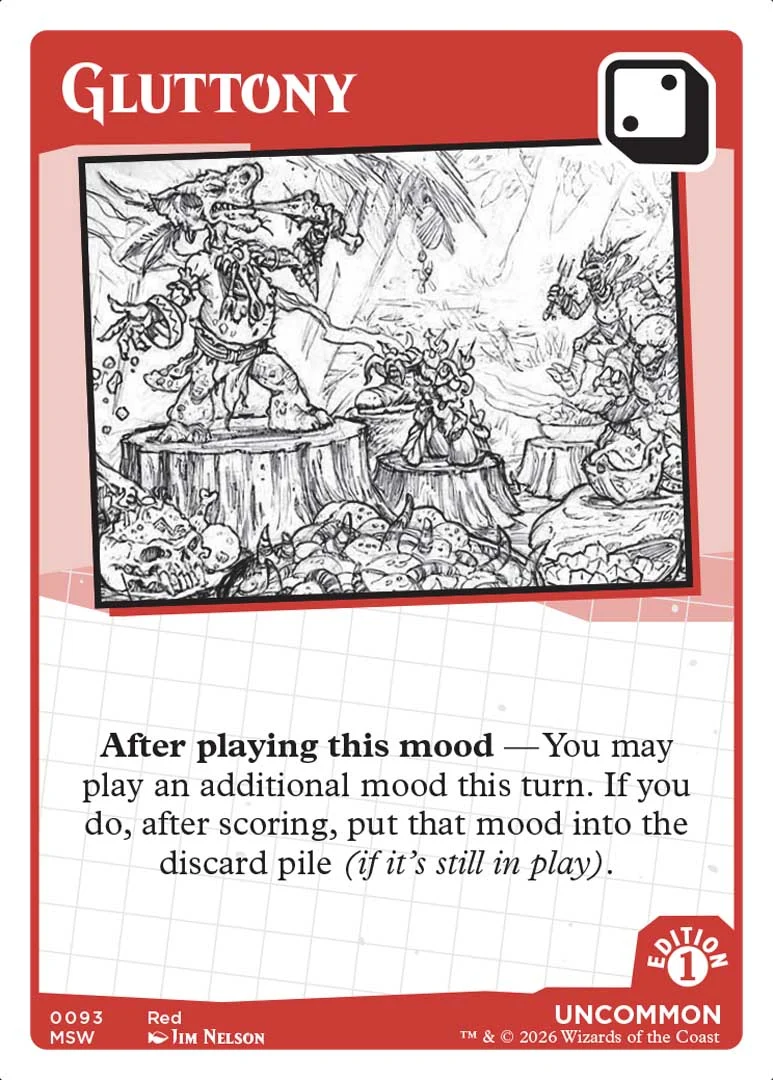
RENTON, WA — June 3, 2026 — In a move that signals a significant shift in the tabletop gaming landscape, Wizards of the Coast has officially announced the launch of Mood Swings, a bold, experimental trading card game (TCG) developed by none other than Mark Rosewater, the legendary Head Designer of Magic: The Gathering. By distilling the depth of the TCG genre into rapid-fire, 5-to-10-minute sessions, the company is aiming to bridge the gap between hardcore tabletop enthusiasts and casual players looking for a quick, visceral experience.
Available exclusively through the MagicSecretLair.com portal, Mood Swings represents a departure from the complex, long-form deckbuilding games that have dominated the market for decades. Instead, it offers a pick-up-and-play dynamic that prioritizes immediate, emotional engagement over hours of pre-game preparation.
The Genesis of an Idea: A Thirty-Year Journey
To understand the significance of Mood Swings, one must look at the career of its creator. Mark Rosewater has been the creative heartbeat of Magic: The Gathering for over three decades, responsible for defining the color pie, expanding the multiverse, and shaping the competitive meta-game. However, Mood Swings is not just a side project; it is, according to Rosewater, a "labor of love" that has evolved in parallel with his professional career.
A Chronology of Development
- The Early Concepts (1996–2005): Rosewater began experimenting with the core mechanics of "emotional state" gaming during his early tenure at Wizards. While Magic was growing into a global juggernaut, he sought a secondary system that relied on shifting rulesets rather than static card interactions.
- Refining the Prototype (2006–2018): During the mid-2010s, Rosewater utilized Mood Swings as an internal design exercise, testing it among colleagues to see if high-level strategy could be compressed into a sub-10-minute window.
- The Final Polish (2019–2025): With the rise of "micro-games" in the tabletop space, Wizards of the Coast greenlit the project for a commercial release. The goal shifted from an internal curiosity to a fully realized, consumer-ready product.
- The Global Launch (June 3, 2026): The game officially reaches the public, marking the first time a major TCG designer has released a standalone experimental title that challenges the traditional "deckbuilding" barrier to entry.
Gameplay Mechanics: The Psychology of Play
Mood Swings is designed for two to four players and eliminates the need for expensive, time-consuming deck construction. Every deckbox contains a randomized set of 45 cards, a rule card, and a play-aide card. The accessibility is intentional; the game is designed to be played the moment it is opened.
The Core Loop
The gameplay loop is deceptively simple: each round, players contribute a card to the "mood pool." These cards, which represent various human emotions and temperaments, carry point values and unique effects. The player who contributes the highest value card wins the round. The catch, however, is the "shifting field" mechanic. When a card is played, its attribute often alters the rules of the current round—perhaps reversing the winning condition, adding a multiplier to specific cards, or forcing players to discard.
Winning the game requires capturing three rounds. Because the cards are randomized, the strategy shifts from long-term planning to "tactical adaptability." Players must learn to read the room and manage their hand as if it were a changing emotional landscape.
Versatility in Format
As Rosewater noted in a recent demonstration, the game is remarkably modular. "I met this couple with two young children and was able to show them a team format in Mood Swings where each parent could play along with one of the kids," he explained. This adaptability allows for standard 1v1 play, team-based variants, or chaotic 4-player free-for-alls, making it a "Swiss Army knife" of card gaming.
Market Implications: Challenging the TCG Status Quo
The release of Mood Swings comes at a pivotal time for the tabletop industry. For years, the TCG market has been defined by high-cost investments and the "pay-to-win" stigma associated with secondary market card prices. By offering a fixed, randomized, and affordable entry point, Wizards of the Coast is testing a new distribution model.
Data-Driven Accessibility
The decision to sell exclusively through MagicSecretLair.com suggests a direct-to-consumer strategy that avoids the traditional hobby shop retail bottleneck, at least for this initial "1st Edition" run. By limiting the product to a 45-card randomized deckbox, Wizards is effectively testing the "fun-per-dollar" metric. If successful, this could lead to a new category of "short-form" TCGs that coexist with established giants like Magic: The Gathering and Pokémon.

Industry Response
While it is too early to measure sales figures, early reactions from the gaming community have highlighted the game’s refreshing lack of "homework." In an era where players are often overwhelmed by complex rulebooks and meta-game research, Mood Swings offers a sanctuary of simplicity. Industry analysts suggest that this "low-barrier" approach could attract demographics that have previously found the barrier to entry for Magic too high.
Official Statements and Vision
Mark Rosewater’s passion for the project is palpable. In his official statement, he described the game as a "love letter to trading card games."
"To describe Mood Swings as a labor of love is an understatement," said Rosewater. "This game has been part of my life for almost 30 years and to see it available for fans around the world to play conjures feelings I can barely describe, which is ironic since this game is entirely about moods and emotions."
Wizards of the Coast, a subsidiary of Hasbro, views this as a vital step in their mission to "inspire creativity and forge friendships." By diversifying their portfolio with a game that emphasizes quick, interpersonal play, they are reinforcing their commitment to tabletop gaming as a social, rather than purely competitive, pursuit.
The Future of the "Mood"
As Mood Swings hits the market, the questions surrounding its long-term viability remain. Will it receive expansions? Will there be organized play? For now, the focus is on the experience itself.
The launch of this game serves as a masterclass in design philosophy: start with an emotion, build a mechanic that supports it, and remove every piece of friction that stands between the player and the fun. As the gaming world turns its eyes to MagicSecretLair.com, one thing is clear: Mark Rosewater has successfully translated his decades of experience into something entirely new, proving that even in a world of high-stakes, competitive gaming, there is always room for a game that simply wants to make you feel.
About the Companies
- Wizards of the Coast: Based in Renton, Washington, the company continues to define the industry through Magic: The Gathering and Dungeons & Dragons. Their move into experimental, rapid-play titles like Mood Swings highlights a studio network capable of balancing legacy success with bold, new creative ventures.
- Hasbro: The parent company, with 165 years of history, continues to leverage its massive IP library—including Transformers, Nerf, and Play-Doh—to reach over 1 billion fans annually. Mood Swings represents a continuation of their strategy to build community through the "magic of play."
For more information on the game, visit MagicSecretLair.com and follow the updates from the Wizards of the Coast social channels.
Reported by the Editorial Desk of the Gaming Industry News Bureau.


 Evan Lee Salim
 Nana Wu