

For the modern professional technician, the toolbox is more than just a collection of steel; it is an ecosystem. Among the myriad brands vying for dominance in the workshop, Milwaukee Tool has successfully cemented itself as the preferred choice for those who demand both versatility and sheer power. As summer 2026 hits its stride, the manufacturer is once again expanding its footprint, unveiling a suite of updates to its highly successful Packout modular storage system and, more importantly, a long-awaited refresh to its cordless fastening lineup.
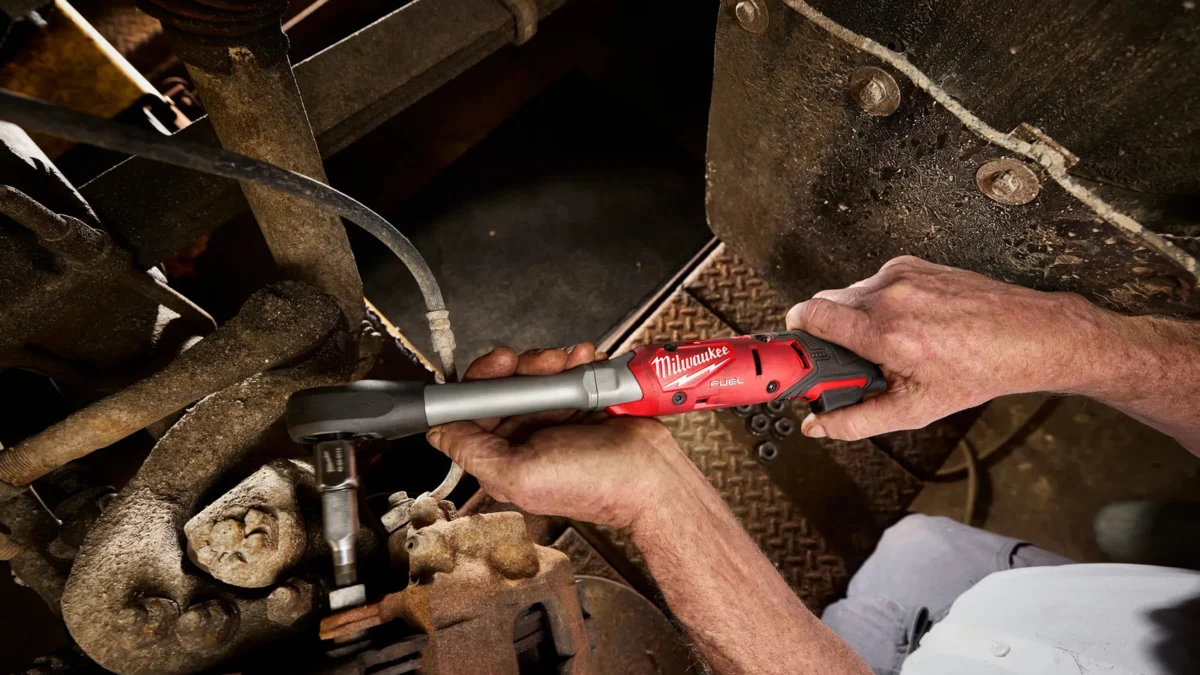
For users already committed to the M12 and M18 battery platforms, the arrival of new extended-reach ratchets represents a significant leap in performance. These tools are the silent heroes of the automotive and industrial sectors—essential for navigating the cramped confines of modern engine bays, intricate exhaust systems, and complex plumbing networks where traditional tools simply cannot reach. By blending upgraded motor technology with refined ergonomics, Milwaukee is signaling that it isn’t satisfied with merely being the market leader; it intends to redefine the standard for what a cordless ratchet can achieve.
The Main Facts: A New Tier of Performance
Milwaukee’s latest announcement centers on three specific models under the M12 FUEL banner: the ¼-inch, ⅜-inch, and ½-inch Extended Reach Ratchets. While the brand initially disrupted the industry with its first-generation extended-reach models back in 2019, this new iteration is built from the ground up to address the evolving demands of high-torque, high-speed fastening.
Each tool in this new lineup—model numbers 3058-20 (¼-inch), 3059-20 (⅜-inch), and 3055-20 (½-inch)—is engineered for those "deep-cavity" scenarios that have historically caused frustration for mechanics. The core specifications reveal a clear focus on the "Fuel" philosophy: brushless motor efficiency paired with high-capacity battery power.
- The Powerhouse: The M12 FUEL ½-inch Extended Reach Ratchet (3055-20) stands as the flagship of this release. Measuring 16.5 inches in length and weighing in at 2.2 lbs (bare tool), it is designed to deliver a staggering 80 ft-lbs of torque, with a top speed of 300 RPM.
- The Versatile Workhorse: The ⅜-inch variant (3059-20) offers a balance of agility and strength, clocking in at 400 RPM with a maximum torque output of 70 ft-lbs.
- The Precision Tool: The ¼-inch model (3058-20) is optimized for smaller fasteners, sacrificing raw torque (45 ft-lbs) for superior speed, capable of reaching 550 RPM in tight spaces.
All three bare tools are set to hit shelves at a retail price of $279, with optional kit configurations available for the smaller two sizes at $379, providing a comprehensive entry point for those needing batteries and chargers alongside the hardware.
A Chronological Perspective: From 2019 to 2026
To understand the weight of this announcement, one must look back at the landscape of 2019. Before Milwaukee introduced its first-generation extended-reach ratchets (2559-20 and 2560-20), the industry was largely reliant on air-powered ratchets. These pneumatic tools, while powerful, required tethering to cumbersome hoses and noisy compressors.
When the first-generation M12 cordless models launched, they were a revelation. They offered the freedom of movement that technicians had craved for decades. Over the following years, these tools became fixtures in repair shops worldwide, earning thousands of five-star reviews for their reliability and ease of use. However, as vehicle designs grew more complex and manufacturers packed more components into tighter engine bays, the demand for higher torque-to-size ratios increased.
By 2024, rumors began circulating within trade forums about a "Project Next-Gen." Milwaukee’s engineering team spent the intervening years analyzing field failure data and user feedback. The result is the 2026 lineup, which represents the natural evolution of the platform. It is a testament to the brand’s iterative design process: listening to the "boots on the ground" and refining the internal components to handle the heat and stress of professional-grade work cycles.
Supporting Data: Technical Breakdown and Efficiency
The move to the new M12 FUEL motor architecture is the defining characteristic of this generation. Milwaukee’s decision to move away from the original motor design was driven by the need for thermal management and torque consistency.
Torque vs. Speed Comparison Table
| Model | Drive Size | Max Torque | Max Speed (RPM) | Length |
|---|---|---|---|---|
| 3058-20 | 1/4" | 45 ft-lbs | 550 | 15.4" |
| 3059-20 | 3/8" | 70 ft-lbs | 400 | 16.2" |
| 3055-20 | 1/2" | 80 ft-lbs | 300 | 16.5" |
These figures are not just marketing numbers; they represent a tangible improvement in job site productivity. In a high-pressure environment, such as a transmission rebuild or a suspension overhaul, the ability to shave seconds off each fastener adds up to hours of saved time per week.
Furthermore, Milwaukee has introduced model-specific protective boots ($29 each). This seemingly minor accessory is a direct response to feedback regarding tool longevity. In the greasy, harsh environments of a professional shop, protecting the tool’s housing from chemical exposure and impact damage is crucial for maintaining the resale value and functional integrity of the investment.
Official Responses and Strategic Positioning
In a statement accompanying the launch, Milwaukee’s product development team emphasized that the goal was not just to make the tools "stronger," but to make them more "integrated." By including modular button and paddle caps in the $379 kits, Milwaukee is acknowledging that different technicians have different grip preferences.
"The feedback from our users has always been our compass," a spokesperson stated. "We realized that a one-size-fits-all approach to ergonomics doesn’t work when you’re working in a confined space where a single awkward grip can make a job impossible. These new caps allow the user to customize their interface with the tool, ensuring that the trigger is always accessible, regardless of the angle."
This shift toward customization highlights the company’s strategic shift to position the M12 system as a "precision platform" rather than a mere "power platform." By offering the ½-inch model exclusively as a bare tool, Milwaukee is also signaling its respect for the professional user, many of whom already own a surplus of M12 batteries and do not wish to pay the "kit premium" for additional hardware they don’t need.
Implications for the Industry
The launch of these ratchets will likely have a cascading effect on the professional tool market.
1. Increased Competitive Pressure
With Milwaukee raising the bar on torque output, competitors in the cordless tool space will likely accelerate their own R&D cycles. We should expect to see rival brands attempt to bridge the gap with their own 12V and 18V platforms by the end of the year.
2. The Decline of Pneumatic Systems
Each time a technician replaces a pneumatic ratchet with a high-performance cordless alternative, the reliance on air compressors in the shop decreases. This leads to quieter, more energy-efficient work environments and reduces the need for expensive air-line maintenance.
3. The "System Lock-in" Effect
Milwaukee’s decision to keep these tools within the M12 ecosystem is a masterclass in brand loyalty. By ensuring that these new ratchets are compatible with existing M12 batteries, Milwaukee lowers the barrier to entry for their current users. If a technician already owns an M12 impact driver or drill, the decision to buy an M12 ratchet becomes a "no-brainer," further solidifying Milwaukee’s hold on the professional market.
4. Professionalization of DIY
While these tools are priced for professionals, the accessibility of the M12 platform means that high-end hobbyists and "prosumers" are likely to invest in this technology as well. This creates a broader market demand, which in turn drives down manufacturing costs through economies of scale, eventually making these high-performance tools more affordable for everyone.
Conclusion: A New Standard for Accessibility
Milwaukee’s 2026 extended-reach ratchet lineup is a masterclass in refinement. It proves that the company understands the nuances of the trade—that power is useless without reach, and that speed is useless without control. Whether you are a master technician tasked with a complex engine teardown or an avid DIY enthusiast working on your own vehicle in the garage, these tools provide a level of performance that was once relegated to the realm of high-end pneumatic setups.
As the industry moves toward a future defined by cordless portability and digital efficiency, Milwaukee remains at the helm. By investing in the M12 FUEL system, users are not just buying a tool; they are buying into a vision of the future where the most difficult jobs become significantly easier to tackle. With the official rollout slated for July 2026, the industry is poised to see a significant shift in how fasteners are removed, replaced, and tightened, proving once again that in the world of professional tools, the evolution never truly stops.












No comments yet. Be the first to join the conversation!