Iffa Jayyana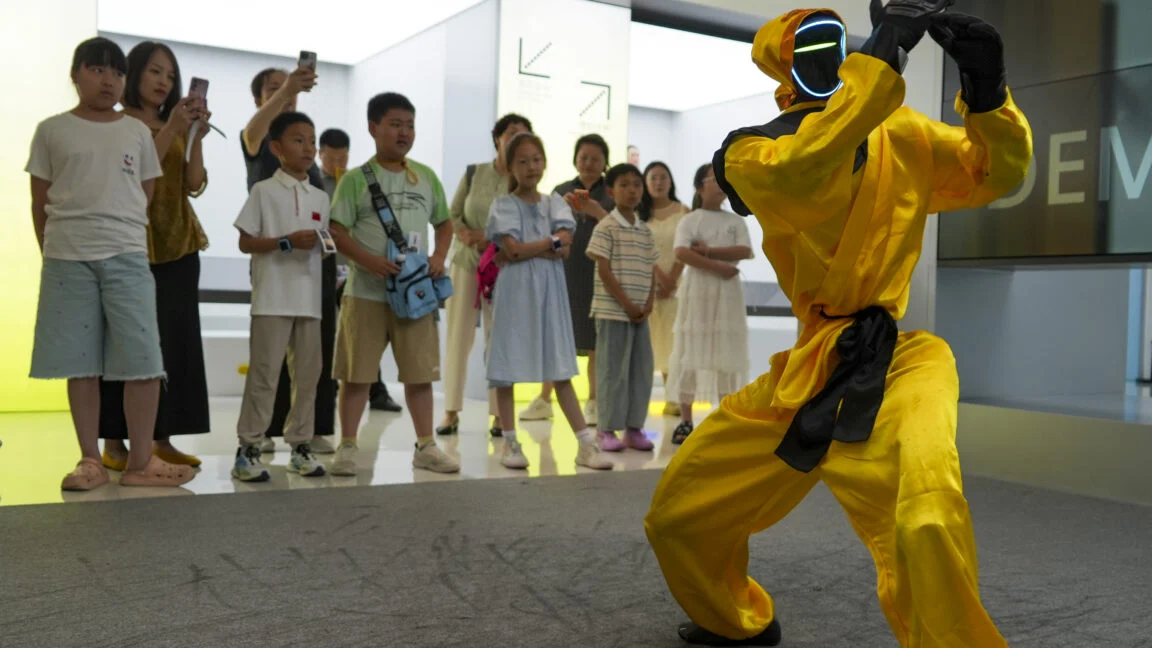
The modern robotics landscape is increasingly defined by a high-octane spectacle: viral videos of humanoid machines performing backflips, folding laundry, or navigating complex obstacle courses with startling grace. To the casual observer, these demonstrations suggest that we are on the precipice of a "Jetsons-style" future where autonomous assistants handle every household chore and industrial task.
However, beneath the polished editing and curated lighting of these social media showcases lies a sobering reality. Experts in the field argue that a cavernous gap remains between the rehearsed, one-off performance of a laboratory prototype and the grueling, unpredictable requirements of real-world functionality. As the robotics industry enters a new investment frenzy, the mismatch between marketing and mechanical maturity has become a central point of contention for researchers and engineers alike.
The Psychology of the Humanoid: Why We Are Easily Fooled
At the heart of the current hype cycle is a fundamental human cognitive bias: anthropomorphism. When we see a machine with two legs, two arms, and a head—a humanoid—we inherently project human-level intelligence, intuition, and capability onto it.
Jonathan Hurst, co-founder of Agility Robotics and a robotics researcher at Oregon State University, notes that this psychological shortcut is a powerful tool, but one that is often weaponized by industry players.
"People automatically extrapolate and assume that the robot that looks like a person can do all the things that a person who can dance could do—which is not true," Hurst explains. "But a lot of the startup companies do kind of prey on that for being able to raise a lot of money."
When a robot performs a dance move, the human brain interprets it as a sign of cognitive agency. If a non-humanoid industrial arm performs the same movement, we see it for what it is: a programmed sequence. This distinction is subtle, but it drives the valuation of startups, as investors are often lured by the visual promise of a "general-purpose worker" rather than the technical reality of a specialized, narrow-task machine.
The Chronology of Hype: From Lab Bench to Viral Feed
The trajectory of humanoid development has accelerated rapidly over the last decade, but the nature of the "proof" has shifted.
- The Early Era (2010–2016): Robotics was defined by rigid, tethered machines. Demonstrations focused on basic mobility, such as the DARPA Robotics Challenge, which tested robots on specific, semi-structured tasks.
- The Mobility Breakthrough (2017–2021): Companies like Boston Dynamics and Agility Robotics shifted the focus to dynamic balance. The goal was to prove that robots could stand, jump, and navigate uneven terrain without falling.
- The Generative AI Pivot (2022–Present): With the integration of Large Language Models (LLMs) and Vision-Language Models (VLMs), the focus moved from mere movement to "reasoning." The new standard for a viral video is a robot that can look at a messy room, identify a piece of trash, and decide to pick it up—or so it appears.
The problem, as experts point out, is that these demonstrations have become increasingly "brittle." They are often the result of thousands of hours of fine-tuning for a specific environment, camera angle, and set of objects. Once the environment changes by even a few degrees, the illusion of intelligence often shatters.
The Myth of Generalization: The "Wine Pouring" Problem
One of the most persistent misconceptions is that once a robot can perform a task—like pouring a glass of wine—it has "learned" the skill of pouring. In reality, modern robotics remains trapped in a cycle of narrow application.
Sergey Levine, a computer scientist at the University of California, Berkeley, and co-founder of Physical Intelligence, highlights the gulf between specific task performance and true generalization.
"Maybe the robot can pour a glass of wine," Levine says, "but can it pour it out of any bottle and into any glass in any environment? That’s actually a lot harder than having a robot do a backflip in one stage demo."
Generalization is the "Holy Grail" of robotics. It requires a machine to perceive the physics of the world—the weight of a bottle, the friction of a surface, the fragility of a glass—and adapt its motor commands in real-time. Current AI models are getting better at identifying objects, but the physical execution remains a high-variance challenge. A robot that succeeds 99 times out of 100 in a lab may fail catastrophically in a kitchen filled with clutter, pets, or changing lighting conditions.
Supporting Data: The Quantitative Gap
The robotics industry currently lacks a standardized "IQ test" for machines. Unlike software, where benchmarks like the Turing test or coding proficiency scores provide a semi-objective metric, robotics demos are inherently subjective.
Data suggests that while robotic dexterity is improving, the reliability metrics for autonomous machines remain low. In logistics and manufacturing, where robots have been deployed for years, the machines are almost always purpose-built (e.g., a robotic arm specifically designed for pick-and-place operations in a cage). These machines are not "humanoid" because they don’t need to be.
When you introduce the humanoid form factor, you introduce massive mechanical complexity: joints that need to be synchronized, centers of gravity that shift, and energy constraints. The cost of achieving human-like mobility is, ironically, a reduction in the reliability of the task performance. Until a robot can prove it can operate for 1,000 hours in a non-controlled environment with a failure rate lower than a human worker, the "humanoid worker" remains a prototype, not a product.
Official Responses and Industry Perspectives
The divide in the robotics community is palpable. On one side are the "Integrationists," who believe that by building the humanoid body, the AI software will eventually "catch up" to fill the cognitive gap. On the other side are the "Pragmatists," who argue that we are pouring billions of dollars into a form factor that is inherently inefficient for most industrial or domestic tasks.
Jonathan Hurst and his peers at Agility Robotics argue for a "bipedal locomotion" approach—creating machines that can walk where humans walk, but acknowledging that the cognitive layer is still in its infancy. They emphasize that the focus should be on "deployment" rather than "demonstration."
"There’s always a gap between the kind of things that somebody can show in a demo and what the real capability of the robot is," Levine notes. He advocates for a shift in industry culture toward "quantitative, large-scale evaluations." This would mean publishing data on how many times a robot fails, what environmental variables cause that failure, and the recovery rate of the machine. Currently, no major robotics company publishes such "failure reports," as they would undermine the narrative of near-human perfection.
The Implications: What Happens When the Hype Fades?
The current trend of "demo-driven" development has significant implications for the future of the field.
- Investment Fatigue: If the current wave of humanoid startups fails to move beyond the demo phase within the next 3–5 years, we may see a "robotics winter." Investors who expected autonomous household help may pull back, potentially starving the industry of the funding needed for legitimate, incremental progress.
- Safety and Liability: As humanoid robots move from the lab to the warehouse floor, the gap between a "cool demo" and a "safe operation" becomes a legal nightmare. A robot that looks human is expected to react with human-like caution; if it fails to do so, the ethical and legal frameworks to hold it accountable are currently non-existent.
- The Loss of Pragmatism: By obsessing over the humanoid form, we may be ignoring more efficient, non-humanoid robotic solutions that could actually solve the labor shortages we face today. A multi-armed, ceiling-mounted robot might be far more effective in a kitchen than a bipedal machine that struggles to stay upright on a rug.
Conclusion: Toward a More Transparent Future
The humanoid robot is a marvel of engineering, representing the convergence of mechanical design, sensor fusion, and artificial intelligence. However, we must stop confusing "spectacle" with "utility."
As we look toward the next decade, the industry must transition from the era of the viral video to the era of the real-world metric. We need transparent evaluations, a realistic understanding of the limits of generalization, and a separation between the marketing of "humanoid potential" and the engineering of "robotic performance."
Until a robot can walk into an unfamiliar home, recognize a spilled glass of wine, find the appropriate cleaning supplies, and rectify the situation without human intervention—all while navigating the chaos of a lived-in environment—it is not yet the helper we were promised. It is, for now, a very expensive, very sophisticated piece of performance art. The journey to true robotic autonomy will not be won in a 30-second clip; it will be won in the thousands of hours of boring, reliable, and invisible work that we have yet to see.

 Asro
Asro
 Rifan Muazin