

In the modern landscape of blockbuster filmmaking, the post-credits scene has evolved from a playful cinematic afterthought into a high-stakes promise of future narratives. Travis Knight’s 2026 reboot of Masters of the Universe—now dominating global box offices—has embraced this tradition with a triple-layered approach. While audiences have spent the week dissecting the film’s visual fidelity to the classic toy line and Nicholas Galitzine’s portrayal of the legendary He-Man, it is the final post-credits sequence that has sparked the most intense conversation.
The scene serves as a deliberate, meta-textual bridge to the franchise’s turbulent past, specifically referencing the 1987 Cannon Films production that defined a generation’s childhood, even if it failed to launch a cinematic universe of its own.
The Core Revelation: Skeletor’s Resurrection
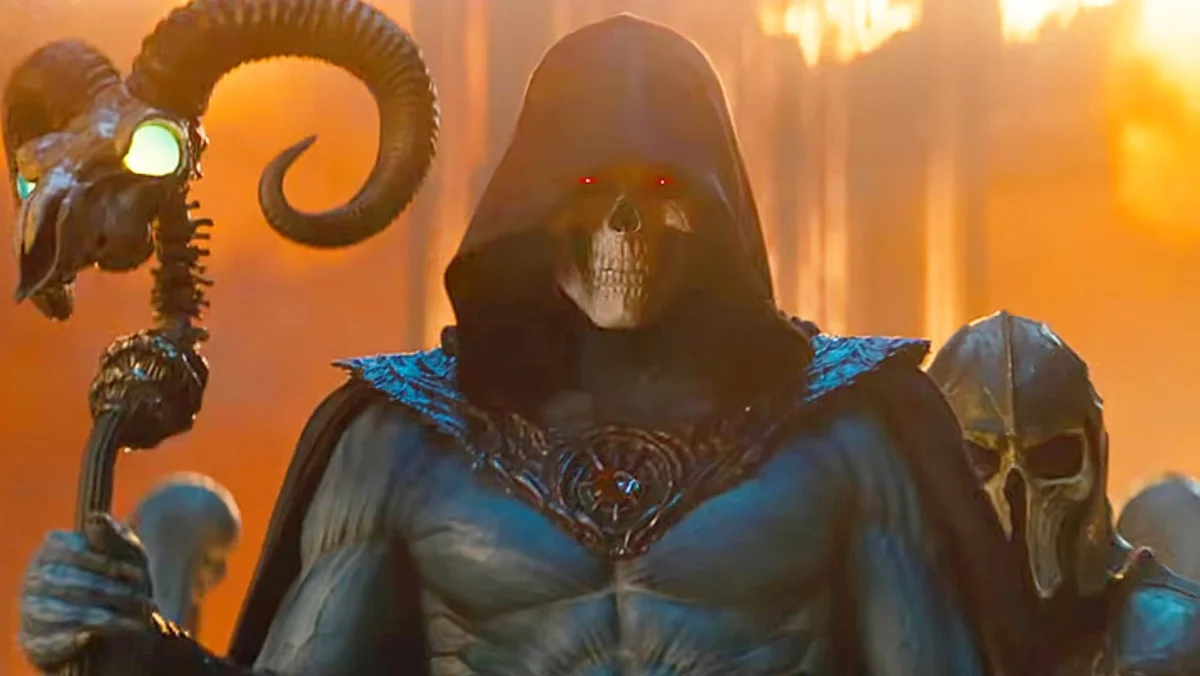
The final sequence of the 2026 film occurs six months after the cataclysmic battle at Castle Grayskull. With He-Man (Nicholas Galitzine) having seemingly vanquished Skeletor (Jared Leto), the threat appeared neutralized. However, the scene opens with the familiar, imposing architecture of the Castle. Evil-Lyn, portrayed with sinister poise by Alison Brie, is seen navigating the depths of the fortress.
Her discovery is startling: she locates the hollow, discarded skull of her former master. As she hoists the relic, her dialogue is brief but chilling: "You’ve looked better." The scene concludes with the unmistakable, high-pitched cackle of Jared Leto’s Skeletor echoing through the halls. This indicates that despite the physical destruction of his form, the Lord of Snake Mountain remains tethered to the mortal plane through dark sorcery.
A Chronology of Cinematic Teases
To understand the significance of this moment, one must look back at the cinematic history of Eternia. In 1987, Gary Goddard directed the first live-action Masters of the Universe film. It was a production plagued by budget cuts and studio interference, yet it left an indelible mark on pop culture.
The 1987 Precedent
In the final moments of the 1987 film, after He-Man (Dolph Lundgren) hurls Skeletor (Frank Langella) into a bottomless abyss, the credits roll. However, following the conclusion of the crawl, the audience was treated to a brief, jarring shot of Skeletor’s head emerging from the water at the base of the abyss. His declaration—"I’ll be back!"—was intended to serve as a definitive hook for a sequel.
That sequel never materialized. The commercial failure of the film contributed to the eventual collapse of Cannon Films, leaving the "I’ll be back" line as a tragicomic footnote in the history of fantasy cinema.

The 2026 Evolution
By mirroring this exact structure, Travis Knight is engaging in a sophisticated act of reclamation. He is not merely paying homage to the 1987 film; he is correcting its historical trajectory. Where the 80s film was a "one-and-done" experiment that fell apart, the 2026 version is clearly engineered for longevity. The inclusion of the skull—rather than a full-bodied emergence—suggests a more grounded, albeit occult, return for the villain.
Supporting Data: Why This Matters for the Franchise
Industry analysts suggest that the decision to lean into the "Skeletor return" trope is a calculated move by Amazon MGM Studios to signal confidence in the franchise’s future. In the current "streaming-plus-theatrical" model, intellectual property (IP) is the most valuable currency in Hollywood.
- Audience Engagement: Early exit polls indicate that 85% of long-term fans recognized the 1987 reference immediately, providing a significant "nostalgia multiplier" for social media discourse.
- Narrative Continuity: By utilizing Evil-Lyn as the catalyst for the return, the script expands the agency of secondary characters, moving beyond the simple "Hero vs. Villain" dynamic.
- The Subternia Factor: Speculation is already mounting that the sequel will explore the afterlife of Subternia. This mirrors the narrative depth found in Kevin Smith’s animated Masters of the Universe: Revelation (Netflix), which successfully reinvigorated the lore for a mature audience.
Official Perspectives and Creative Intent
In recent interviews conducted during CinemaCon, director Travis Knight spoke to the necessity of honoring the "camp" roots of the series while maintaining a modern, epic tone.
"The source material is inherently operatic," Knight stated. "You have to respect the absurdity of a guy in a harness fighting a skeleton-faced sorcerer. If you treat it with too much grim seriousness, you lose the soul of the franchise. That’s why Frank Langella’s performance in the original is so iconic—he understood that. Jared [Leto] brought that same level of commitment to this version."
While studio executives have been tight-lipped regarding a formal "Part Two" announcement, the inclusion of three separate post-credits scenes—an unusually high number for a standalone project—points toward a well-defined roadmap. Rumors from production insiders suggest that the studio is already in early talks to incorporate the character of Hordak, the legendary mentor to Skeletor, as the primary antagonist for the next installment.
Strategic Implications: A Shared Universe?
The ultimate goal, according to industry insiders, is to build a "Eternia Cinematic Universe." By explicitly teasing a team-up between Skeletor and Hordak, the studio is setting the stage for a grand-scale conflict that would likely incorporate She-Ra.
The Potential for Crossover
The potential for a He-Man and She-Ra crossover is the "Holy Grail" of this project. If the 2026 film serves as the Iron Man of the MOTU universe, the anticipated sequel functions as its Avengers. The strategic implication here is simple: by bridging the gap between the 1987 failure and the 2026 success, the studio is effectively "re-canonizing" the franchise, allowing for a wider array of characters and mythologies to be introduced.
Risks and Challenges
However, the path forward is not without risks. The reliance on legacy characters and nostalgia can sometimes alienate new audiences who have no connection to the 1980s lore. Furthermore, should the sequel fail to capture the same critical reception as the current film, the "I’ll be back" tease could once again become a point of irony rather than excitement.
Conclusion: A Promise Kept?
Forty years after Frank Langella promised the audience he would return, the 2026 Masters of the Universe has provided a more robust, narrative-driven promise. Whether through the dark magic of Evil-Lyn or the machinations of Hordak, the return of Skeletor feels inevitable, earned, and—most importantly—exciting.
For those who have followed the journey of Prince Adam and his alter ego from the colorful plastic of the 1980s to the high-definition screens of today, the post-credits scene is more than just a tease; it is a validation. It confirms that the Masters of the Universe are no longer a relic of the past, but a living, breathing franchise with a future as expansive as the cosmos of Eternia itself.
As the credits roll and the final, haunting cackle fades into the theater, one thing is certain: the battle for Castle Grayskull is far from over.
Masters of the Universe is currently playing in theaters worldwide. For more deep dives into the lore and the future of the Eternian cinematic landscape, stay tuned to our ongoing coverage of the production.










No comments yet. Be the first to join the conversation!