Layla Zulfa
In the contemporary digital landscape, social media has graduated from a mere megaphone for brand awareness to a sophisticated engine of business intelligence. Yet, a persistent disconnect remains: while social media teams are on the front lines of customer sentiment and market shifts, their findings often remain trapped within marketing silos. To secure the resources and executive buy-in necessary for long-term growth, social marketers must pivot from being content creators to becoming strategic intelligence architects.
Effective social media management requires more than just creativity; it demands a significant investment in human capital, technology, and time. As businesses tighten their belts, the pressure to justify every dollar spent on social has never been higher. For the modern marketer, the challenge is clear: how do you transform “likes” and “shares” into the language of the boardroom—revenue, retention, and competitive advantage?
The Evolution of Social Value: From Engagement to Intelligence
The traditional view of social media as a top-of-funnel brand awareness tool is increasingly obsolete. Today, the true value of social media lies in its ability to provide real-time, unfiltered feedback from the market. This is the realm of social intelligence—a treasure trove of data that reveals consumer pain points, emerging industry trends, and competitor vulnerabilities.
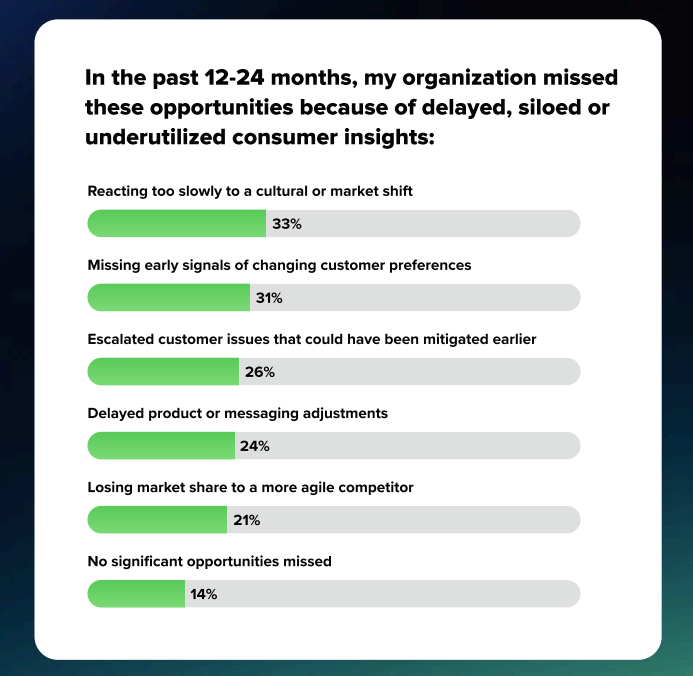
When this data is effectively synthesized, it transcends marketing. It informs product development, guides customer service, and shapes event strategies. However, when this intelligence is ignored or siloed, companies suffer from "insight blindness," missing pivotal opportunities for growth that are hiding in plain sight within their social comments and community forums.
Chronology of a Shift: Moving from Silos to Synergy
For many organizations, the shift toward a data-driven social strategy follows a distinct evolutionary arc:
- The Reactive Stage: Teams focus on vanity metrics—likes, follows, and simple impressions. Communication with leadership is limited to sporadic reports highlighting "viral" moments.
- The Integration Stage: The realization hits that social data is a business asset. Teams begin to integrate social media tools with CRM systems (such as Salesforce) and BI (business intelligence) platforms like Tableau.
- The Strategic Partnership Stage: Social teams proactively share insights across departments. Product teams receive direct feature requests from social comments, and sales teams use social-driven lead attribution to close deals.
- The Enterprise Intelligence Stage: Social media is recognized as a mission-critical function. Executive leadership uses social intelligence to inform high-level business strategy and resource allocation.
According to Sprout Social’s 2026 Social Intelligence Report, the industry is currently undergoing this transformation, with 67% of professionals identifying social intelligence as mission-critical to their future growth.
The Data Behind the Demand: Why ROI Matters
To win the trust of the C-suite, social teams must move beyond anecdotal evidence and embrace rigorous attribution. The "push and pull" between social teams and leadership often stems from a lack of measurable ROI.
Key Performance Indicators (KPIs) vs. Business Outcomes
- Qualitative Metrics: Audience sentiment, community health, and brand reputation trends. These metrics provide the "why" behind the numbers, offering context that pure data cannot provide alone.
- Quantitative Metrics: Conversion rates, lead generation, and multi-touch attribution. These are the metrics that keep the CFO interested.
Sprout Social’s internal data highlights the impact of this transition. By shifting to a multi-touch attribution model, the company reported a 5,800% increase in measurable pipeline impact. This shift proves that when social efforts are tracked across the entire funnel—from the first touch to the final sale—the financial value of social becomes impossible for leadership to ignore.
Official Perspectives: Translating Social for the C-Suite
Olivia Jepson, Social Media Intelligence Manager at Sprout Social, emphasizes that the burden of proof lies with the marketer. "Social teams are driving revenue," she notes. "But last-touch attribution only tells part of the story. Strategic discussions about how social impacts the entire funnel—spanning top-of-funnel engagement to down-funnel demand—are essential for building a more effective reporting infrastructure."
This sentiment is echoed by industry leaders who argue that executives are, in effect, another "audience" for the social team. When a social marketer presents data to a VP or CMO, they must treat the report with the same level of editorial care as a brand campaign. The goal is to strip away the jargon and focus on what the business cares about: efficiency, cost-savings, and revenue growth.
Implementing a Framework for Success
To bridge the gap between social activity and business outcomes, teams should follow a structured five-step framework:
1. Strategic Alignment
Begin by defining objectives that mirror the company’s broader goals. If the sales team is targeting a new market segment, the social team should be curating content and tracking sentiment specifically within that demographic.
2. Precise Attribution Modeling
Implement robust tracking, such as UTM tagging, to ensure every social interaction can be traced back to its impact on the bottom line. Without an attribution model, social remains a black box.
3. Unified Data Ecosystems
Break down silos by integrating social data into the company’s primary CRM and BI tools. When customer service agents can see social complaints directly within their Salesforce interface, the entire organization becomes more customer-centric.
4. Benchmarking for Context
Data is meaningless without a baseline. Utilize industry benchmarks to show leadership not just how the brand is performing, but how it is performing relative to competitors.
5. Calculating True ROI
Finally, use specialized ROI calculators to provide a hard, financial figure for social efforts. This includes not just direct revenue, but also efficiency gains—such as the time saved by automated social customer care or the reduction in acquisition costs.
Implications for the Future of Enterprise
The implications of this shift are profound. Organizations that successfully integrate social intelligence into their core decision-making processes will operate with a distinct competitive advantage. They will be the first to know when a competitor falters, the first to identify a shift in consumer preference, and the most efficient at nurturing leads through the sales funnel.
Conversely, brands that relegate social to a siloed marketing function risk falling behind. As artificial intelligence and social listening tools become more advanced, the "social-first" company will be the one that acts with clarity and speed, while others are still guessing.
Conclusion: Becoming an Essential Source of Truth
The path to securing executive buy-in is through consistent, data-backed storytelling. By treating social media as a legitimate business intelligence source rather than a marketing expense, teams can secure the resources they need to scale.
When you start sharing proactive insights—such as emerging market niches or product improvement suggestions—you stop being a cost center and start being a strategic partner. As more departments begin to rely on the social team for data, your influence within the company grows, creating a virtuous cycle of investment, innovation, and impact.
The era of "vanity metrics" is over. The era of the social-intelligent enterprise has begun. By mastering the art of communicating value, you aren’t just justifying your budget—you are defining the future of your company’s growth.


 Nana Wu
 Nana
Nana