Nila Kartika Wati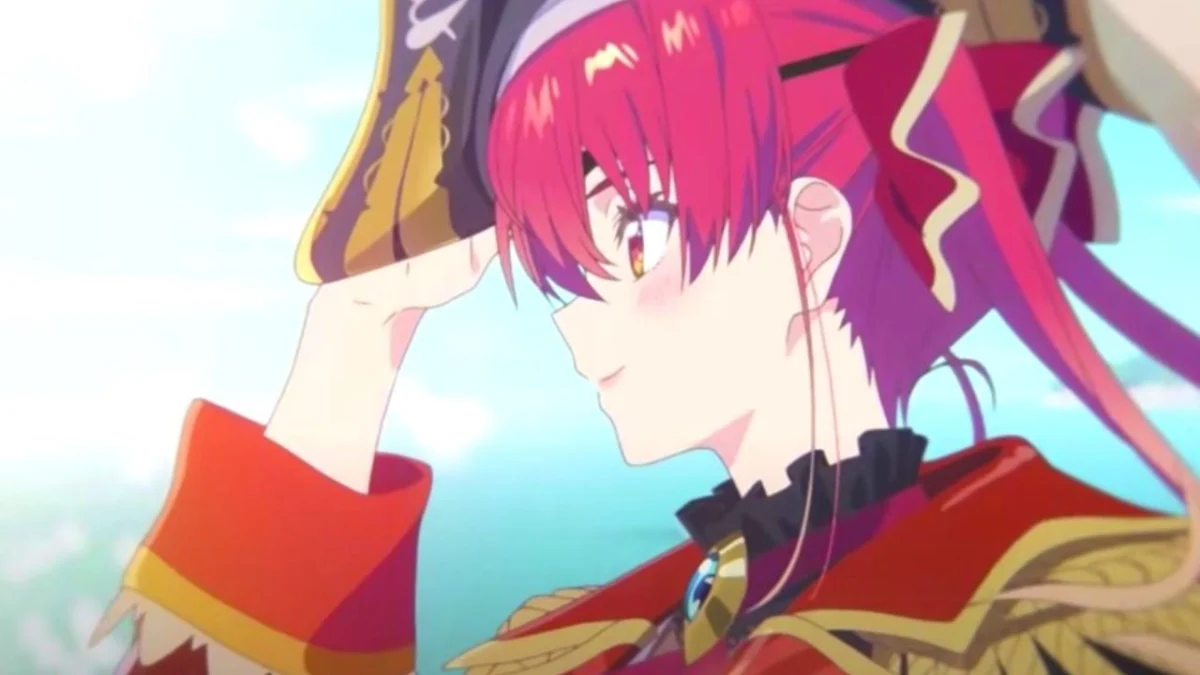
In the rapidly evolving landscape of digital entertainment, a new breed of celebrity has emerged, captivating millions across the globe. These are not flesh-and-blood stars in the traditional sense, but "Virtual YouTubers"—or VTubers—who interact with audiences through meticulously crafted, high-fidelity digital avatars. At the vanguard of this cultural phenomenon stands Hololive Production, a powerhouse agency that is currently pivoting from simple content creation toward the construction of an expansive, interconnected virtual reality ecosystem.
Their latest initiative, dubbed "Hololive Alternative," marks a tectonic shift in how fans engage with digital performers, promising a future where distance and language are no longer barriers to community.
The Genesis of the Virtual Idol
To understand the significance of Hololive’s current trajectory, one must first recognize the mechanics of the VTuber industry. A VTuber is essentially a content creator who utilizes motion-capture technology to project a digital persona onto a live stream. Behind these vibrant, anime-inspired characters are real human performers who provide the voice, personality, and humor that drive the engagement.
Hololive, operated by Cover Corp, has mastered this delicate marriage of technology and performance. Since its inception in December 2019, the agency has grown from a niche experiment into a global entertainment juggernaut. With a roster of over 50 performers—including internationally renowned icons like Takanashi Kiara and Ninomae Ina’nis—Hololive has proven that the "virtual" nature of the medium does not preclude the development of deep, parasocial bonds between creators and their audiences.
"Hololive Alternative": A Chronology of a Virtual Vision
The announcement of "Hololive Alternative" was not merely a PR stunt; it was the unveiling of a long-term roadmap. The project was introduced to the public via an official website and a breathtaking promotional teaser video that showcased a sprawling, fantasy-inspired world far removed from the standard "streaming desk" setup.
The Timeline of Expansion:
- Late 2020: Internal discussions within Cover Corp regarding the unification of the Hololive brand into a singular "multiverse" began to gain traction.
- February 2021: The official launch of the Hololive Alternative website, accompanied by a 30-second teaser PV (Promotional Video) that visually defined the scope of this new project.
- March 2021: The commencement of recruitment drives, inviting fresh talent to participate in the auditions for the agency’s expansion efforts.
- Ongoing (2021–Present): The integration of serialized content, including the announcement of a manga series set within the Alternative universe, serving to flesh out the lore and character backstories.
The project represents a transition from "performers playing games" to "performers inhabiting a world." By providing a narrative framework—a manga series and a shared virtual setting—Hololive is effectively transitioning into a transmedia franchise, similar to established giants like Pokémon or The Idolmaster.
The Philosophy of Connection: CEO Motoaki Tanigo’s Vision
The driving force behind Hololive’s ambition is CEO Motoaki Tanigo, known affectionately by fans as "Yagoo." Tanigo’s philosophy centers on the removal of physical and linguistic friction.
In various interviews and corporate statements, Tanigo has articulated a vision where Hololive performers host interactive shows within a simulated, three-dimensional space. In this environment, fans from Tokyo, New York, and Berlin could theoretically occupy the same digital room, interacting with the performer in real-time. This is not just about streaming; it is about the "Metaverse"—a shared, persistent virtual environment where the content is not just consumed, but experienced.
"We want to build a world that transcends the limitations of geography," the company stated in a recent press release. By creating a unified setting, Hololive hopes to alleviate the loneliness that often accompanies digital consumption, turning passive viewing into an active, communal event.
Supporting Data: The Scale of the Phenomenon
The statistics surrounding Hololive are staggering. The agency currently manages over 50 active VTubers, with many individual channels boasting millions of subscribers.
- Audience Reach: Hololive’s collective viewership spans every continent, with significant density in Japan, Southeast Asia, and North America.
- Engagement Metrics: Unlike traditional influencers, the "superchat" culture—where fans donate to have their messages read live—has created a massive revenue stream for the agency, outperforming many traditional celebrity streams on platforms like Twitch.
- Recruitment Drive: The sheer volume of applicants during the March 2021 audition cycle highlights the cultural gravity of the project. Thousands of hopefuls applied for a handful of spots, proving that the desire to become a "virtual star" is a growing career aspiration among the Gen Z and Millennial demographics.
Implications: A New Frontier for Digital Media
The implications of "Hololive Alternative" are far-reaching, touching on technology, sociology, and copyright law.
1. Technological Innovation
Hololive is pushing the boundaries of real-time rendering. Creating an environment where 50+ avatars can interact in a synchronized 3D space requires significant investment in server infrastructure and motion-tracking latency reduction. This project will likely necessitate advancements in low-latency broadcasting and VR-compatible streaming protocols.
2. Narrative-Driven Engagement
By introducing a manga and a dedicated storyline, Hololive is shifting the focus from the streamer as an individual to the streamer as a character in a larger epic. This "Lore-first" approach encourages fans to participate in fan fiction, art, and theory-crafting, which in turn deepens their loyalty to the brand.
3. Sociological Impact
We are witnessing a fundamental shift in human social interaction. For many, the "virtual" world is no longer a substitute for reality, but an extension of it. Hololive’s ability to create a sense of belonging in a digital space is a study in modern community management. By removing language barriers through potential automated translation or shared non-verbal virtual activities, they are creating a truly globalized fandom.
Challenges and Future Outlook
Despite the optimism, the road ahead is not without obstacles. Scaling a virtual agency to this level involves significant risk. Technical glitches during large-scale virtual concerts, the difficulty of maintaining a cohesive narrative across 50+ distinct personalities, and the ever-present challenge of managing community sentiment in a digital-first environment are substantial hurdles.
However, the team at Cover Corp remains undeterred. With the second round of auditions closed and the manga project underway, the gears of the Alternative machine are turning.
As we look toward the future of entertainment, Hololive stands as a bellwether for what is to come. Whether or not they succeed in building a perfect, seamless virtual world, they have already succeeded in fundamentally altering the way we perceive celebrity, community, and the screen between us. The magic they bring is not just in the high-quality animation or the catchy songs; it is in the bridge they are building between the tangible and the virtual. For the millions of fans watching, the "Alternative" future isn’t coming—it’s already here, and it’s just getting started.


 Jia Lissa
 Muslim