

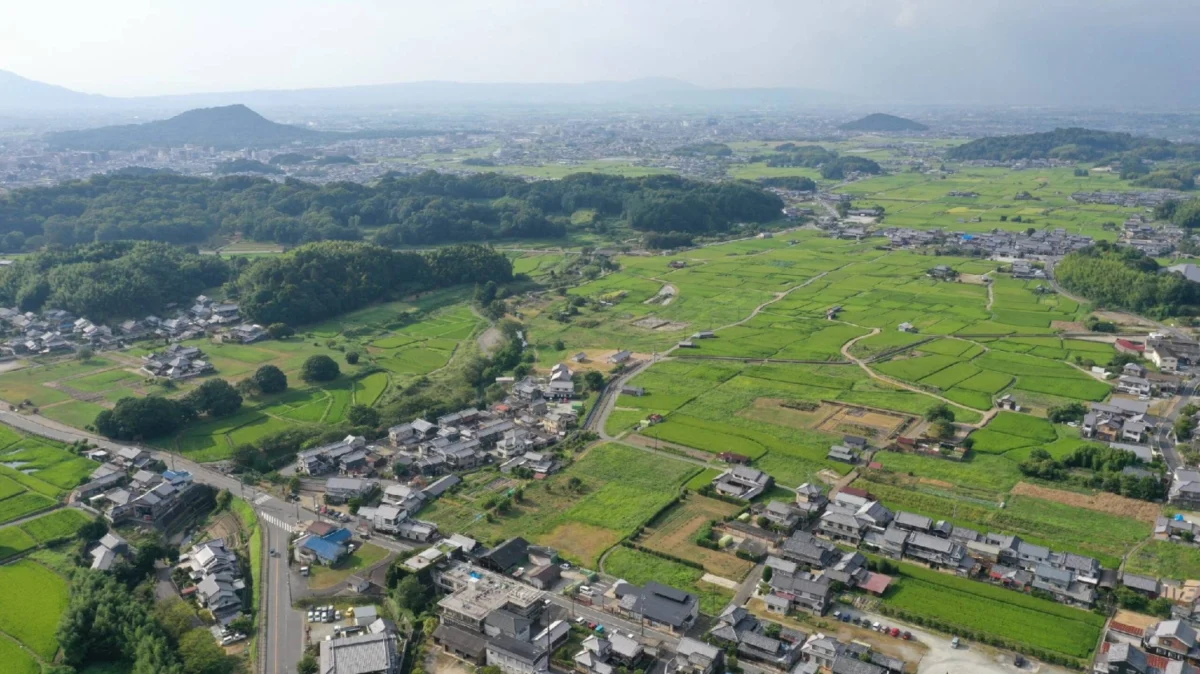
In a significant development for global heritage conservation, a UNESCO advisory panel has officially recommended the inscription of the Asuka-Fujiwara archaeological sites in Japan’s Nara Prefecture onto the prestigious UNESCO World Cultural Heritage list. The announcement, made this past Saturday, marks the culmination of nearly two decades of rigorous academic research, meticulous site preservation, and diplomatic efforts.
The recommendation comes from the International Council on Monuments and Sites (ICOMOS), the professional body that evaluates nominations for the World Heritage Committee. Given that ICOMOS recommendations are historically accepted by the committee, the global community expects the Asuka-Fujiwara sites to be formally recognized during the upcoming session of the World Heritage Committee, scheduled to take place in Busan, South Korea, from July 19 to 29.
If inscribed, this site will become Japan’s 22nd World Cultural Heritage designation and its 27th site overall, further solidifying the nation’s status as a guardian of globally significant historical treasures. This momentum follows the successful 2024 inscription of the Sado Island Gold Mines, highlighting a period of sustained success for Japanese cultural diplomacy.
The Significance of the Asuka-Fujiwara Sites
The Asuka-Fujiwara sites represent a pivotal epoch in Japanese history, spanning the 6th to the 8th centuries. This period, often referred to as the Asuka and Nara periods, was a time of profound transformation during which Japan transitioned from a collection of powerful clans to a centralized, bureaucratic state modeled on the sophisticated systems of continental East Asia, particularly China’s Sui and Tang dynasties.
The proposed World Heritage property encompasses 19 distinct archaeological sites. Among these are the ruins of the Asuka and Fujiwara palaces—the latter being the first true capital city in Japan constructed on a grid-pattern urban layout—and the iconic Takamatsuzuka burial mound, renowned for its vivid, ancient murals.
These sites offer an unparalleled window into the formation of ancient statehood. The transition between these capitals is not merely a geographic shift; it serves as a physical manifestation of the ideological and political shift toward a centralized administrative system that would define Japan for centuries to come.
Chronology: A Decades-Long Journey to Recognition
The path to potential World Heritage status has been far from swift. The journey began in 2007, when the Asuka-Fujiwara sites were first placed on Japan’s tentative list for UNESCO recognition.
The Long Road to Candidacy
- 2007: The sites are formally added to the tentative list, marking the beginning of a long-term commitment to research and conservation.
- 2007–2020: The intervening years were spent demonstrating the "Outstanding Universal Value" (OUV) required by UNESCO. This period involved extensive excavations, the formalization of protective legal frameworks, and the development of management plans to ensure the sites would be preserved for future generations.
- 2020–2024: Local government officials, working in tandem with national experts, submitted four separate draft recommendations to Japan’s Agency for Cultural Affairs. Each submission refined the scope and emphasized the archaeological integrity of the sites.
- January 2025: The Japanese government officially submitted the finalized nomination dossier to UNESCO, triggering the formal evaluation process.
- September 2025: ICOMOS experts conducted an exhaustive on-site evaluation, inspecting the 19 constituent assets to verify the authenticity and conservation status of the ruins.
- May 2026: The ICOMOS advisory panel issues its official recommendation to include the site on the World Heritage list.
Supporting Data: Why the Sites Meet UNESCO Criteria
ICOMOS’s determination that the Asuka-Fujiwara sites merit inscription is based on a strict evaluation of their historical integrity and the adequacy of their conservation.
Archaeological Assets
The 19 constituent sites include:
- Palace Ruins: Fujiwara-kyo, the capital established in 694 AD, remains a primary focus due to its role as the prototype for future Japanese capitals like Heijo-kyo (Nara) and Heian-kyo (Kyoto).
- Religious and Funerary Structures: The Takamatsuzuka tomb, discovered in 1972, contains murals that provide rare insights into the clothing, social hierarchy, and artistic styles of the 7th century.
- Infrastructure: Remains of irrigation systems, ancient roads, and official administrative offices that demonstrate the complexity of the early Japanese state.
Conservation Management
ICOMOS noted that the scope of these assets is "appropriate," acknowledging that the Japanese government has implemented a robust management framework. The agency has successfully balanced the needs of modern infrastructure development in Nara Prefecture with the absolute requirement to preserve the subterranean and surface remains of these ancient capitals.
Official Responses and Future Obligations
Following the ICOMOS recommendation, Japanese government officials have expressed cautious optimism and a commitment to the advisory panel’s guidance. The Agency for Cultural Affairs has signaled its intent to comply with the specific "encouragements" provided by ICOMOS.
Strategic Recommendations from ICOMOS
The advisory panel provided two major directives for the Japanese government to fulfill post-inscription:
- Expanded Designation: The panel urged Japan to continue the process of designating the entirety of the Fujiwara palace ruins as a protected "historic site." Currently, certain segments remain under private or local management; consolidating these under federal historic site status will ensure uniform protection.
- Mural Preservation: The panel emphasized the need for ongoing research into the preservation and restoration of murals removed from burial mounds. These artifacts, particularly those from the Takamatsuzuka and Kitora tombs, are extremely fragile and require specialized climate-controlled environments and advanced chemical conservation techniques.
In response, a spokesperson for the Nara Prefectural government stated, "We view this recommendation as both a validation of our efforts and a call to action. We are fully committed to implementing the panel’s suggestions to ensure that these treasures remain a legacy for all of humanity."
Implications: The Impact of UNESCO Recognition
The inscription of the Asuka-Fujiwara sites will have far-reaching implications, ranging from cultural preservation to local economic stimulation.
Strengthening Cultural Identity
For Japan, the designation serves as a reminder of the country’s deep historical ties to the Asian mainland. It highlights the fluidity of culture, as Japan adopted and adapted administrative, artistic, and religious systems from China and the Korean Peninsula to build its own distinct national identity. By placing these sites on the global stage, Japan invites a wider international dialogue on how ancient civilizations formed their political structures.
Tourism and Local Economy
UNESCO World Heritage status is widely recognized as a catalyst for sustainable tourism. For Nara Prefecture, which already boasts significant tourism, the addition of these sites to the World Heritage roster is expected to increase international visitor numbers. This brings both economic opportunities and the challenge of managing higher visitor volumes. Local authorities have already begun drafting "visitor management plans" to ensure that the increased foot traffic does not degrade the archaeological sites.
A Global Benchmark for Site Management
The successful nomination process of the Asuka-Fujiwara sites sets a standard for how "archaeological landscapes"—sites where the remains are often largely underground—can be preserved. Many World Heritage sites are monumental buildings; the Asuka-Fujiwara nomination highlights the importance of protecting the space and layout of history, rather than just the physical structures that remain above ground.
Conclusion
As the global community prepares for the Busan meeting in July, the recommendation for the Asuka-Fujiwara sites stands as a testament to the power of long-term cultural planning. By recognizing these sites, UNESCO does more than just honor a region of Japan; it honors the complex, multi-layered history of human governance and artistic achievement in East Asia.
Should the World Heritage Committee formally adopt the recommendation, Japan will be tasked with the significant responsibility of protecting these delicate vestiges of the 6th to 8th centuries. With the support of international experts and the dedication of local and national agencies, the Asuka-Fujiwara sites are set to become a permanent, protected fixture of the world’s cultural landscape, ensuring that the story of Japan’s emergence as a centralized state is preserved for generations to come.











