

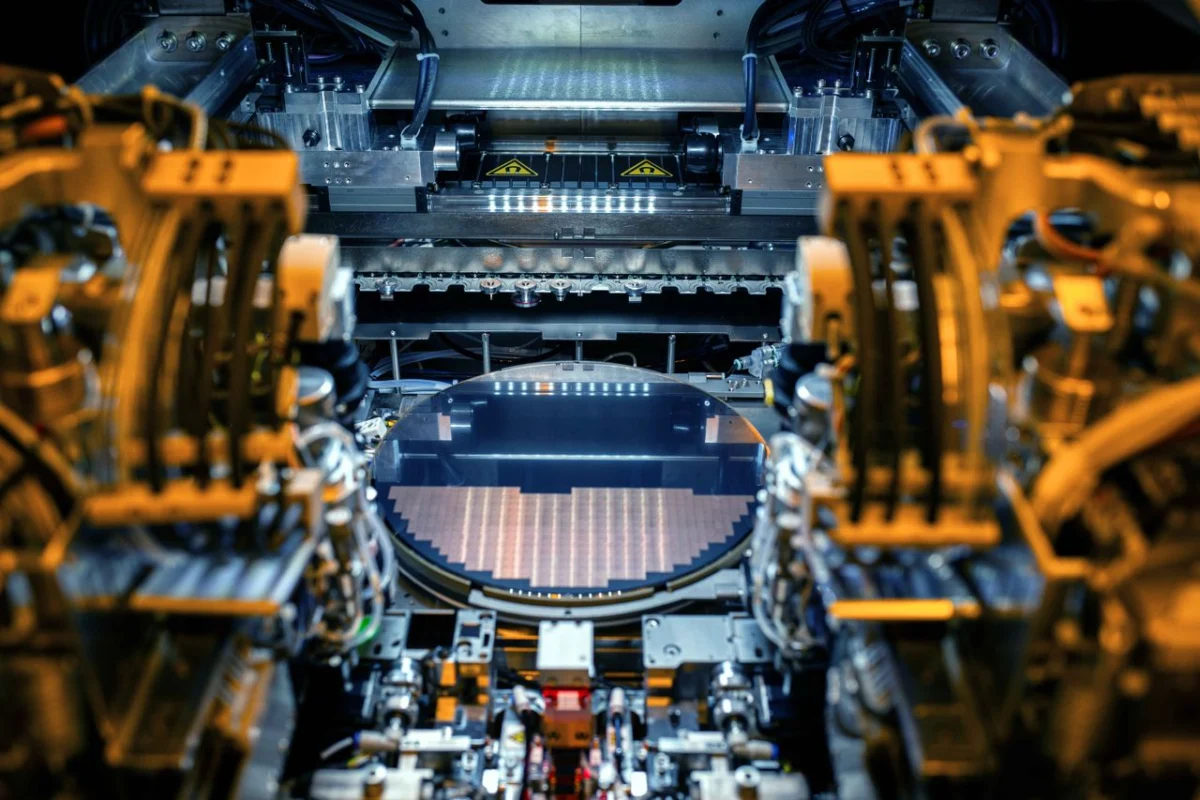
In a seismic shift for the global semiconductor landscape, Apple and Intel have reportedly reached a preliminary agreement for the manufacturing of Apple’s custom processors at Intel’s state-of-the-art fabrication facilities. This development, first reported by The Wall Street Journal, marks a historic rapprochement between two tech giants that have maintained a complex, often adversarial relationship for decades. The deal signals Apple’s aggressive intent to reduce its near-total reliance on the Taiwan Semiconductor Manufacturing Company (TSMC) and highlights Intel’s desperate yet ambitious pivot toward becoming a premier foundry for third-party chip designers.
The Core Facts: A New Chapter in Silicon Diplomacy
The preliminary agreement, reached after more than a year of clandestine negotiations, represents a cornerstone of Apple’s broader supply chain diversification strategy. While specific technical details regarding which product lines—ranging from the A-series chips in iPhones to the high-performance M-series silicon in MacBooks—will be manufactured by Intel remain under wraps, the implications are profound.
For Apple, the move is rooted in risk mitigation. As geopolitical tensions in the Taiwan Strait remain a persistent concern for Western tech firms, and as the global demand for advanced nodes continues to outstrip supply, Cupertino is looking to establish a "Plan B" that is geographically diversified. Intel, currently undergoing a massive structural overhaul under CEO Pat Gelsinger, views the contract as a "trophy" validation of its Intel Foundry Services (IFS) division, proving that its bleeding-edge manufacturing nodes can compete with the world’s best.
Chronology: A Year of Negotiations
The road to this preliminary deal was paved with both technical hurdles and strategic skepticism.
Phase 1: The Seeds of Diversification (Early 2023)
Following the erratic supply chain disruptions of the post-pandemic era, Apple executives began evaluating the feasibility of U.S.-based manufacturing. Reports emerged early last year suggesting that Apple had initiated high-level talks with both Intel and Samsung. At the time, industry analysts were skeptical, citing the significant differences in architectural design and process technology between TSMC’s ecosystem and Intel’s proprietary methods.
Phase 2: The Deep-Dive Technical Review (Mid-2023)
Throughout the middle of 2023, engineering teams from both companies engaged in deep-dive feasibility studies. The primary challenge was reconciling Apple’s highly optimized, ARM-based architecture with Intel’s manufacturing processes. This period saw a significant increase in the exchange of proprietary design kits (PDKs) and confidential manufacturing data, as Apple sought to ensure that Intel’s 18A and 20A processes could meet the stringent power-efficiency and performance thresholds required for Apple silicon.
Phase 3: Finalizing the Framework (Late 2023 – Early 2024)
In the last few months, negotiations moved from technical assessment to contractual finalization. Both parties worked to define quality control benchmarks, capacity allocation, and pricing models. The preliminary agreement serves as the foundational structure, allowing both companies to move toward pilot production runs and facility certification.
Supporting Data: Why the Shift Was Inevitable
To understand the necessity of this partnership, one must look at the concentration of the semiconductor industry. Currently, TSMC commands over 60% of the global foundry market and, more critically, produces over 90% of the world’s most advanced sub-7nm chips.
The Dependency Risk
Apple is arguably TSMC’s largest client, accounting for a substantial percentage of its annual revenue. While this provides Apple with priority access to the latest nodes, it creates a "single point of failure." Any regional conflict, natural disaster, or logistical bottleneck in Taiwan could effectively halt Apple’s ability to ship new iPhones and Macs.
Intel’s Foundry Ambition
Intel’s financial performance over the last two years has been characterized by heavy capital expenditure (CAPEX) as the company builds out its "IDM 2.0" strategy. Intel is investing billions in new "megafabs" in Ohio, Arizona, and Germany. To justify these massive investments, Intel needs "anchor tenants." Securing Apple—the industry’s most demanding and high-volume customer—acts as the ultimate endorsement for Intel’s foundry services, potentially attracting other major fabless players like Nvidia or Qualcomm.
Official Responses and Industry Sentiment
As of this writing, both Apple and Intel have maintained a "no comment" stance regarding the specifics of the Wall Street Journal report. However, industry insiders and analysts have been vocal about the implications.
"This is not just a business deal; it is a structural realignment of the tech industry," noted one lead semiconductor analyst at a top-tier investment bank. "Intel is essentially telling the world that they are no longer just a chip designer, but a service provider. If they can make a chip for Apple, they can make a chip for anyone."
From the Apple camp, the silence is strategic. The company rarely discusses its supply chain publicly, preferring to keep its vendors in competition to maintain leverage on pricing and quality. However, Apple’s recent initiatives—including the expansion of its sourcing of silicon from US-based facilities—suggest that this deal is part of a multi-year road map to ensure the resilience of its hardware ecosystem.
Implications: The Road Ahead
The impact of this partnership will be felt across the entire tech ecosystem.
1. The Geopolitical Buffer
By manufacturing domestically in the United States, Apple is aligning itself with the U.S. government’s push to bring semiconductor production back to American soil. This potentially unlocks federal incentives and tax credits under the CHIPS and Science Act, lowering the total cost of production and mitigating risks associated with reliance on overseas manufacturing hubs.
2. The Pressure on TSMC
While TSMC remains the undisputed leader in process technology and yield, the loss of Apple’s total volume—or even a significant portion of it—to Intel will force TSMC to rethink its global strategy. We may see TSMC accelerate its expansion in Arizona to match Intel’s local production capabilities, leading to a "foundry arms race" that benefits the entire industry.
3. The Technical Challenge for Intel
For Intel, this is a "do or die" moment. Successfully manufacturing Apple’s complex silicon requires a level of precision and customer service that Intel has historically struggled to provide to third parties. If the first generation of Intel-manufactured Apple chips faces yield issues or power-efficiency gaps compared to their TSMC-made counterparts, the partnership could be short-lived. Conversely, if Intel succeeds, it will cement its position as the primary alternative to TSMC for the next decade.
4. Impact on Consumer Electronics
Consumers are unlikely to see a change in the price of their devices, but they will benefit from a more stable supply chain. The days of "chip-shortage-induced" product delays—like those seen during the pandemic—could be mitigated as Apple leverages multiple manufacturing sources to balance global demand.
Conclusion: A New Era of Collaboration
The preliminary agreement between Apple and Intel represents a turning point in the history of silicon. It marks the end of an era where Apple was solely dependent on Asian fabrication and the beginning of a period where Intel seeks to redefine its existence through foundry services.
While the deal is still in its preliminary stages and full-scale production remains a goal for the future, the signal is clear: the semiconductor landscape is moving toward regionalization, diversification, and intense competition. For Apple, it is an insurance policy. For Intel, it is the ultimate test of its technological recovery. As the two companies move toward finalization, the global tech market will be watching closely, waiting to see if this marriage of convenience can yield the next generation of high-performance computing power.
The successful execution of this deal will not only define the next decade for these two companies but will also serve as a barometer for the viability of the U.S. domestic semiconductor resurgence. For now, the industry waits for the first pilot production runs, which will likely serve as the litmus test for a partnership that, if successful, could change the world of computing forever.












No comments yet. Be the first to join the conversation!