Nana
Nana
For over a decade, a pervasive narrative has shadowed Apple’s software update cycle. With every major iteration of iOS, a chorus of users would inevitably emerge, claiming their devices had suddenly become sluggish, battery-drained, or buggy. This phenomenon—often derisively labeled "planned obsolescence"—suggested that Apple intentionally throttled older hardware to nudge users toward the latest flagship models. While Apple has consistently denied these claims, citing the necessity of hardware-demanding features, the public suspicion never truly evaporated.
However, with the arrival of the iOS 27 developer beta, that narrative is facing its most significant challenge to date. For the first time in years, the anecdotal consensus among testers isn’t one of disappointment, but of unexpected rejuvenation. Users running the beta on legacy hardware are reporting that their devices don’t just feel stable—they feel faster.
The Core Transformation: A Shift in Engineering Philosophy
At the heart of the iOS 27 update lies a fundamental shift in Apple’s software engineering strategy. Rather than prioritizing feature bloat or resource-heavy UI transitions, Apple has reportedly overhauled the underpinnings of the operating system. According to preliminary technical documentation provided by the company, the speed gains stem from a ground-up reconstruction of how the system manages CPU scheduling, memory allocation, and background process management.
In previous iterations, background tasks often competed aggressively for limited hardware resources, leading to the "stutter" frequently experienced on older chips. iOS 27 introduces a more granular, intelligent energy distribution model. By prioritizing active foreground tasks and optimizing how the system offloads background synchronization, older A-series chips—which previously struggled under the weight of modern overhead—are now freed to operate with greater efficiency. Essentially, the phone is no longer being forced to "think" about unnecessary processes while the user is trying to navigate the interface.
Chronology of the "Slowdown" Controversy
To understand why iOS 27 feels like such a tectonic shift, one must look at the history of the "planned obsolescence" stigma.
- 2017: The "Batterygate" Catalyst: The controversy moved from rumor to reality when it was discovered that Apple was indeed throttling performance on older iPhones. Apple’s defense was that it was managing power peaks to prevent unexpected shutdowns in devices with degraded batteries. The resulting backlash led to a $600 million class-action settlement and a permanent change in how Apple displays battery health.
- 2018–2023: The Feature-Heavy Era: During this period, Apple prioritized AI-driven photography, complex widgets, and high-fidelity augmented reality (AR) features. These updates, while innovative, were undeniably heavy on silicon, often causing older models to heat up and throttle as they struggled to keep pace.
- 2024–2025: The Plateau: As hardware innovation began to saturate, users started holding onto their devices for longer—up to four or five years on average. This created a tension between Apple’s desire to sell new hardware and the reality of a global consumer base that was increasingly reluctant to upgrade.
- 2026: The iOS 27 Pivot: With the release of the iOS 27 beta, Apple appears to have recognized that the longevity of its installed base is a strategic asset rather than a liability. By focusing on optimization over raw feature count, the company is effectively shifting its business model toward ecosystem retention.
Quantifying the Gains: Is It Just a Placebo?
Apple’s official claims regarding iOS 27 are ambitious. The company reports that app launch times have improved by up to 30%, while the Photos app—notoriously resource-heavy due to on-device indexing—is loading 70% faster. Perhaps most impressively, AirDrop, which has historically suffered from handshaking latency, is seeing speed increases of up to 80%.
While industry analysts typically approach these "percentage improvement" claims with skepticism, the real-world performance on older devices—specifically the iPhone 11 through the iPhone 15 series—is telling a different story.
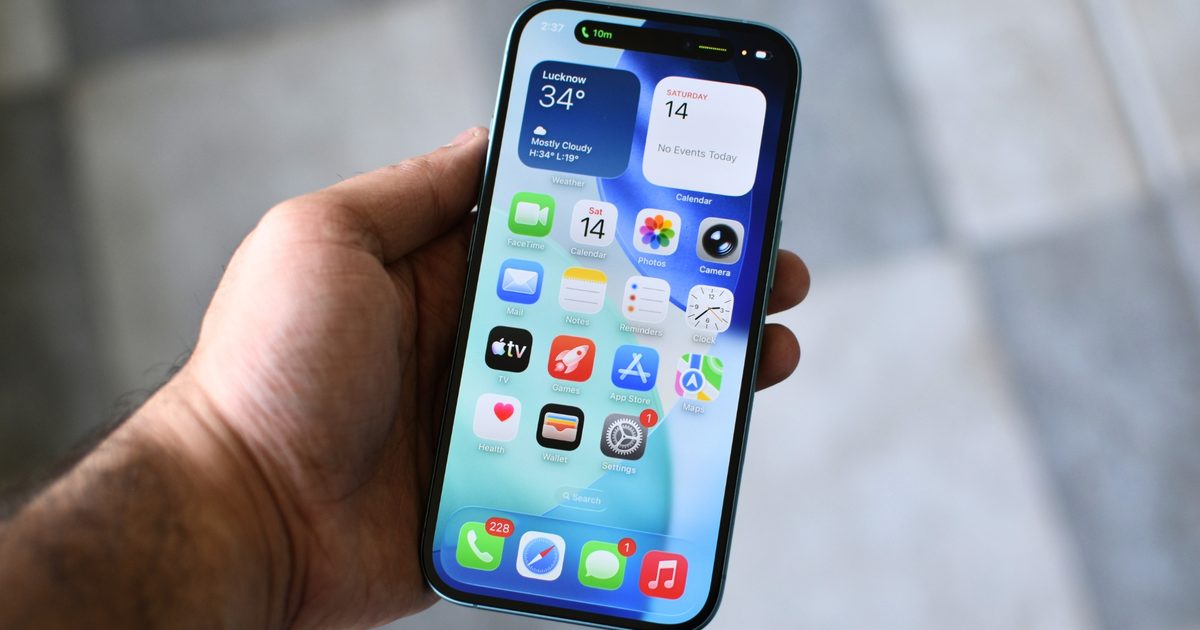
My own experience testing the beta on an iPhone Air (an older model) aligns with these claims. The subjective feeling of "snappiness" is undeniable. Transitions are fluid, and the lag that typically plagues the multitasking switcher has been largely mitigated. Furthermore, the improvements to AirDrop are not just measurable in lab settings; they are palpable in daily use. Transferring large 4K video files, which previously felt like a chore, now occurs with a speed that rivals direct cable connections.

Supporting Data and Technical Context
The efficiency gains in iOS 27 are not magic; they are the result of better memory management. Older iPhones have less RAM, and in previous versions of iOS, the system was quick to "kill" background apps, forcing a reload every time the user switched back. iOS 27 utilizes a more advanced compressed memory algorithm, allowing the system to keep more processes in a "suspended" state without consuming the same level of CPU cycles.
Furthermore, Apple has implemented a "Dynamic Thermal Management" profile for older devices. Instead of aggressive, blunt-force throttling when a phone gets warm, the OS now proactively adjusts task priority to maintain a consistent frame rate. This ensures that even if a phone is under a heavy load, it stays usable, rather than hitting a performance cliff.
Official Responses and Strategic Implications
Apple has remained relatively quiet regarding the "planned obsolescence" aspect of these updates, focusing instead on the umbrella term "Performance Optimization." However, in a recent developer conference keynote, a senior Apple executive hinted that the company is moving toward a "modular update architecture." This suggests that in the future, critical system-level optimizations will be decoupled from the core feature updates, allowing Apple to push performance fixes to older devices without requiring them to run the full, resource-heavy version of the latest OS.
The implications for the smartphone industry are profound. If Apple proves that a five-year-old phone can perform as well as a new one through software alone, it sets a new standard for the industry. It forces competitors to justify their own upgrade cycles and forces consumers to reconsider the necessity of annual hardware refreshes.

Conclusion: A New Era of Software Maturity
The iOS 27 update is arguably the most important software release from Apple in the last decade, not because of what it adds, but because of what it stabilizes. It marks a transition from a company focused on "what’s next" to a company focused on "how long can this last."
For the millions of users who felt they were on an invisible countdown to an upgrade, iOS 27 offers a reprieve. It is a tacit acknowledgement that a phone should be a long-term investment, not a disposable commodity. If Apple continues this trajectory—prioritizing efficiency and maintenance alongside new features—the whispers of planned obsolescence will likely fade, replaced by a new reality where an older iPhone isn’t a liability, but a reliable, high-performance tool.
We have always argued for a "maintenance year" in the software cycle—a period where the focus shifts from new bells and whistles to hardening the foundation. With iOS 27, Apple has finally delivered. The result is a device that feels like it’s aging in reverse, proving that with the right engineering, the life of a smartphone is limited only by its battery, not its software.


 Asro
Asro