Nana
Nana
After years of silence that left fans wondering if the project had been relegated to the horror graveyard, the Creepshow video game adaptation is finally clawing its way back to the surface. Following a lengthy period of development uncertainty, a newly launched Steam page has confirmed that the title, based on Shudder’s acclaimed horror anthology series, is officially slated for an August 2026 release.
Developed by PHL Collective and published by DreadXP—the team behind the indie horror phenomenon The Mortuary Assistant—this point-and-click adventure promises to capture the quintessential spirit of the franchise: a blend of campy dread, comic-book aesthetics, and macabre humor.
The Main Facts: What We Know About the Creepshow Game
The Creepshow video game is designed as a point-and-click adventure, a genre that naturally lends itself to the narrative-heavy, mystery-driven storytelling of the anthology series. According to the developers, the narrative centers on a protagonist named Danny and his circle of friends. What begins as an innocuous, perhaps even mundane, bad day at the local mall quickly devolves into a descent into the supernatural.
The core plot revolves around Danny’s quest to uncover the truth regarding his father’s past. This search leads the group to "The Reader," a mysterious, potentially malevolent fortune-teller who acts as the bridge between reality and the "treacherous tales" that define the Creepshow brand.
Key features announced for the title include:
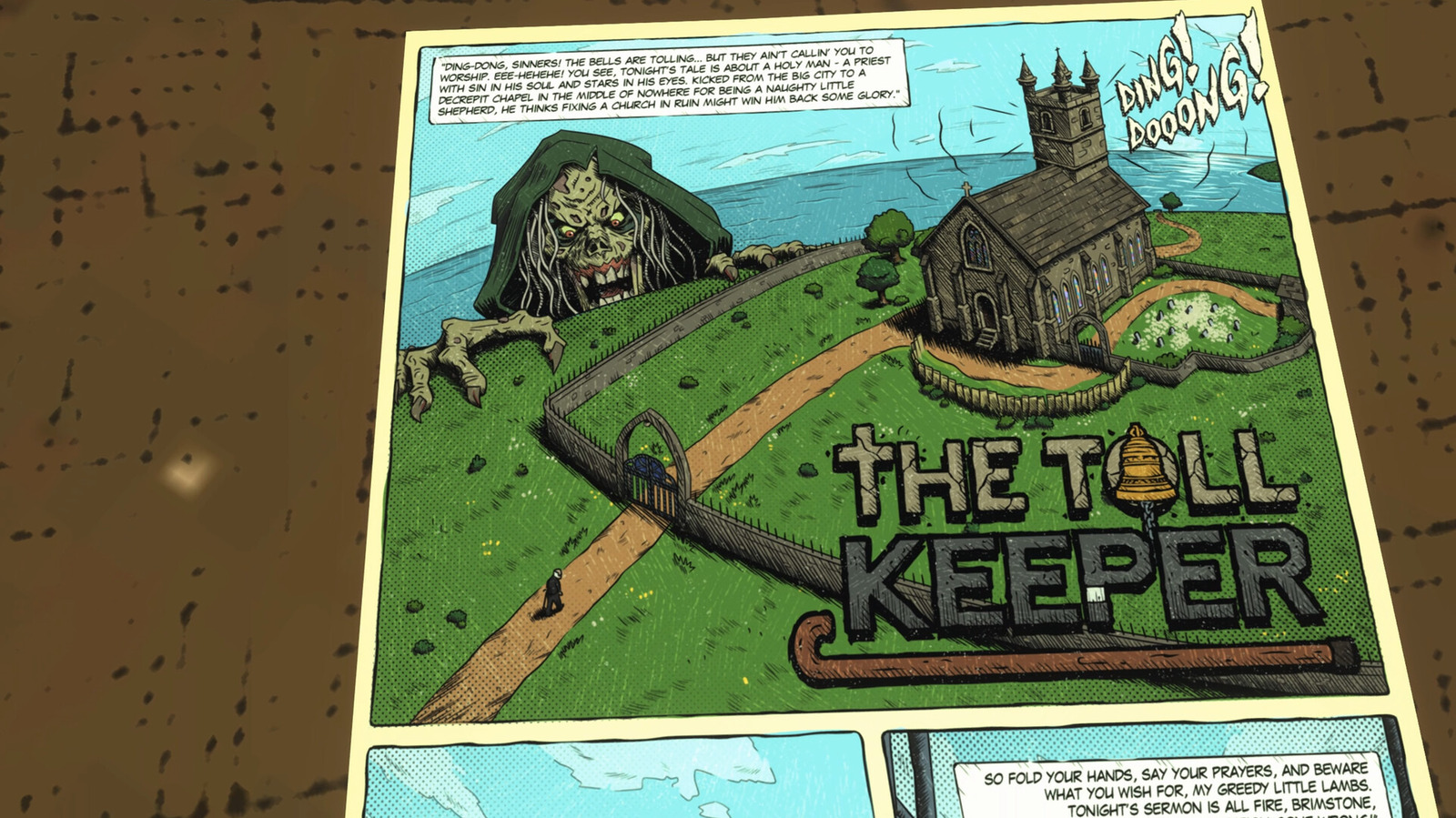
- Pulp-Inspired Visuals: A distinct artistic style that mirrors the comic-book aesthetic of the original 1982 George A. Romero and Stephen King film.
- Genre Hybridity: The gameplay will integrate traditional point-and-click investigation mechanics with a series of horror-themed mini-games.
- Narrative Stakes: The developers have promised multiple endings, suggesting that player choices will dictate the survival—or demise—of Danny and his companions.
- Atmospheric Tone: Balancing dark humor with genuine, skin-crawling horror, the game aims to replicate the "EC Comics" style of storytelling that made the original anthology a cult classic.
A Chronology of Development: From Tease to Release
The road to Creepshow’s digital debut has been far from straightforward. The project was initially teased several years ago, sparking immediate excitement within the horror gaming community. However, following the initial announcement, the project entered a prolonged period of radio silence.
In the fast-paced world of indie game development, extended silences are often viewed as a "death knell" for a title. Speculation began to mount that the project had been quietly canceled or indefinitely shelved due to the logistical complexities of licensing the Creepshow IP, which is owned by Shudder/AMC Networks.
For over a year, social media channels and gaming forums were filled with questions about the game’s status. The breakthrough finally occurred recently when the official Steam store page went live. This sudden reactivation of the project signaled a new, confident phase in development. By establishing a concrete release window—August 2026—the developers have signaled that the game has moved past the conceptual and early production phases and is now firmly in the polishing and optimization cycle.
Supporting Data: Why Point-and-Click?
The choice of a point-and-click adventure for the Creepshow franchise is a calculated design decision that aligns with the history of horror gaming. In the 1990s and early 2000s, horror titles frequently utilized point-and-click mechanics to emphasize atmosphere over combat.
DreadXP, the publisher, has a track record of elevating unique, narrative-driven horror games. By partnering with PHL Collective, they are positioning Creepshow to appeal to a specific subset of the horror market: those who value environmental storytelling and character development over twitch-based action.
The game’s reliance on "comic-book environments" suggests a stylized approach that will likely age better than attempts at hyper-realism. By leaning into the source material’s roots—the iconic Creepshow comic book that appears in the films—the developers are creating a cohesive experience that functions as a love letter to the original anthology.
Furthermore, the integration of "horror mini-games" serves to break up the pace of the point-and-click exploration, ensuring that players remain engaged. These mini-games likely serve as high-tension spikes, punctuating the slower, investigative gameplay with moments of immediate, visceral threat.
Official Responses and Industry Outlook
While specific statements from the creative directors have been sparse, the industry response has been largely positive. The partnership with DreadXP is viewed as a major vote of confidence. DreadXP has spent the last few years curating a library of high-quality horror titles, and their involvement suggests that Creepshow will receive the level of marketing and community support necessary to succeed in a crowded PC market.
The developers have kept their cards close to their chest regarding console ports. Currently, the project is strictly identified as a PC title. This is a common strategy for smaller studios, as it allows them to focus their QA (Quality Assurance) resources on a single platform before potentially expanding to PlayStation, Xbox, or Nintendo Switch post-launch.
Industry analysts suggest that if Creepshow performs well, it could open the door for a revival of the "anthology game" format, where episodic content could be released to mimic the structure of the Creepshow TV series.
Implications: The Future of Horror IP Adaptations
The return of the Creepshow game has significant implications for how legacy horror brands interact with the gaming industry.
1. The Power of Nostalgia
The Creepshow brand carries significant cultural weight. By respecting the 1980s aesthetic, the developers are tapping into a lucrative vein of nostalgia that has driven the success of other recent horror revivals. If the game succeeds, it confirms that horror fans are hungry for titles that feel like extensions of their favorite film franchises rather than generic shooters with a licensed skin.
2. The Indie-Anthology Synergy
Horror anthologies are notoriously difficult to adapt into long-form video games because they rely on short, punchy endings. By choosing to center the game on a singular, overarching mystery that incorporates these "tales" as thematic elements, PHL Collective is solving a major structural hurdle. This could serve as a blueprint for other horror anthologies, such as Tales from the Crypt or Black Mirror, looking to enter the gaming space.
3. The "Bad Day at the Mall" Trope
The narrative hook—a bad day at the mall—is a classic trope that resonates with the consumerist critiques often found in George A. Romero’s work. By grounding the game in this setting, the developers are paying homage to the master of horror himself, while simultaneously providing a familiar, enclosed environment that is perfect for building tension and horror.
Final Thoughts: The Road to August 2026
As the release window of August 2026 approaches, the gaming community will be watching closely to see if Creepshow can deliver on its promise. The combination of a strong publisher, a classic IP, and a gameplay style that respects the source material is a potent recipe for success.
For now, the project stands as a testament to persistence. In an industry where games are frequently abandoned, the "resurrection" of the Creepshow project is a victory for fans of the anthology series. Whether the final product will haunt our nightmares or simply fade into the background remains to be seen, but for the first time in years, the Creepshow game is officially a reality.
Prepare your flashlights and keep your eyes peeled; the Reader is waiting, and the stories are about to begin.


 Suro Senen
 Jia Lissa