Nila Kartika Wati
For over a decade, the Final Fantasy VII Remake project has stood as the titan of modern role-playing games. Spearheaded by Square Enix, the ambitious endeavor to modernize the 1997 classic required a monumental split into three distinct titles to do justice to the source material’s depth and scale. As the trilogy approaches its climactic conclusion with the upcoming Final Fantasy VII: Revelation, scheduled for release in Spring 2027, the industry and the global fanbase have turned their gaze toward the future.
Central to this discourse is director Naoki Hamaguchi. Having navigated the immense pressure of reinterpreting one of the most beloved titles in gaming history, Hamaguchi has become the subject of intense speculation regarding his next move. Chief among the rumors is the potential for a Final Fantasy VI remake—a title often cited as the pinnacle of the 2D era and a holy grail for fans hoping for a modern, high-fidelity reimagining. However, in recent interviews, Hamaguchi has moved to temper these expectations, signaling a desire for creative evolution over further retracing the past.
The Weight of Expectation: A Decade of Remaking a Legend
The Final Fantasy VII Remake project was never merely a remaster; it was an exercise in reconstruction. By breaking the original game into a trilogy, Square Enix allowed for the expansion of Midgar and the broader world of Gaia, adding layers of narrative nuance, character development, and mechanical complexity that were limited by the technological constraints of the original PlayStation.
However, the endeavor has been a marathon. Hamaguchi and his team have spent the better part of ten years living, breathing, and iterating on the world of Cloud Strife and Sephiroth. This level of commitment is rare in the AAA industry, where teams often rotate between disparate projects. Following the conclusion of Revelation in 2027, the director is understandably focused on personal and professional horizons that extend beyond the legacy of Final Fantasy VII.
The "FF6 Remake" Discourse: An Official Stance
The conversation surrounding a potential Final Fantasy VI remake has reached a fever pitch in recent years. With Final Fantasy VI featuring an expansive, ensemble cast—arguably more diverse and sprawling than that of Final Fantasy VII—and a world that undergoes a cataclysmic shift midway through the narrative, the technical and creative hurdles of a full-scale 3D remake are immense.
In a recent interview with Game Informer, Hamaguchi addressed the persistent calls from the community for him to lead a potential Final Fantasy VI reimagining. While he acknowledges the fervor of the fanbase, he is quick to distance himself from the project.
"I do see a lot of fans and community asking me to take on the helm for an FF6 remake," Hamaguchi noted, while Square Enix representatives emphasized that such a project remains entirely hypothetical. "So, I’m seeing a lot of that floating online, but, you know, a Final Fantasy 6 Remake or any other remake, it could be me, or it could be someone else. Personally, I think that it might be in better hands if it went to another creator in Square Enix."
This sentiment was echoed in a conversation with Bloomberg, where Hamaguchi was even more direct: "It’s not going to be a remake!" This emphatic denial serves as a clear signal that, regardless of whether Square Enix eventually greenlights a Final Fantasy VI project, Hamaguchi’s personal vision for his post-2027 career does not involve returning to the well of legacy titles.
Chronology of a Modern Epic
To understand why Hamaguchi is ready to move on, one must look at the timeline of the Final Fantasy VII project:
- 2015: Square Enix officially announces the Final Fantasy VII Remake at E3, sending shockwaves through the industry.
- 2020: The first installment, Final Fantasy VII Remake, launches to critical acclaim, successfully expanding the opening act of the original story.
- 2024: The second entry, Final Fantasy VII Rebirth, expands the scope significantly, moving into the open world and raising the stakes for the trilogy’s finale.
- 2026: Leading up to the final release, director Naoki Hamaguchi begins to discuss the end of his tenure on the series, sparking public speculation about his future.
- 2027 (Spring): The anticipated release of Final Fantasy VII: Revelation, marking the conclusion of the decade-long journey.
This timeline highlights the sheer endurance required to shepherd a project of this magnitude. Hamaguchi has essentially dedicated his prime career years to ensuring the "perfect state" of this series, a factor that understandably influences his desire for a clean slate.
The Creative Toll and the Need for Originality
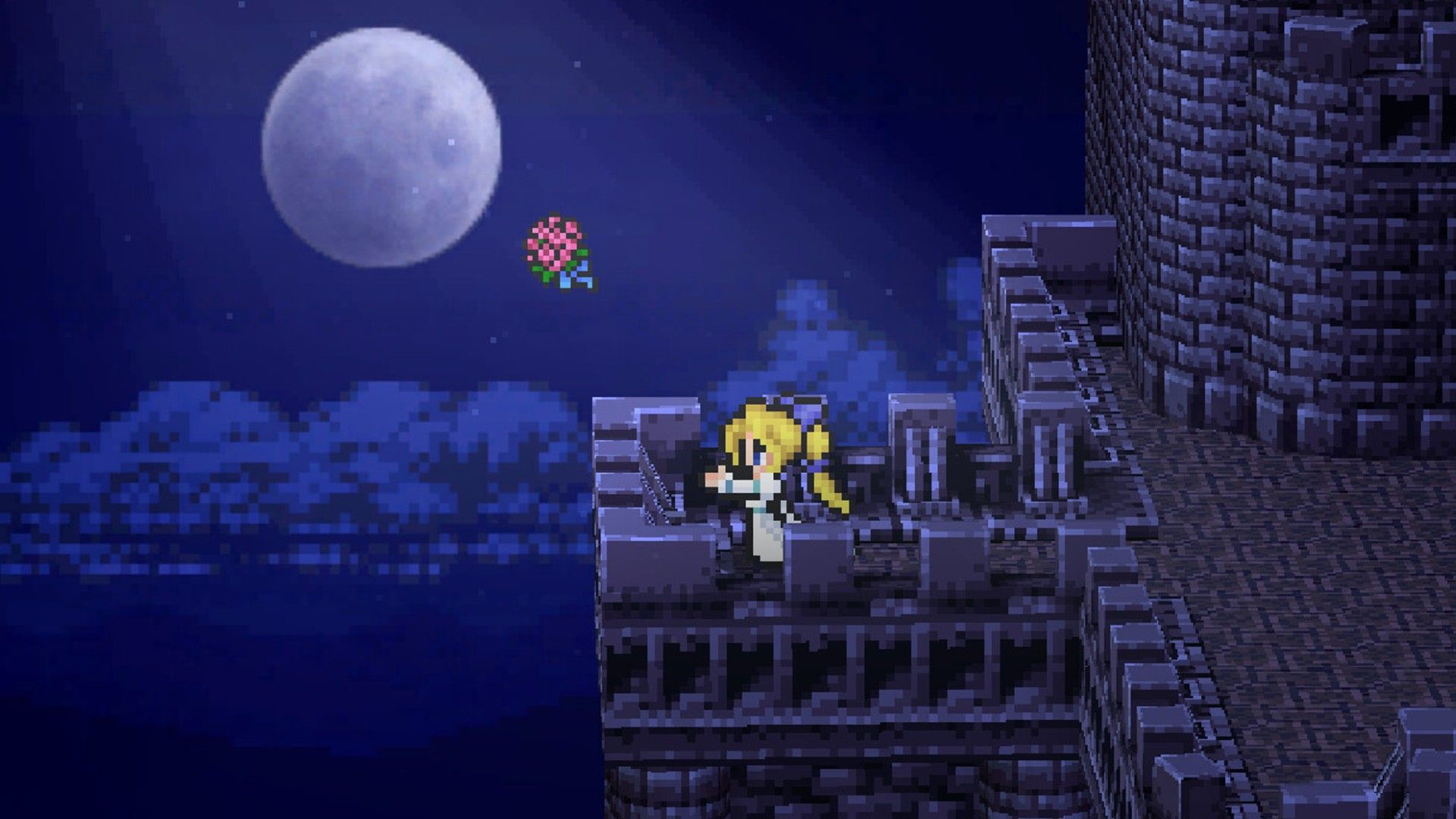
Creating a remake of Final Fantasy VI would arguably be a more daunting task than the VII trilogy. Final Fantasy VI is celebrated for its non-linear narrative, its vast roster of playable characters—each with their own unique motivations—and an overworld that is drastically altered by the game’s central antagonist, Kefka.
Translating the intricate pixel-art charm and specific tone of Final Fantasy VI into a modern 3D engine would require an enormous amount of creative risk. Hamaguchi’s reluctance is not necessarily a slight against the game, but rather an acknowledgment of the exhausting nature of remaking classics.
"Right in this moment, I’m fully focused on completing FF7 Revelation and ensuring we’re delivering the FF7 Remake series in a perfect state, so that’s where I’m right now," he stated. For a creator of his stature, the need to build something from the ground up—something that is not bound by the pre-existing expectations of a 30-year-old script—is a powerful motivator.
Implications for the Future of Square Enix
What does this mean for Square Enix’s broader strategy? The publisher has long relied on its back catalog to drive sales and excitement. However, if top-tier directors like Hamaguchi are looking to pivot toward original intellectual properties (IP), the company may need to rethink how it handles its legacy franchises.
Hamaguchi has expressed a clear interest in continuing to work within the JRPG genre, whether that involves a new Final Fantasy title or an entirely different IP. His confidence in his next steps suggests that his creative reservoir is far from empty.
For the fans, the message is clear: do not hold your breath for a "Hamaguchi-led Final Fantasy VI." While the game remains a perennial favorite for a remake, the man who brought Final Fantasy VII back to life is looking toward the future. This shift represents a broader trend in the industry where veteran developers are increasingly seeking to innovate rather than iterate.
Conclusion: A New Chapter
As the industry prepares for the final curtain call of the Final Fantasy VII project in 2027, the focus shifts from what was to what could be. Naoki Hamaguchi’s tenure on the Remake series will undoubtedly be remembered as a high-water mark for modern JRPGs.
While the allure of Final Fantasy VI in a modern engine remains a siren song for many, it is perhaps healthier for the medium to see a director of Hamaguchi’s caliber turn his talents toward the unknown. Whether his next project turns out to be a new entry in the Final Fantasy lineage or a completely fresh adventure, the industry will be watching. The era of the "Remake" may define his past, but it is clear that Hamaguchi is determined to ensure it does not define his entire career.
For now, the focus remains on Revelation. The stage is set, the stakes have never been higher, and the journey toward the conclusion of one of gaming’s most important stories is nearing its end. After that, the horizon is open, and for Hamaguchi, that is exactly how it should be.


 Sagoh
Sagoh
 Nana Wu