Asep Darmawan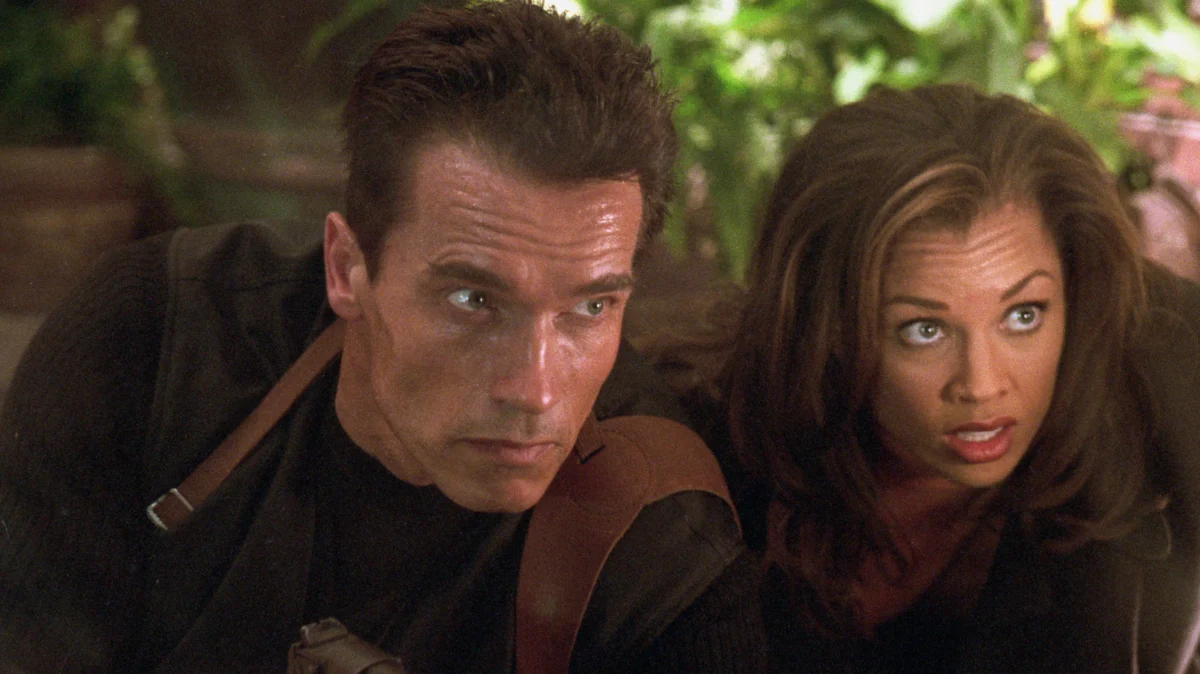
In the landscape of 1990s action cinema, few sequences possess the visceral, white-knuckle intensity of the mid-air parachute jump in Chuck Russell’s 1996 hit, Eraser. While contemporary blockbusters rely heavily on computer-generated imagery (CGI) to simulate gravity-defying feats, Eraser stands as a monument to the era of practical effects—a time when "real-life jeopardy" wasn’t just a marketing buzzword, but a daily requirement for the stunt team.
Recent exclusive insights from director Chuck Russell reveal that the film’s iconic Boeing 747 sequence was not merely a triumph of choreography, but a harrowing exercise in genuine risk. By blending the physical athleticism of Arnold Schwarzenegger with the expertise of elite skydivers, the production created a piece of cinematic history that remains unmatched nearly three decades later.
The Core Conflict: A Blueprint for Practical Perfection
The plot of Eraser follows U.S. Marshal John Krueger (Schwarzenegger), an operative who "erases" the identities of witnesses in high-stakes cases. The film’s centerpiece involves a frantic escape from a commercial airliner, where Krueger must bail out, intercept a falling parachute, and avoid being shredded by the plane’s engines—all while plummeting thousands of feet toward the earth.
For director Chuck Russell, the priority was authenticity. "We didn’t want the audience to feel like they were watching a cartoon," Russell noted. To achieve this, the team eschewed digital doubles, opting instead to place world-class stunt performers in legitimate, high-altitude danger. The result is a sequence that vibrates with tension, as the viewer senses that the struggles witnessed on screen are, in fact, unfolding in real-time.
Chronology of a Stunt: From Concept to Freefall
The execution of the Eraser parachute scene was a logistical labyrinth that spanned months of preparation. The process began with the conceptualization of the "tangled silk" moment, where the protagonist is trapped in his own parachute canopy while freefalling.
![One Arnold Schwarzenegger Stunt Led To Real Peril For The Stuntman [Exclusive]](https://www.slashfilm.com/img/gallery/one-arnold-schwarzenegger-stunt-led-to-real-life-jeopardy-for-the-stunt-performer-exclusive/l-intro-1781306668.jpg)
- Pre-Production and Storyboarding: The team mapped out the physics of the fall, calculating wind resistance and the precise moment of deployment to ensure safety while maintaining the illusion of chaos.
- The Aerial Unit: The production recruited legendary skydiver and stunt performer Guy Manos to lead the aerial team. Manos, whose reputation in the parachuting community was already immense, was tasked with orchestrating the freefall photography.
- The "Actual" Jeopardy: Unlike modern films where actors are safely tethered in front of green screens, the performers in Eraser were actually falling. As Russell confirmed, "Those guys are really falling… that stunt team, with a guy named Guy Manos, really did get wrapped up in the silk."
- The Human Factor: The sequence featuring the stuntman struggling to free himself from the parachute shroud lines was not a simulated performance. It was a documented moment of authentic peril where the performer had to navigate the physics of a tangled chute in the sky.
The Physicality of the Star: Arnold’s Commitment
While the stunt team handled the high-altitude photography, the film’s lead, Arnold Schwarzenegger, insisted on performing his own ground-level work, which was equally grueling. Schwarzenegger, renowned for his disciplined approach to action, provided the necessary gravitas to anchor the sequence.
"We dropped Arnold from the ceiling of the biggest stage at Warner Brothers on what’s called a descender rig," Russell explained. This rig is specialized equipment typically reserved for seasoned stunt professionals, designed to facilitate rapid, controlled drops that simulate the sensation of plummeting from an aircraft.
The production team hung the mid-section of a Boeing 747 fuselage from the rafters of the Warner Bros. soundstage, creating a massive, immersive set. Schwarzenegger’s ability to perform these drops—maintaining composure and character intensity while being yanked through the air—served as the bridge between the practical stunt work in the sky and the narrative heart of the film.
Supporting Data: Why Practical Effects Matter
The enduring appeal of the Eraser sequence serves as a case study for the current film industry’s shifting standards. Statistics regarding audience engagement consistently show that practical stunts trigger a stronger emotional response than digital ones.
- The "Uncanny Valley" Factor: Digital characters, no matter how sophisticated, often fail to mimic the subtle, unpredictable movements of a human body in freefall.
- The "Weight" of Reality: Audiences possess a subconscious ability to perceive the "weight" of a stunt. When a performer is actually falling, the micro-adjustments in their body to stabilize themselves are present, providing a layer of realism that cannot be replicated by software.
- Safety Protocols vs. Risk: The production of Eraser utilized a specialized braking system on the descender rig to prevent injury, demonstrating that "real jeopardy" does not mean "reckless disregard for life." It is the marriage of expert engineering and physical bravery.
Official Perspectives and Industry Impact
Director Chuck Russell’s reflections emphasize that the success of the stunt was a collective effort. By trusting the expertise of Guy Manos and the stunt team, Russell was able to capture a kinetic energy that modern action cinema often struggles to replicate.
![One Arnold Schwarzenegger Stunt Led To Real Peril For The Stuntman [Exclusive]](https://www.slashfilm.com/img/gallery/one-arnold-schwarzenegger-stunt-led-to-real-life-jeopardy-for-the-stunt-performer-exclusive/intro-1781306668.jpg)
Industry critics have long lauded Eraser as a quintessential "underrated" action film. In an era dominated by CGI, the film is frequently revisited by film students and stunt coordinators as a masterclass in staging. The sequence is not just a scene; it is a testament to the fact that when a director, a star, and a stunt team align, they can create moments of "real-life jeopardy" that define a career.
Implications for Future Action Cinema
The legacy of the Eraser plane sequence is a call to action for the next generation of filmmakers. As 4K re-releases continue to bring classic action films to new audiences, the clarity of the image highlights the meticulous work done in the 90s. The stunt serves as a reminder that the audience’s suspension of disbelief is far easier to maintain when the screen shows something that actually happened in the physical world.
As we look toward the future, the industry appears to be coming full circle. With directors like Christopher Nolan and Tom Cruise championing the return to practical effects, the philosophy that fueled Eraser is once again becoming the gold standard.
In conclusion, the parachute jump in Eraser is more than just a relic of a bygone era; it is a blueprint. It teaches us that while the tools of the trade may change, the fundamental ingredient for a legendary action sequence remains the same: a human being, a physical space, and the willingness to take a risk in the pursuit of the perfect shot. As Eraser returns to theaters in 4K UHD this June, it offers both longtime fans and a new generation a chance to witness the raw, unfiltered, and deeply impressive reality of Hollywood’s golden age of practical stunts.


 Neng Nana
 Rifan Muazin