Siti Muinah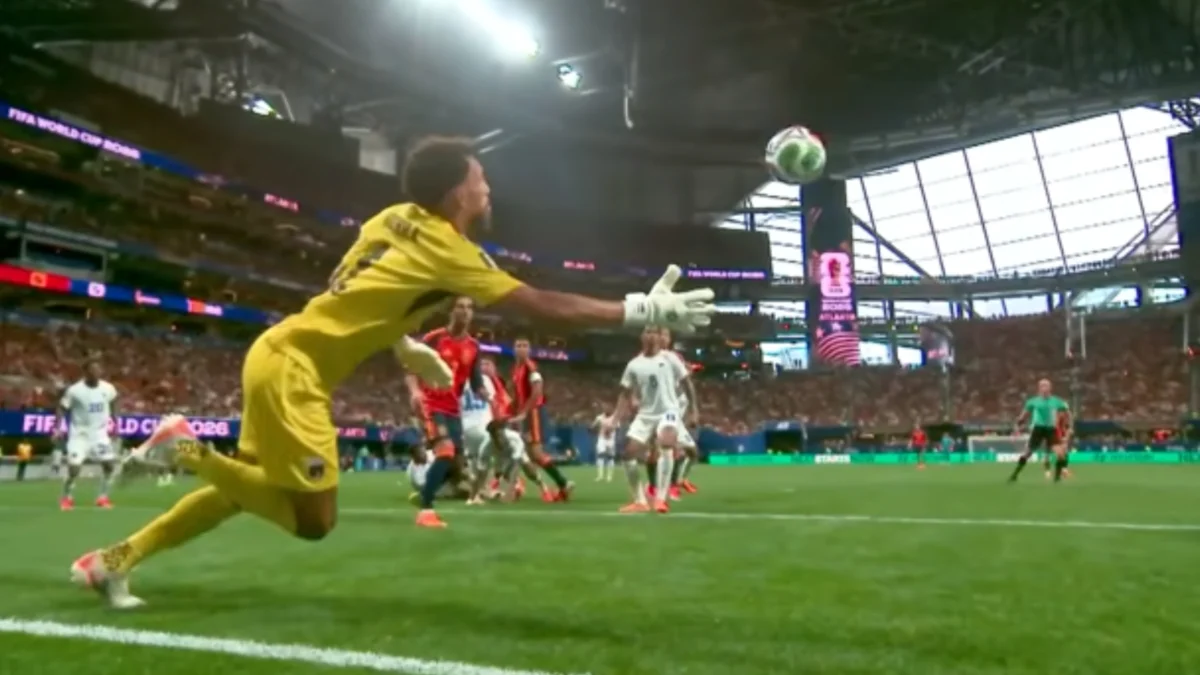
In the high-stakes world of sports wagering, the phrase "sure thing" is often the siren song that leads even the most experienced investors toward financial catastrophe. On June 15, 2026, that reality manifested in a visceral, million-dollar fashion on the decentralized prediction platform Polymarket. As Spain, the 2010 FIFA World Cup champions, took the pitch against tournament debutants Cape Verde, the betting markets were heavily skewed, reflecting a widespread belief that the match was little more than a formality. By the time the final whistle blew, however, a seismic upset had occurred—not necessarily in the record books, but in the bank accounts of thousands of bettors worldwide.
The Anatomy of a Massive Wager
The narrative of the match began long before the first kick. Spain entered the contest as an overwhelming favorite, with odds listed at -1200. Statistical models and pundits alike assigned the European powerhouse a staggering 92% probability of securing three points. For many, this presented an irresistible opportunity to secure a modest profit by risking a significant principal.
One Polymarket user, caught up in the fervor of what appeared to be an mathematical certainty, placed a monumental bet of $999,068. The wager was simple: back Spain to defeat Cape Verde. The potential payout, a modest return on such a gargantuan risk, was slated at $1,085,943.48. On social media, the sentiment was echoed by casual observers and seasoned gamblers alike, with X (formerly Twitter) user Matty Chucks famously declaring the bet "literally free money." This hubris captured the prevailing atmosphere of the day—a collective assumption that the disparity in footballing pedigree would inevitably translate into an effortless victory for the favorites.
Chronology of a Historic Stalemate
The match itself, held on June 15, 2026, unfolded as a tactical masterclass by the Cape Verdean side. Rather than crumbling under the pressure of facing a global titan, the underdog squad displayed remarkable defensive discipline and tactical organization.
- Pre-match: Betting volume on Spain reaches a fever pitch, with platforms like BetMGM and Polymarket reporting record-breaking interest. Spain is a -1200 favorite.
- First Half: The expected Spanish offensive surge is neutralized. Cape Verde’s defensive line maintains a rigid shape, frustrating the Spanish attack and forcing low-percentage shots.
- Second Half: As the minutes tick away, the tension in the betting markets becomes palpable. Spain fails to break the deadlock, and the odds for a draw begin to skyrocket.
- Final Whistle: The match concludes in a 0-0 draw. The underdog has successfully held the 2010 champions to a scoreless tie, triggering a total loss for those who backed a straight Spanish win.
This result was not just a sporting curiosity; it was a financial catastrophe for those who had treated the match as an investment rather than a contest. The draw meant that the $1M bet was effectively vaporized, marking one of the most high-profile losses in the history of decentralized sports betting.
Supporting Data: The Scale of the Upset
The impact of the Cape Verde-Spain result rippled across the entire sports betting ecosystem. According to data from major sportsbooks, Spain to win was the single most-backed wager of the World Cup to that point.
Mark Bickerdike, head of soccer at Caesars Sportsbook, noted the severity of the financial fallout for trading floors. "From a trading perspective, this was a significant result," Bickerdike explained. "Spain was heavily backed by bettors across both straight bets and parlays. The result did not just impact individual bettors; it effectively nuked millions of dollars in parlay tickets that relied on a Spanish victory to remain viable."
While the anonymous $1M bettor took the headlines, the broader implications were clear: the sports betting industry—both traditional and blockchain-based—suffered a massive correction. The sheer volume of money concentrated on a single, high-probability outcome meant that when the "impossible" happened, the liquidity providers and the market makers were the only ones left standing with a smile.
The Contrarian’s Jackpot: The "Fishalive" Phenomenon
While the majority were mourning their losses, a small subset of contrarian bettors—those willing to bet against the prevailing wisdom—reaped a massive reward. Among them was a user operating under the handle "fishalive."
While the masses were piling onto Spain, "fishalive" identified value in the 9% probability assigned to a non-win outcome for Spain. By placing a $427,000 bet on Spain not to win, the user essentially positioned themselves against the public consensus. When the 0-0 draw was confirmed, the contract paid out a staggering $4,702,769.23.
This juxtaposition of outcomes—one user losing nearly a million dollars while another gained nearly five million—highlights the core philosophy of decentralized betting markets: for every massive loss, there is often a calculated, high-conviction victory on the other side of the trade.
Official Responses and Market Implications
The fallout from the match has sparked a wider conversation about the risks of "sure-thing" betting and the volatility of the World Cup. Regulatory bodies in several jurisdictions have used the event to reiterate warnings about the dangers of "chasing" favorites with outsized capital.
Furthermore, the event has placed a spotlight on the platform mechanics of Polymarket. Because these markets are peer-to-peer, the liquidity and the odds are entirely market-driven. The $1M loss serves as a cautionary tale for the burgeoning sector of crypto-sports betting: market efficiency is not the same as certainty. Even with a 92% probability, the remaining 8% margin is where the most dramatic financial events occur.
The Cultural Impact: A New Era for Cape Verde
Beyond the financial markets, the match has transformed the perception of the Cape Verde national team. By keeping a clean sheet against a team of Spain’s caliber, the tiny island nation has earned the respect of the global footballing community.
This level of respect is perhaps best exemplified by the recent behavior of fans at the tournament. Much like the viral instances of Japanese supporters cleaning up stadiums after matches, the discipline and heart shown by the Cape Verde squad—and their supporters—have shifted the narrative of the World Cup from a mere contest of wealth and talent to one of resilience and surprise.
Conclusion: Lessons from the Pitch
The loss of $1 million on a single football match serves as a stark reminder of the fundamental rule of gambling: if there is a reward, there is risk. The "free money" fallacy that gripped the betting community leading up to the Spain vs. Cape Verde match highlights the cognitive biases that can infect even the most sophisticated markets.
As the 2026 World Cup continues, the lessons from June 15 will likely linger. Bettors will be more cautious, favorites will be scrutinized with greater intensity, and the underdog will forever be viewed with a renewed sense of potential. For the anonymous $1M bettor, it was an expensive lesson in humility. For the world of sports, it was a reminder that no matter how heavily the odds are stacked, the game is only decided on the grass—and sometimes, the grass has a way of humbling the giants.


 Sagoh
Sagoh
 Evan Lee Salim