

By Editorial Staff | 2 hours ago | Categories: PC Components, Cases
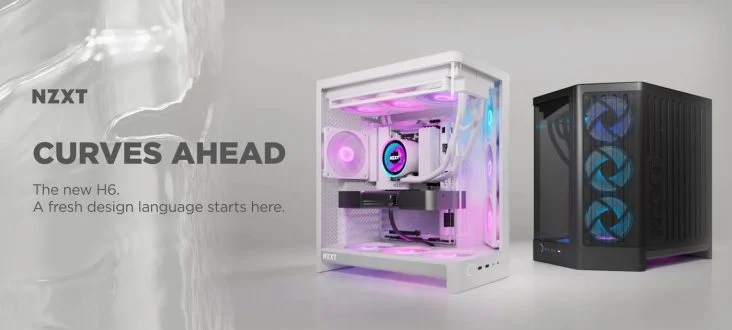
In the rapidly evolving landscape of high-performance PC hardware, the chassis has transitioned from a simple metal box to a centerpiece of personal expression and engineering precision. Today, NZXT, a brand synonymous with minimalist design and clean aesthetics, has officially unveiled its latest innovation: the H6 series of cases. Featuring a striking dual-chamber architecture and native support for the burgeoning "back-connect" motherboard ecosystem, the H6 series aims to bridge the gap between enthusiast-grade performance and effortless cable management.
Main Facts: The Evolution of the H6 Series
The NZXT H6 series represents a fundamental shift in the company’s approach to the popular "panoramic" case segment. By utilizing a 55-litre dual-chamber internal volume, NZXT has successfully separated the high-heat components—the GPU and CPU—from the power supply and cable management pathways. This separation is not merely for aesthetics; it provides a dedicated thermal environment for the most power-hungry components while keeping the rear chamber free for complex cable routing.
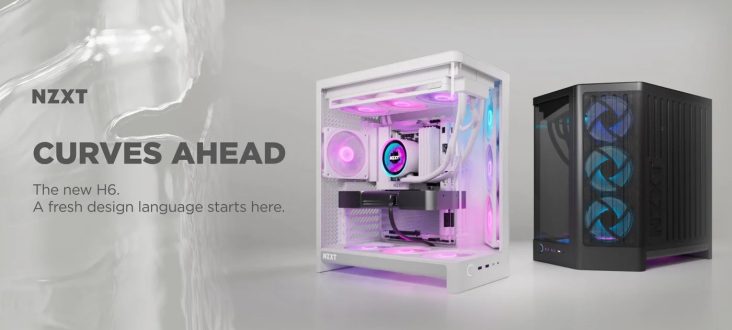
The most prominent design feature is the one-piece curved tempered glass side panel. Unlike traditional cases that utilize a corner pillar or a plastic hinge, the H6 series offers an unobstructed, continuous view of the interior, effectively creating a "showcase" effect for the internal hardware.
Key Specifications at a Glance:
- Chassis Type: Dual-chamber ATX Mid-Tower
- Motherboard Compatibility: ATX, mATX, and Mini-ITX
- Fan Capacity: Up to 10 x 120mm fans
- Radiator Support: Up to 360mm at the top panel
- GPU Clearance: Up to 390mm
- CPU Cooler Height: Up to 165mm
- Connectivity: 2x USB-A 3.2 Gen1, 1x USB-C 3.2 Gen2x2
- MSRP: $99.99 (Standard) / $199.99 (RGB+ Edition)
Chronology: From Concept to Consumer Availability
The development of the H6 series follows a trend seen throughout the last 24 months, where the industry has collectively pivoted toward "fish tank" style designs. NZXT’s internal development team began working on the H6 concept shortly after the success of their H9 series, acknowledging that while the H9 was a powerhouse, there was a market gap for a more compact, yet equally visually stunning, mid-tower solution.
- Early Q1 2024: NZXT finalized the design for the dual-chamber cooling layout, emphasizing the angled side fan mounts to optimize airflow toward the GPU.
- Q2 2024: Prototype testing for back-connect compatibility was integrated, recognizing the growing demand for motherboards that tuck connectors behind the tray for a cleaner build.
- Late Q2 2024: Final validation of the curved glass manufacturing process, ensuring the structural integrity of the one-piece panel.
- Today: Official launch of the standard H6 and the H6 RGB+ variants across global retail channels.
Supporting Data: Thermal Efficiency and Hardware Clearance
Engineering a case for modern hardware requires a deep understanding of thermal density. With modern graphics cards, such as the NVIDIA GeForce RTX 40-series and AMD Radeon RX 7000-series, exceeding 300W in power draw, airflow must be directed with surgical precision.
The Thermal Advantage
The H6 series utilizes an angled side-intake design. By mounting fans on the diagonal panel between the front and side glass, NZXT directs cool air directly into the GPU intake area. When combined with a bottom-intake configuration, the chassis creates a high-pressure environment that forces heat upward and out through the top-mounted radiator or exhaust fan.
With support for up to ten 120mm fans, users are given the freedom to optimize their airflow based on their specific hardware configuration. Whether opting for a high-static-pressure setup for an air-cooled build or a high-volume airflow setup for liquid cooling, the H6 provides the necessary physical space to accommodate massive radiators without conflicting with RAM modules or VRM heatsinks.
Hardware Compatibility
The internal volume is generous, specifically designed to accommodate the oversized GPUs that have become standard. With 390mm of clearance, even the most massive, triple-fan cooling solutions—such as the ASUS ROG Strix or MSI Suprim X series—will fit comfortably. Furthermore, the inclusion of an integrated, adjustable GPU anti-sag bracket is a premium touch that protects both the card’s PCB and the motherboard’s PCIe slot from long-term stress.
Official Responses and Strategic Vision
In a statement regarding the launch, NZXT’s design leads emphasized the importance of the "clean build" movement. "We wanted to provide a platform that makes professional-grade aesthetics accessible to the average builder," a spokesperson noted. "By incorporating back-connect motherboard support, we are future-proofing the H6 for a generation of hardware that prioritizes the visual experience as much as the raw frame rate."
The inclusion of the RGB+ version, which bundles the F360 RGB Reverse intake fans and the NZXT Control Hub Lite, indicates the company’s move toward a more integrated ecosystem. By removing the need for individual controller purchases, NZXT is aiming to simplify the building process for users who want a synchronized, plug-and-play lighting experience right out of the box.
Implications: The Future of the PC Building Industry
The release of the H6 series is not just a product launch; it is a signal of the current direction of the DIY PC market. Several key implications can be drawn from this announcement:
1. The Death of the "Spaghetti" Build
Cable management has long been the most intimidating aspect of building a PC. With the rise of back-connect motherboard standards (such as ASUS BTF or MSI Project Zero), cases like the H6 are essential. By providing the necessary clearance and cable-routing channels, NZXT is effectively lowering the barrier to entry for novice builders, allowing them to achieve a "pro" look without years of experience.
2. Aesthetics as a Performance Metric
The dual-chamber design is no longer an outlier; it is the new standard for enthusiast cases. The market has clearly spoken: consumers want to see their hardware. By minimizing the visual footprint of the power supply and hard drive bays, the H6 allows the motherboard, GPU, and RAM to become the primary focal points of the system.
3. Price-to-Performance Tiering
By offering the standard H6 at $99.99, NZXT is aggressively targeting the mainstream market while keeping the $199.99 RGB+ model as a premium offering for those who value convenience and pre-synchronized aesthetics. This tiered strategy ensures that both budget-conscious builders and premium enthusiasts have a seat at the table.
4. The Ecosystem War
NZXT’s focus on the Control Hub Lite underscores the importance of software-hardware integration. As manufacturers like Corsair, Lian Li, and NZXT continue to refine their proprietary ecosystems, the winner of the market share war will be the company that provides the most stable and user-friendly software interface. The H6, being the canvas for this software, is a critical component in that ongoing strategy.
Conclusion: Is the H6 the Right Choice for Your Next Build?
The NZXT H6 series is a compelling entry into a crowded market. Its strengths lie in its versatility—balancing airflow-focused cooling with the aesthetic requirements of a modern showcase build. For those looking to upgrade their current rig or start a new high-end build, the combination of the panoramic glass, back-connect motherboard support, and robust thermal capacity makes the H6 a top-tier contender.
As we look toward the future of PC hardware, it is clear that cases like the H6 will continue to drive innovation. By listening to the demands of the enthusiast community and refining the chassis design to meet the challenges of modern, power-hungry components, NZXT has solidified its position as a leader in the industry. Whether you are a first-time builder or a seasoned veteran, the H6 series offers a sophisticated, functional, and undeniably beautiful foundation for your next computing masterpiece.












No comments yet. Be the first to join the conversation!