Siti Muinah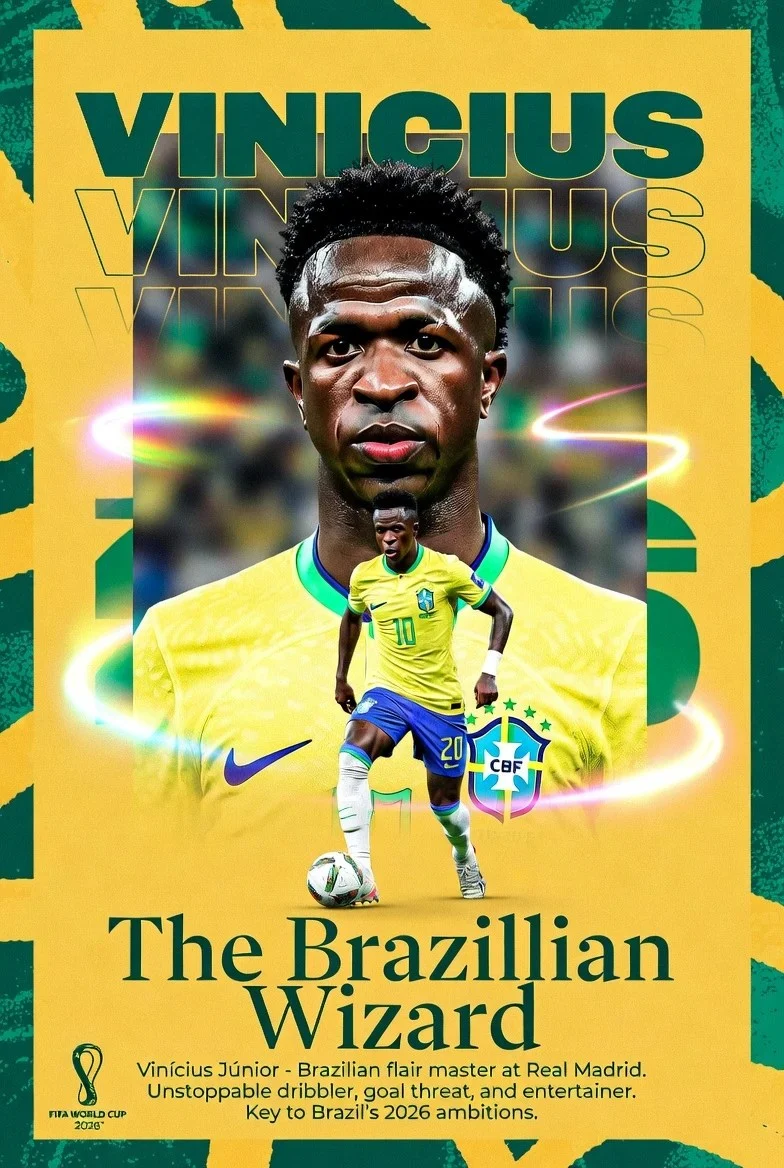
The anticipation is reaching a fever pitch. As the world turns its gaze toward North America, the FIFA World Cup 2026 is poised to redefine the landscape of international sports. Hosted jointly by Canada, Mexico, and the United States, this tournament represents the largest iteration of the competition in history, featuring an expanded format that promises to deliver unprecedented drama, tactical innovation, and cultural exchange.

Beyond the stadiums and the logistical marvels of hosting a tournament across three nations, the heartbeat of the World Cup remains the players. To celebrate this monumental event, we have curated a deep dive into 20 superstars—a blend of established legends and the next generation of footballing royalty—who are expected to define the narrative of the 2026 cycle.

The Main Facts: An Unprecedented Tournament
The 2026 FIFA World Cup will be a historic landmark. For the first time, 48 nations will compete for the most coveted trophy in sports. This expansion from the traditional 32-team format increases the number of matches to 104, spanning 16 host cities across the three host nations.

The tournament is not merely a contest; it is a sprawling cultural phenomenon. From the iconic Azteca Stadium in Mexico City to the cutting-edge arenas in the United States and the passionate footballing hubs of Canada, the infrastructure is designed to handle a global audience of billions. FIFA has emphasized that this tournament will be the most accessible and inclusive in history, aiming to inspire a new generation of North American football fans while honoring the deep-rooted traditions of the global game.

A Chronological Roadmap to Glory
The road to 2026 has been a multi-year odyssey of qualification and preparation. While the qualification process has been rigorous, the timeline for the final tournament is set to be a whirlwind of intensity:

- The Build-up (2024–2025): National teams have been navigating continental qualifiers, refining their squads, and testing tactical systems against diverse styles of play.
- The Final Draw (Early 2026): The eyes of the world turned to the official draw, where the groups were finalized, setting the stage for the initial clashes.
- The Opening Ceremony (June 2026): The tournament kicks off, signaling the start of a month-long festival of football.
- The Knockout Stages (July 2026): As the field narrows, the pressure mounts. Every match becomes a "do-or-die" encounter, leading to the ultimate showdown in the Final.
- The Final (July 2026): The culmination of the journey, where one nation will be crowned champions of the world.
Supporting Data: The Elite 20 – Profiles in Excellence
Our collection of 20 modern player posters highlights the athletes who possess the unique combination of skill, history, and ambition required to thrive under the World Cup spotlight.

The Old Guard: Legends Defying Time
- Lionel Messi (Argentina): The "Eternal Maestro." Having already secured the 2022 title, Messi enters 2026 as a creative force, his vision still capable of dismantling any defensive structure.
- Cristiano Ronaldo (Portugal): The "GOAT Challenger." His physical longevity and relentless pursuit of records remain a testament to his discipline. He remains a lethal threat in the penalty area.
The Current Titans of the Game
- Kylian Mbappé (France): The "Speed King." Now a fixture at Real Madrid, Mbappé’s pace and clinical finishing make him the most feared attacker in world football.
- Erling Haaland (Norway): The "Goal Machine." His physical dominance and positional awareness allow him to score at a rate rarely seen in the modern era.
- Vinícius Júnior (Brazil): The "Brazilian Wizard." His ability to manipulate the ball in tight spaces and his flair for the dramatic make him the engine of the Brazilian attack.
- Harry Kane (England): The "Complete Striker." A masterful No. 9 who blends elite scoring ability with the intelligence to drop deep and link play.
- Jude Bellingham (England): The "Midfield Maestro." A box-to-box phenomenon who possesses the leadership and technical maturity of a veteran.
- Rodri (Spain): The "Anchor." The tactical brain behind Manchester City’s dominance, his ability to control the tempo of a game is unmatched.
- Kevin De Bruyne (Belgium): The "Playmaker." A master of the final ball, his vision remains arguably the best in the sport.
- Mohamed Salah (Egypt): The "Egyptian King." A consistent, world-class winger who continues to be the primary offensive catalyst for both club and country.
- Virgil van Dijk (Netherlands): The "Dutch Wall." A colossus at the back, his leadership and physical prowess provide the defensive foundation for the Oranje.
- Son Heung-min (South Korea): The "Asian Sensation." His clinical finishing and relentless work rate have made him an icon on the global stage.
- Bernardo Silva (Portugal): The "Magician." A player whose technical intelligence and ability to retain possession in high-pressure environments are critical to Portugal’s success.
- Bruno Fernandes (Portugal): "Captain Fantastic." His creative output and leadership qualities make him a pivotal figure in any midfield setup.
- Lautaro Martínez (Argentina): The "Assassin." A high-intensity striker who excels in both holding up the ball and finding the back of the net in crucial moments.
The Rising Phenoms: The Future is Now
- Lamine Yamal (Spain): The "Wonderkid." A generational talent whose technical ability and poise beyond his years have already made him a cornerstone of Barcelona and the Spanish national team.
- Jamal Musiala (Germany): The "German Prodigy." A silky-skilled attacker capable of gliding past defenders, Musiala represents the creative future of German football.
- Pedri (Spain): The "Silent Conductor." An elegant midfielder whose tactical understanding and composure under pressure are the envy of his peers.
- Phil Foden (England): The "English Pearl." A versatile attacker who brings flair, creativity, and a consistent goal-scoring threat to the Three Lions.
- Julián Álvarez (Argentina): The "Rising Star." A dynamic forward whose high-pressing work rate and sharp finishing make him a nightmare for opposing defenders.
Official Perspectives and FIFA’s Vision
FIFA President Gianni Infantino has consistently championed the 2026 World Cup as a "once-in-a-generation opportunity." In official briefings, FIFA has underscored that the tournament is designed to leave a lasting legacy for the sport in North America. By investing in grassroots initiatives, improved stadium infrastructure, and community outreach, FIFA intends to solidify football as the premier sport in the region.

"This is not just about the matches played in July 2026," a FIFA spokesperson noted. "It is about building a bridge to the future. We are bringing the world’s most popular game to the world’s largest sports market, and the ripple effects will be felt for decades."

The Tactical Implications of a Global Stage
The 2026 World Cup will also serve as a laboratory for modern tactical trends. With the influx of young, versatile players like Yamal, Musiala, and Bellingham, we are seeing a shift away from rigid, position-based structures toward a more fluid, "total football" approach.

The increased size of the tournament also means that squad depth will be the ultimate differentiator. Nations with a deep pool of talent—such as France, England, and Brazil—will likely have a significant advantage in the later stages, where fatigue and injury management become as important as raw talent. Furthermore, the variance in climates across the host cities—from the coastal humidity of the Atlantic to the high-altitude challenges of Mexico City—will force coaches to be more innovative in their preparation than ever before.

Conclusion: A Tournament for the History Books
As we look toward the kickoff of the FIFA World Cup 2026, the excitement is palpable. It is a tournament that brings together the wisdom of legends like Messi and Ronaldo with the electrifying energy of the new vanguard like Lamine Yamal and Jude Bellingham.

The stage is set. The posters are printed, the stadiums are preparing, and the fans are ready. Whether it is the tactical mastery of the midfield or the explosive speed of the wingers, the 2026 World Cup promises to be a masterclass in human performance. As these 20 superstars prepare to etch their names into history, the world waits with bated breath to see who will rise to the occasion and claim the ultimate prize.

Follow the journey, track the statistics, and prepare for a summer that will change the face of global football forever. The road to the 2026 FIFA World Cup is more than a tournament; it is the pinnacle of the beautiful game.


 Neng Nana
 Asep Darmawan