Neng Nana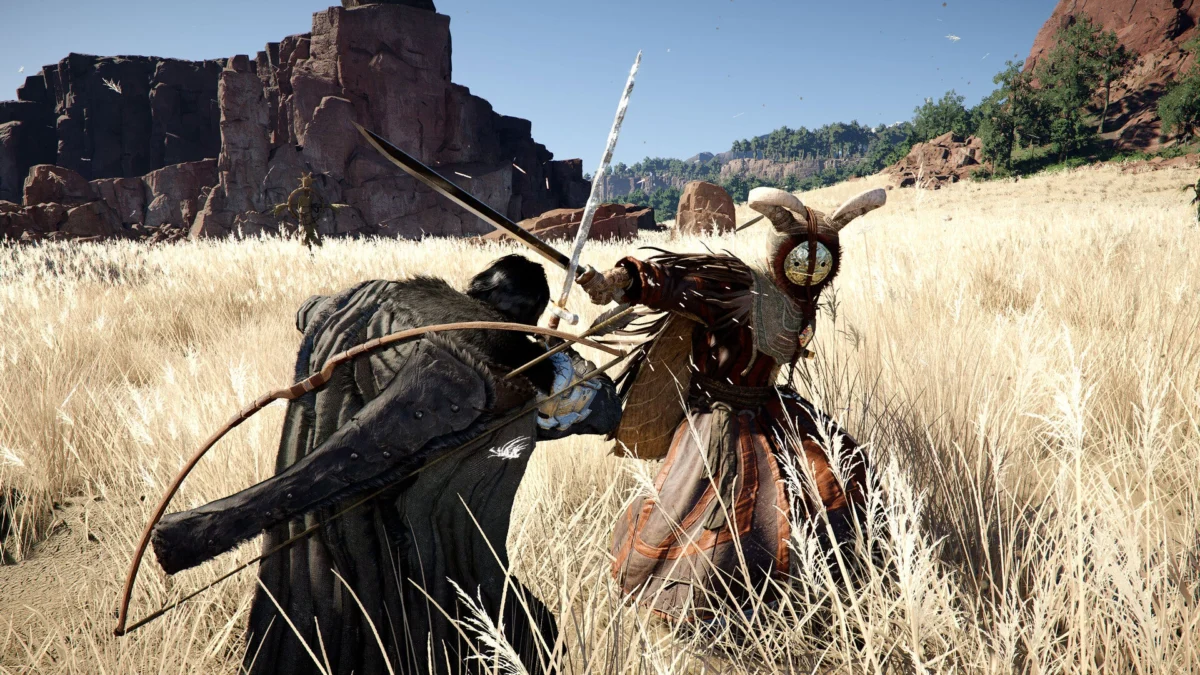
Seoul, South Korea – Pearl Abyss, the acclaimed developer behind the highly anticipated action RPG Crimson Desert, has swiftly responded to early player feedback with the release of its inaugural post-launch patch, version 1.00.03. Launched just days after the game’s global debut, the update primarily targets the widespread criticisms concerning the game’s control scheme, particularly for keyboard and mouse users, alongside a suite of crucial quality-of-life improvements and gameplay balance adjustments. This proactive move signals Pearl Abyss’s commitment to refining the player experience and addressing core issues that, despite an otherwise positive reception, have somewhat hampered the ambitious title’s initial rollout.
While Crimson Desert has garnered significant praise for its stunning visuals, expansive world, and ambitious combat mechanics, its control system emerged as a dominant point of contention among the burgeoning player base. The complexity of inputs, coupled with what many described as unresponsive or clunky character animations, created a barrier to entry and enjoyment for a segment of players. Patch 1.00.03 represents the developer’s immediate and direct effort to alleviate these frustrations, promising a more fluid and intuitive interaction with the game world.
The update is currently live on Steam and PlayStation platforms, with Pearl Abyss confirming that Xbox and the Epic Games Store will receive the patch "at a later time," indicating a staggered rollout across different ecosystems. This initial set of fixes is just the beginning, as the developer has publicly vowed to continue working diligently on all other points of feedback raised by the community, setting a precedent for ongoing engagement and iterative improvement.
The Dawn of Improvement: Crimson Desert’s First Major Update Arrives
The release of Patch 1.00.03 marks a critical juncture for Crimson Desert, signaling Pearl Abyss’s dedication to fostering a robust and satisfying player experience. Coming mere days after the game’s official launch, the update demonstrates a remarkable agility and responsiveness from the development team in absorbing community feedback and translating it into tangible improvements. This rapid deployment underscores the importance placed on player satisfaction in the modern gaming landscape, particularly for a title with live-service aspirations.
The primary focus of this significant update is undeniably the overhaul of the game’s control mechanics, a direct response to the most vocal and consistent criticisms leveled by players since launch. While Crimson Desert‘s intricate combat system and deep character customization have been widely lauded, the execution of player inputs, especially with a keyboard and mouse, proved to be a source of considerable frustration. Players reported a disconnect between their commands and the on-screen character’s actions, often citing a lack of responsiveness, an overly complex default keybind structure, and animations that felt sluggish or unprioritized. Pearl Abyss has explicitly targeted these issues in Patch 1.00.03, aiming to smooth out the rough edges and provide a more seamless interaction experience.
Beyond the immediate improvements to controls, the patch also introduces several crucial quality-of-life features that directly address common inconveniences encountered during early gameplay. Among these is the highly anticipated addition of a Storage facility at Howling Hill Camp, a central hub for players. This seemingly minor addition has significant implications for inventory management, allowing players to offload excess gear and resources, thereby reducing inventory clutter and facilitating longer exploration sessions without the constant worry of being overburdened. Such features, while not as flashy as combat tweaks, are fundamental to the long-term enjoyment and accessibility of any expansive action RPG. The prompt implementation of these changes reflects a developer keen on optimizing the foundational gameplay loop and ensuring player retention through continuous refinement.
Addressing the Core Complaints: A Deeper Dive into Control Enhancements
The most impactful changes within Patch 1.00.03 are undoubtedly those directed at Crimson Desert‘s control scheme, a critical area identified by the community as needing immediate attention. The game, with its fast-paced action combat and myriad abilities, demands precise and intuitive controls, a facet that many felt was lacking at launch.
Keyboard and Mouse: A Prioritized Overhaul
For PC players utilizing keyboard and mouse, the experience was often described as cumbersome and counter-intuitive. Pearl Abyss has tackled this head-on by implementing several fixes and altering default presets. While specific details of every tweak are extensive and best reviewed in the full patch notes, the core intent is clear: to enhance responsiveness, simplify complex actions, and improve overall fluidity. This likely includes adjustments to mouse sensitivity and acceleration curves, making camera control more natural and precise. Furthermore, re-evaluating and remapping default keybinds could streamline common actions, reducing the need for awkward finger stretches or repeated presses. The integration of more intuitive context-sensitive prompts or clearer visual feedback for certain abilities might also contribute to a less "painful" experience, as described by the developers. The goal is to ensure that the player’s intent translates directly and immediately into character action, reducing input lag and animation priority conflicts that previously hindered smooth gameplay. Such improvements are paramount for an action RPG where split-second decisions and precise movements dictate success in combat.
Controller Conundrum: Awaiting Future Refinements
Curiously, despite significant feedback, this initial patch does not include specific changes or improvements for controller users. This omission has been noted by players, particularly those on PlayStation who prefer a gamepad experience. Pearl Abyss has, however, openly acknowledged this gap, stating that controller enhancements are firmly on the roadmap for future patches. This indicates a structured approach to development, where resources are prioritized based on the most pressing issues and the largest segments of the player base affected. It also suggests that a more comprehensive redesign or fine-tuning of controller inputs might require more development time than the immediate keyboard and mouse fixes. Balancing the complexity of Crimson Desert‘s combat and movement across both keyboard/mouse and controller interfaces presents unique challenges, requiring distinct approaches to button mapping, analog stick sensitivity, and target locking mechanisms. Players can expect these refinements in subsequent updates, demonstrating the developer’s commitment to a holistic improvement across all supported input methods.
Beyond Controls: Quality-of-Life and Gameplay Adjustments
While control refinements form the backbone of Patch 1.00.03, Pearl Abyss has also included a range of additional quality-of-life improvements and gameplay tweaks that enhance the overall player experience, demonstrating a comprehensive approach to post-launch support.
Inventory Management and Convenience
One of the most welcome additions is the implementation of a Storage facility at Howling Hill Camp. In expansive RPGs like Crimson Desert, inventory management can quickly become a cumbersome task, with players often struggling to carry all necessary items, crafting materials, and quest-related loot. The introduction of a central storage point at a frequently visited hub significantly alleviates this burden. It allows players to safely deposit items they don’t immediately need, freeing up valuable inventory slots and enabling longer, more uninterrupted exploration or combat sessions. This convenience reduces the frequency of tedious trips back to vendors or safe zones just to manage inventory, thereby enhancing the flow of gameplay and player immersion.
Furthermore, the patch brings improvements to the fast travel system. While the exact nature of these improvements is detailed in the full patch notes, they are designed to make traversing the vast world of Pywel more convenient. This could involve reducing loading times, optimizing fast travel point accessibility, or streamlining the interface for initiating fast travel. In a game world as expansive and visually rich as Crimson Desert‘s, efficient fast travel is crucial for respecting player time and encouraging exploration without making it feel like a chore.
Balancing the Battlefield: Combat and Progression Tweaks
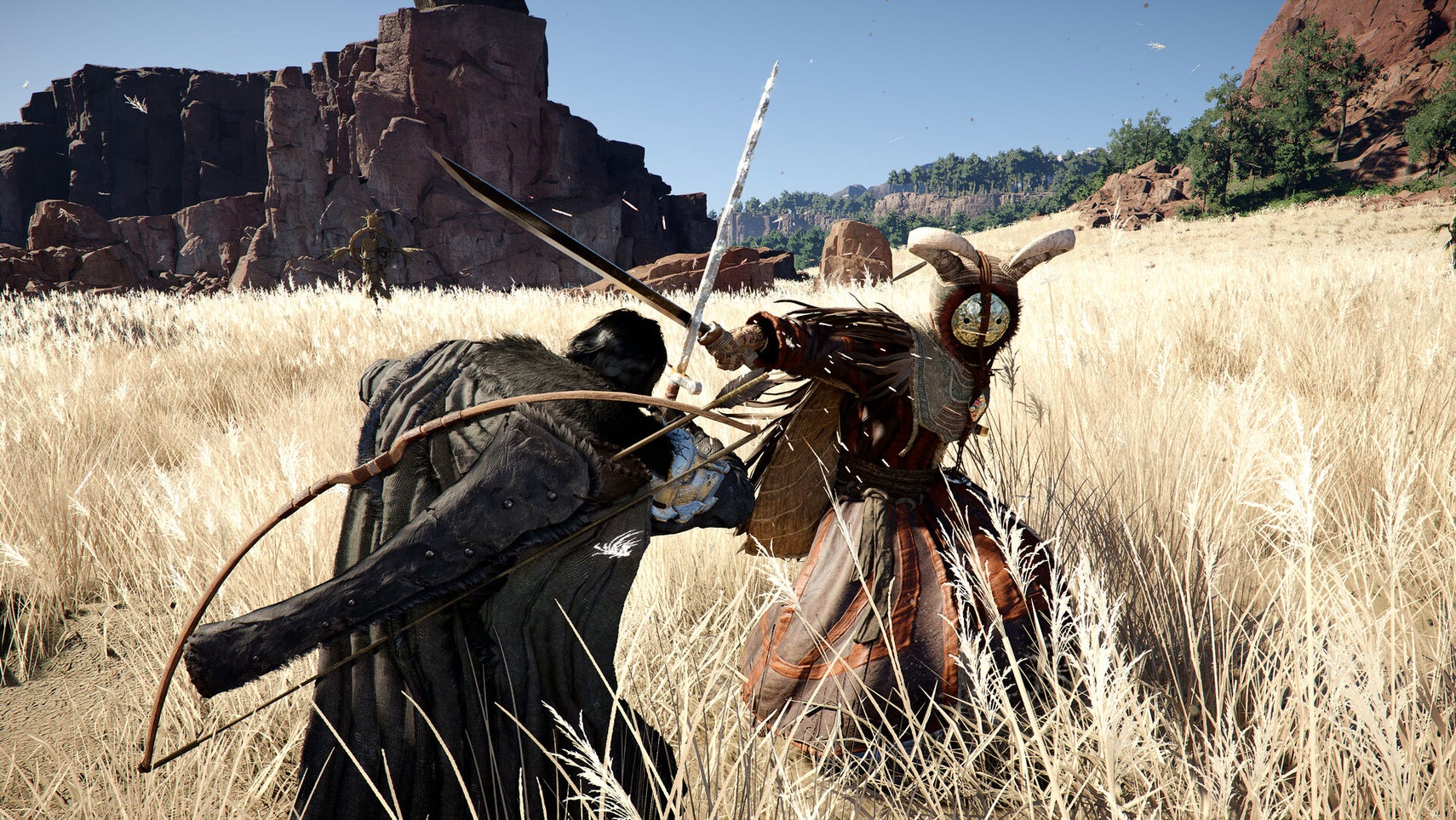
Patch 1.00.03 also includes a set of gameplay tweaks, specifically targeting enemy health and difficulty. Early player feedback often highlighted instances of uneven difficulty spikes, particularly in certain regions or against specific enemy types. Some players found certain encounters disproportionately challenging, while others felt the grind to overcome them was too steep. These adjustments aim to create a more balanced and fair combat experience, ensuring that challenges scale appropriately with player progression and skill. This could involve recalibrating enemy HP pools, adjusting damage outputs, or modifying combat behaviors of various adversaries. A well-balanced difficulty curve is essential for maintaining player engagement and ensuring that the sense of accomplishment comes from mastering mechanics rather than overcoming arbitrary statistical hurdles.
Additionally, the update introduces several fixes to NPC dialogue. In a story-rich action RPG, coherent and engaging dialogue is vital for immersion and narrative progression. Bugged or repetitive dialogue, missing voice lines, or incorrect text can pull players out of the experience. These fixes ensure that interactions with non-player characters are smooth, meaningful, and contribute positively to the game’s unfolding narrative.
The Full Scope: Accessing the Patch Notes
For players seeking the exhaustive list of all changes and bug fixes, Pearl Abyss has provided the full change log on the game’s official Steam page. Consulting these detailed notes is highly recommended for all players to fully understand the scope of improvements and how they might impact their gameplay experience.
A Chronology of Player Feedback and Developer Response
The journey from Crimson Desert‘s launch to its first major patch has been remarkably swift, illustrating a developer highly attuned to its community. Upon its release, the game was met with a dual reception: widespread awe for its graphical fidelity, ambitious scope, and engaging combat, yet simultaneous, fervent critiques regarding specific gameplay elements.
Almost immediately, player feedback began to coalesce around several key areas, with the control scheme emerging as the most prominent pain point. Forums, social media, and review platforms were abuzz with discussions detailing the frustrations of keyboard and mouse controls, describing them as clunky, unresponsive, and overly complex for an action-oriented title. While the underlying animations were also cited as contributing to a lack of fluidity, the direct input mechanism was the most urgent call for revision.
Recognizing the gravity of these concerns, Pearl Abyss wasted no time in engaging with its player base. Just two days prior to the patch’s release, the developer issued a comprehensive "letter to players" on Saturday. This public address served as a crucial bridge between the community’s vocal feedback and the development team’s commitment to improvement. The letter generally acknowledged the broad spectrum of player feedback, affirming that Pearl Abyss was actively listening and compiling reported issues. Crucially, it specifically highlighted the game’s controls as an area of immediate focus for the development team, signaling that efforts were already underway to rectify the situation. This transparency and prompt acknowledgment played a significant role in managing player expectations and fostering a sense of trust within the community.
The release of Patch 1.00.03 on Monday, mere days after the public letter, stands as a testament to Pearl Abyss’s rapid development cycle and its dedication to iterative improvement. The speed with which these initial fixes were deployed, particularly for critical elements like controls, demonstrates a highly organized and responsive team capable of quickly diagnosing and implementing solutions. This chronological sequence—from launch to immediate feedback, developer acknowledgment, and rapid patch deployment—establishes a positive precedent for Crimson Desert‘s ongoing live-service development.
Supporting Data: Early Metrics and Community Sentiment
Beyond anecdotal feedback, hard data from the game’s early performance metrics offers further insight into the initial reception of Crimson Desert and the potential impact of Pearl Abyss’s swift response. These figures paint a picture of a game with strong underlying appeal that is already benefiting from developer engagement.
Concurrent Player Growth
Despite the aforementioned control issues and other early-game frustrations, Crimson Desert has demonstrated robust player engagement. Over the weekend following its launch, the game actually managed to break its own launch peak concurrent player numbers. While the increase was modest – "only by a few thousands more" – it is significant. In an era where many new titles see a sharp decline in concurrent players after the initial launch hype, Crimson Desert‘s ability to grow its player base, even marginally, indicates a strong foundational appeal. It suggests that players are willing to overlook initial imperfections for the promise of the game’s core experience, and that the word-of-mouth (both positive and critical) is driving continued interest. This sustained or even growing engagement provides a healthy platform for Pearl Abyss to build upon with subsequent updates.
Shifting Review Scores
Parallel to the concurrent player trends, the game’s Steam user review rating has also shown improvement over the same period. While the specific numerical rating fluctuates, an upward trend signifies a positive shift in community sentiment. This improvement can be attributed to several factors: players appreciating the developer’s quick acknowledgment of issues, the anticipation of impending fixes (as hinted by the developer letter), and potentially, new players entering the game who may find the initial experience more palatable or are more tolerant of early-game quirks. Positive movement in review scores is a crucial indicator for developers, as it directly impacts discoverability and purchase decisions for potential new players. It reinforces the idea that an attentive developer can quickly mitigate negative perceptions and build goodwill within the community. The initial review sentiment for Crimson Desert was generally positive, but often accompanied by caveats regarding performance and controls. The current trend suggests that these caveats are being addressed, leading to a more favorable overall perception.
The Road Ahead: Ongoing Engagement
Pearl Abyss has not only delivered this initial patch but has also explicitly vowed to "keep working on addressing all other points of feedback." This commitment is vital for a live-service title. It assures the community that their voices are heard and that the development team views the game’s launch as merely the beginning of its journey. This ongoing engagement is a critical factor in fostering a loyal player base and ensuring the game’s long-term viability and success in a competitive market. It suggests a future where Crimson Desert will continuously evolve, driven by a symbiotic relationship between its creators and its community.
Official Responses and Future Outlook
Pearl Abyss’s prompt and transparent communication regarding Crimson Desert‘s post-launch development has set a positive tone for the game’s future. The developer’s official responses, particularly the letter to players preceding the patch, underscore a commitment to continuous improvement and a player-centric development philosophy.

The decision to acknowledge player feedback publicly and then rapidly deploy a patch directly addressing the most pressing concerns speaks volumes about Pearl Abyss’s operational efficiency and dedication. In the current gaming landscape, where many developers struggle with post-launch communication or take extended periods to implement fixes, Pearl Abyss’s approach stands out. This transparency helps to build and maintain trust within the player community, turning potential frustrations into anticipation for future improvements.
While Patch 1.00.03 focuses heavily on controls and immediate quality-of-life additions, it is explicitly stated that this is only an "initial set of fixes." This implies that the development team is aware of other "deeper issues" that may require more extensive overhauls. These could range from further refinements to character animations and physics, which are often complex to adjust, to balancing intricate progression systems, optimizing late-game content, or even re-evaluating certain monetization strategies if they prove to be unpopular. The scope of Crimson Desert as an action RPG with potential live-service elements means that ongoing iteration across all facets of the game – from combat fluidity to economic balance and narrative delivery – will be crucial.
The promise of future patches, including specific improvements for controller users, further solidifies the long-term outlook. This structured approach suggests that Pearl Abyss is not merely firefighting but has a strategic plan for evolving Crimson Desert into its fullest potential. The success of this strategy will depend on maintaining the current level of responsiveness and ensuring that subsequent updates continue to address player concerns effectively and consistently. The early signs, however, are highly encouraging, suggesting that Crimson Desert is poised for a robust post-launch lifecycle.
Implications for Crimson Desert’s Trajectory
The rapid deployment of Crimson Desert‘s first post-launch patch carries significant implications for the game’s long-term trajectory and its standing within the crowded action RPG genre. In an industry increasingly defined by live-service models and continuous content updates, a strong and responsive post-launch strategy is paramount for a title’s survival and success.
Firstly, this swift action is likely to have a positive impact on player retention. Players who might have been frustrated by the initial control issues are now given a tangible reason to return or to continue playing, knowing that their feedback is valued and acted upon. Improved controls translate directly into a more enjoyable and less frustrating gameplay experience, which is critical for keeping players engaged in the long run.
Secondly, the developer’s responsiveness can significantly influence new player acquisition. Positive word-of-mouth, coupled with improving review scores on platforms like Steam, will attract players who might have initially been hesitant due to early negative feedback. As the game becomes more polished and user-friendly, its appeal broadens, drawing in a wider audience that might not have tolerated the initial rough edges. This early commitment to refinement helps to mitigate launch-day criticisms and reshape the narrative around the game’s quality.
Furthermore, Pearl Abyss’s approach fosters a crucial developer-community relationship. By actively listening and responding to player feedback, the studio cultivates a sense of trust and partnership with its player base. This collaborative dynamic is invaluable for live-service games, as it ensures that future development aligns with player desires and expectations, leading to a more sustainable and beloved product. A strong community bond can also translate into increased loyalty and support, even during challenging periods.
Ultimately, this first patch suggests that Crimson Desert is not just a one-off release but the beginning of an evolving experience. If Pearl Abyss continues this proactive and responsive development cycle, Crimson Desert has the potential to overcome its initial hurdles and mature into a highly polished, critically acclaimed, and commercially successful action RPG. The foundation for a thriving player ecosystem has been laid; the ongoing commitment to iterative improvement will determine the ultimate height of its success.
Conclusion
The arrival of Patch 1.00.03 for Crimson Desert is a testament to Pearl Abyss’s agility and dedication to its player base. By swiftly addressing the most prominent criticisms, particularly regarding control mechanics, the developer has taken a crucial first step in refining the ambitious action RPG. While deeper issues may still loom, the immediate improvements to keyboard and mouse controls, coupled with vital quality-of-life additions like the Howling Hill Camp storage and enhanced fast travel, signify a strong commitment to enhancing the player experience.
The positive shifts in concurrent player numbers and Steam review scores, occurring even before the full impact of the patch could be felt across all platforms, underscore the community’s appreciation for Pearl Abyss’s transparency and responsiveness. As the game continues to evolve with future updates, including promised controller refinements and further gameplay tweaks, Crimson Desert appears poised to overcome its initial challenges and solidify its position as a compelling and immersive new entry in the action RPG genre. Players are encouraged to dive back into Pywel to experience these changes firsthand and to continue providing feedback as the world of Crimson Desert expands and improves. For those seeking assistance on their journey, remember to consult available guides on topics such as Abyss Gear socketing, acquiring Contribution Points, inventory expansion, and map revelation to fully harness the game’s potential.


 Lina Irawan
 Sagoh
Sagoh