Jia Lissa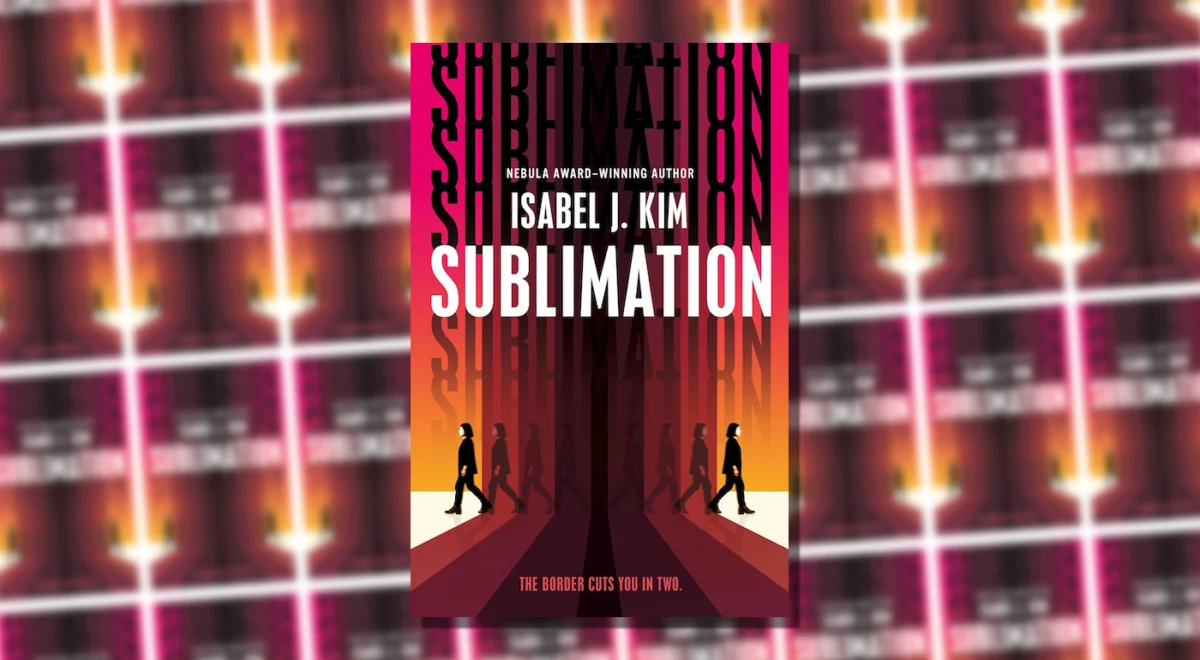
In the landscape of contemporary speculative fiction, few premises are as hauntingly intimate as the one presented in Isabel J. Kim’s debut novel, Sublimation. Kim, a multi-award-winning author, crafts a world where the act of migration is not merely a bureaucratic struggle or a social transition; it is a literal, biological fracturing of the self. In this reality, the act of leaving one’s home country triggers "instancing"—a mitosis-like event that splits a person into two distinct, physical beings.
These "instances" possess their own separate minds, desires, and memories from the moment of the split. They are two versions of a single person, existing simultaneously in different lands. While the scientific or metaphysical origins of this phenomenon remain unknown, its presence is as ancient as recorded history, with the earliest mentions surfacing in Babylonian texts dating back to 1753 BC. Sublimation does not merely ask the reader to accept this premise; it forces a confrontation with the psychological and political costs of living a life cleaved in two.
The Anatomy of the Instance: A World Altered
To understand the world of Sublimation, one must discard the notion that this is a "tiny" deviation from our own. As Kim demonstrates, the existence of instancing fundamentally rewrites human history. The novel drip-feeds this world-building, avoiding the trap of exposition-heavy info dumps. Instead, the reader is submerged in a reality where the divide is normalized, yet remains deeply unsettling.
An "instance" is not a clone; it is a continuation. Whether the original remains behind or the copy moves forward is a distinction that modern American vocabulary has effectively erased, treating both halves as legitimate, though partial, entities. The phenomenon is reversible—if two instances meet and touch, they reintegrate into a single body, absorbing the memories and experiences of their time apart. However, the novel asks a harrowing question: What happens when the two versions of you have grown so far apart that only one of them wants to go back?
Chronology and Case Studies: The Lives of the Divided
Kim anchors her sprawling, high-concept premise in the lives of two pairs of characters, grounding the ethereal physics of instancing in visceral human emotion.
Soyoung and Rose
Soyoung and Rose were a single person until the age of ten, when Rose and her mother migrated from Korea to America. For years, they existed as distant echoes of one another. Soyoung remained in Seoul, living a life of rootedness and continuity, while Rose navigated the assimilation pressures of the American diaspora. They are strangers who share a soul. Their paths only intersect at the funeral of their shared grandfather—a moment that serves as a crucible for their conflicting identities.
Youjin and YJ
The second pair, Youjin and YJ, provides a more transactional look at the phenomenon. YJ moved to the United States for university, initiating the instance. Unlike Soyoung and Rose, Youjin and YJ have maintained an active, almost tactical, relationship. Their goal is clear: they plan to reintegrate once YJ secures American citizenship. The motivation is purely pragmatic—by merging upon YJ’s naturalization, they aim to bypass the mandatory Korean military service. This cold, calculated approach to their own existence highlights the ways in which the instancing phenomenon is leveraged, exploited, and commodified by individuals and states alike.
The Legacy of Colonialism: Implications of the Divide
One of the most profound aspects of Sublimation is its unflinching examination of how institutional power structures dictate the lives of instances. Kim posits that the modern map of the world is, in many ways, the map of instances. The author notes that "colonial capitalism" is the primary engine of the world’s current instance population.
The narrative is explicit regarding the history of the United States:
"Instancing is written into America’s blood, into the story it tells itself: Here is where instances migrate. Give us your tired, your poor, your hungry, give us your copies and let them be fruitful and multiply, let them homestead, let them become titans of industry, let them and their non-instanced children build cities and towns and railroads."
This is not a story of magic; it is a story of power. Kim’s authorial voice reminds the reader that the "freedom" to migrate is often a privilege of the elite, while the necessity of migration is a consequence of systemic failure. The contrast between the expatriate and the economic migrant—frequently defined by race and passport strength—is woven into the physical reality of the characters. As the text poignantly observes, many instances are created because they realize their only viable choice is to flee a "broken shithole" for another, slightly more prosperous, broken land, merely to "gnaw the rind from and send back the scrapings."
Philosophical Consequences: Is Reintegration Murder?
The central conflict of Sublimation is not just about geography, but about the continuity of the self. If you spend ten years apart, who are you when you finally merge? Reintegration is not a simple return to the status quo; it is a profound act of cognitive dissonance. The memories of two separate lives—lives filled with different traumas, joys, and cultural conditioning—are suddenly forced into a single consciousness.
Youjin’s early-novel question—"Is it like murder?"—haunts the remainder of the book. To reintegrate is to effectively end two distinct lives to create a hybrid. It raises the ultimate question of identity: If we are the sum of our experiences, what happens when those experiences are contradictory? The novel suggests that the physical separation is merely a "metaphor made flesh," a tangible manifestation of the psychological tug-of-war experienced by all who live between two worlds.
A Stylistic Shift: From Introspection to Techno-Thriller
While the first two-thirds of the novel focus heavily on the philosophical, character-driven exploration of these divided lives, Sublimation pivots in its final act. The story shifts toward the pace and tension of a techno-thriller, a trajectory that explains its recent acquisition by Universal Studios for television development.
Comparisons to the hit series Severance are apt, as both works explore the commodification of the self and the corporate/governmental interest in controlling the human mind. However, Kim’s work distinguishes itself through its masterful use of the second-person narrative. By placing the reader in the position of the instance, she creates an immersive, claustrophobic experience. It captures the specific, heart-stopping sensation of stepping across a border, the precise moment when you know you are leaving a part of yourself behind.
Final Reflections: The Cost of the Future
Sublimation is a monumental debut that manages to juggle a high-concept premise with profound emotional weight. It is an ambitious work that refuses to provide easy answers. Instead, it leaves the reader with a series of questions that linger long after the final page:
- On Citizenship: How do immigration laws evolve in a world where a person is physically split by a border?
- On Sovereignty: Does an instance have the same human rights as a singular person, or are they property of the state that facilitated their "duplication"?
- On Memory: Is there a "true" version of a person, or is the instance just as real as the origin?
Isabel J. Kim does not pander. She assumes her readers are well-versed in history, politics, and the complexities of the human condition. By the time the reader finishes Sublimation, they are left with the unsettling realization that, in our own world, we are all perhaps a little bit "instanced." We all leave pieces of ourselves in the places we have traveled, in the jobs we have left, and in the cultures we have straddled.
Sublimation is not just a story about a biological anomaly; it is a mirror held up to the modern experience of globalization. It is a brilliant, necessary exploration of the desire for a better life and the devastating price one pays to achieve it. Whether you are a fan of speculative fiction or simply a reader looking for a deeply intellectual and emotionally resonant narrative, this novel is an essential addition to the year’s reading list.
Book Details:
- Sublimation
- Author: Isabel J. Kim
- Publisher: Tor Books
- Genre: Speculative Fiction / Techno-Thriller
- Availability: Now available through major retailers.


 Siti Muinah
 Basiran