Pevita Pearce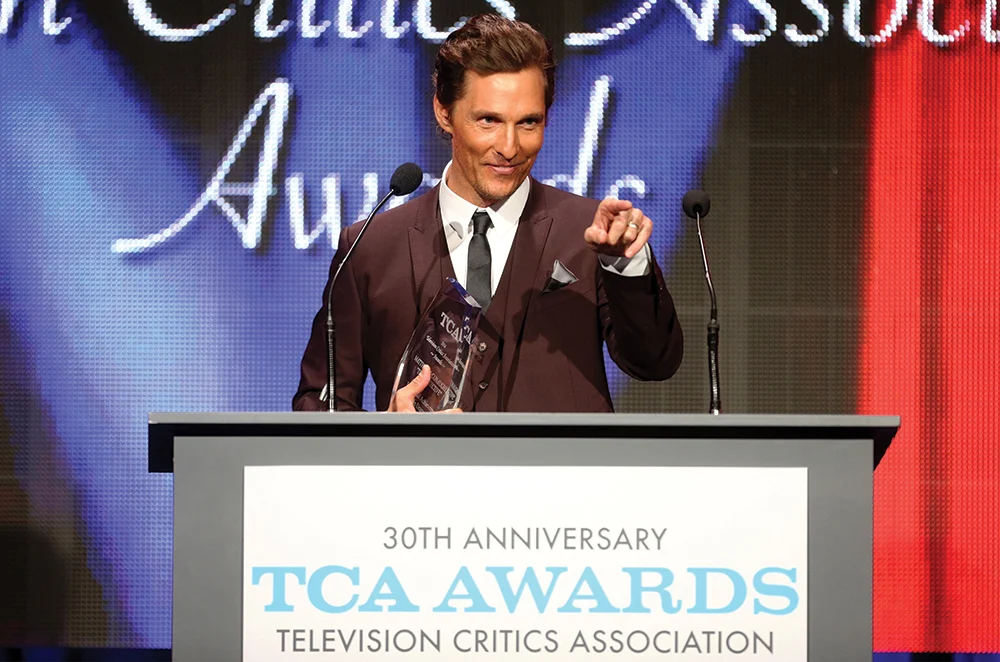
The Television Critics Association (TCA) recently unveiled the nominees for the 2026 TCA Awards, sparking a wave of excitement across the industry. In a landscape saturated with bloated, televised award ceremonies, the TCA has long stood out for its refreshing, minimalist approach. By stripping away the spectacle, the organization focuses on what truly matters: the craft of storytelling.
This year’s nominations feature compelling head-to-head battles, such as the veteran-heavy clash between Noah Wyle and Rhea Seehorn for individual achievement in drama, and a powerhouse comedic showdown between Harrison Ford and Jean Smart. Even more intriguing is the "Program of the Year" category, where a late-night institution like The Late Show With Stephen Colbert is poised to challenge the prestige scripted dramas that typically dominate the conversation.
Yet, behind the excitement of the nominations lies a somber reality: the TCA Awards, once a staple of the summer television calendar, have transitioned into a digital-only affair. As the organization navigates a post-press-tour world, critics and industry observers are asking whether this transition is a temporary compromise or the beginning of the end for one of television’s most respected traditions.
A Chronology of Decline and Digital Adaptation
To understand the current state of the TCA Awards, one must look at the historical arc of the event. For decades, the TCA Awards were inextricably linked to the organization’s Summer Press Tour—a multi-week marathon of panels, screenings, and press junkets that served as the industry’s central hub.
The awards were never designed to be a televised spectacle. Because they lacked the high-pressure, red-carpet pageantry of the Emmys, they offered a unique, intimate environment. Winners weren’t just accepting statues; they were receiving validation from the most influential critics and reporters in the country—the very people who shape the critical narrative around television.
However, the foundation of this tradition began to fracture during the COVID-19 pandemic, which forced the TCA to pivot to a press-release-only format. The organization attempted to regain its footing following the 2023 Hollywood strikes, culminating in a triumphant 40th-anniversary gala in 2024. That evening, which celebrated heavy hitters like FX’s Shōgun, HBO’s Hacks, and Netflix’s Baby Reindeer, felt like a return to normalcy.
Unfortunately, that celebration now appears to be the swan song of the traditional era. With networks scaling back their participation in physical press tours and member travel budgets tightening, the logistical and financial burden of hosting an in-person event has become unsustainable. Consequently, the 2026 iteration will be conducted via social media, featuring prerecorded acceptance videos from honorees.
The Economic and Ideological Dilemma
The TCA’s struggle is symptomatic of a broader shift in how media organizations interact with the industry they cover. Unlike the Academy of Television Arts & Sciences, the TCA does not charge submission fees. This policy is a point of pride, ensuring that the awards remain untainted by a "pay-to-play" dynamic. However, it also means the organization lacks a consistent revenue stream to underwrite a high-quality, in-person awards ceremony.
Furthermore, there is a fundamental philosophical hurdle: the TCA must maintain its independence. Accepting sponsorship from the very studios and streamers whose work they review creates a potential conflict of interest. As TCA president Andy Dehnart, who also operates the industry-essential site Reality Blurred, notes, the organization is caught in a difficult position.

"Our No. 1 idea is to make sure that the TCA Awards are being seen by a much broader audience, and to make sure that people know about the shows that we’re highlighting," Dehnart says. He views the current digital experiment as a way to broaden the footprint of the awards, even if it sacrifices the tactile nature of a live gala.
Implications: A Call for Radical Restructuring
Is the TCA Awards’ transition to digital permanent? If the organization remains tethered to the now-defunct model of the long-form summer press tour, the answer is likely yes. However, industry insiders suggest that if the TCA is to survive as a relevant institution, it must decouple its awards from the tour and embrace new, collaborative models.
Proposed Solutions for a Sustainable Future
The survival of the TCA Awards depends on finding a new, financially viable anchor. Several strategies could revitalize the brand:
- Strategic Timing: The TCA should consider moving the ceremony to the "Phase 1" Emmy voting window. Aligning the awards with the peak of industry campaigning would ensure that talent is already in Los Angeles and the industry’s attention is at its highest.
- Mentorship and Partnerships: Organizations like the Peabody Awards and Humanitas provide a blueprint for how nonprofit, mission-driven entities can host prestigious, high-end events. Seeking guidance from these groups could provide the operational roadmap the TCA currently lacks.
- Cross-Organizational Alliances: The TCA could benefit from underwriting partnerships with existing festivals. The ATX TV Festival, for instance, has already begun a promising collaboration with the TCA. Expanding this to include the Hollywood Radio & Television Society (HRTS), SeriesFest, or even the Paley Center could provide the infrastructure for a physical event without requiring the TCA to fund it alone.
A partnership with the Paley Center, in particular, could be a masterstroke. PaleyFest already hosts nightly panels and star-studded events; integrating the TCA Awards into this ecosystem would provide a marquee stage for the awards while giving Paley a prestigious, recognized honors ceremony to anchor its programming.
Looking Toward an Uncertain Horizon
The path forward is undeniably difficult, but it is not without hope. President Andy Dehnart remains optimistic, emphasizing that the organization is not wedded to any single methodology. "I’m all about TCA experimenting, trying new things, having conversations, partnering with new people," Dehnart says. "We are not locked into any one mode of doing things, and for me that’s really exciting."
The TCA stands at a crossroads. It can continue to shrink into a digital-only footprint, eventually risking obsolescence as audiences lose touch with the brand, or it can undergo a period of aggressive, innovative restructuring.
For the critics and reporters who form the backbone of the TCA, the awards are more than just a ceremony; they are the final, essential word on the television year. If the association can find a way to preserve the spirit of the TCA Awards—independent, prestige-driven, and intimate—while modernizing its financial structure, it will ensure that its legacy of championing the best of television continues for another 40 years.
The industry is watching. Whether the TCA decides to embrace a partnership model or invent a new digital-physical hybrid, the goal remains the same: to give television’s most creative minds the recognition they deserve in a way that respects the critical integrity of those doing the honoring. The "smackdown" between Harrison Ford and Jean Smart may be taking place on screens this year, but the real battle for the future of the TCA is taking place in boardrooms and behind the scenes—and its outcome will define the next chapter of television journalism.

 Laily UPN
 Ali Ikhwan