Muslim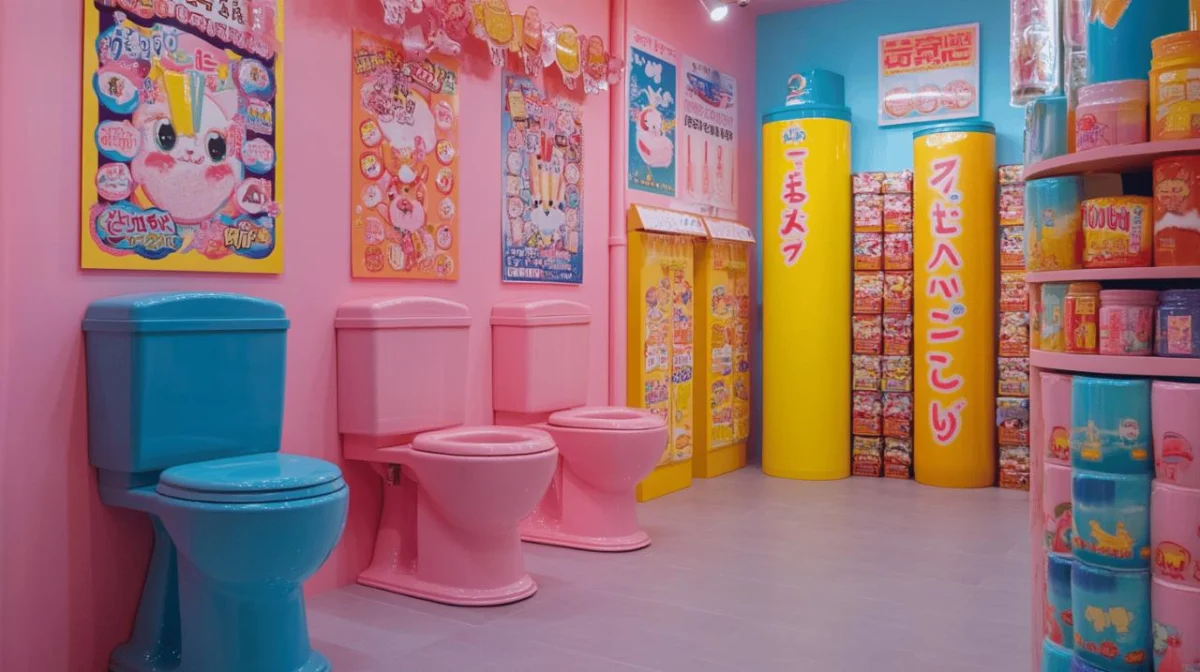
In the vast, colorful, and often surreal landscape of Japanese confectionery, few products have managed to capture the global imagination quite like the Moko Moko Mokoletto. At first glance, the product appears to be a crude gag gift: a miniature plastic toilet that requires assembly. However, beneath its bizarre exterior lies a masterclass in experiential marketing, sensory innovation, and the power of digital-native consumer trends.
Since its explosive debut in 2013, the Moko Moko Mokoletto has transcended the boundaries of a simple "snack" to become a cultural artifact of the internet age. By blurring the lines between toy, chemistry experiment, and edible treat, it has redefined how confectionery companies engage with a younger, digital-first audience.
Main Facts: Deconstructing the Mokoletto Experience
The Moko Moko Mokoletto is not merely a candy; it is a DIY assembly kit. The product typically consists of a small, plastic toilet model that the user must construct piece by piece—a process that taps into the universal appeal of model kits and building blocks.
Once assembled, the user adds water and a proprietary sachet of acidulated powder into the toilet’s tank. Through a chemical reaction, the mixture bubbles and foams, creating a sweet, frothy liquid that can be consumed directly from the bowl. This "mousse" is designed to be both a playful visual spectacle and a palatable treat.
Core Components of the Success:
- Tactile Engagement: The requirement for physical assembly fosters a sense of ownership over the final product.
- The "Ew-Factor" Appeal: The deliberate choice of a toilet aesthetic serves as a subversive, "WTF" marketing hook that inherently demands social sharing.
- Sensory Innovation: The transition from powder and water to a bubbling foam provides an interactive, multisensory experience that traditional candy bars cannot replicate.
A Chronology of a Viral Sensation
The trajectory of the Mokoletto serves as a roadmap for the modern viral product. Its rise was not accidental, but rather a perfect storm of design innovation and the emerging power of the "unboxing" culture.
2013: The Domestic Launch
When the product first hit shelves in Japan, it was marketed as a quirky, low-cost novelty. It was immediately embraced by Japanese youth, who found the irreverent humor of the product deeply appealing. In the Japanese context, where "kawaii" (cute) and "kimokawaii" (creepy-cute) aesthetics thrive, the toilet theme was less shocking than it was delightfully absurd.
2014: The Western Breakthrough
By 2014, the product began to make significant inroads into Western markets. This was facilitated by the rise of "J-Culture" enthusiasts and the growing popularity of international snack subscription boxes. As English-speaking bloggers and early YouTube pioneers began documenting their "Mokoletto experience," the product achieved cult status.
2015 – Present: Consolidation as a Pop-Culture Icon
The product moved from niche novelty shops to mainstream digital platforms. It became a staple in "weird Japan" listicles and social media challenges. The brand successfully iterated on its designs, releasing various color schemes and limited-edition versions, effectively turning a one-time gimmick into a collectible series.
Supporting Data: Digital Footprints and Market Impact
The success of Moko Moko Mokoletto is not anecdotal; it is supported by measurable engagement metrics that define the new era of marketing.
The Role of Niche Digital Media
The product’s ascent was heavily supported by blogs and community sites such as La Banane qui Parle and Un Loulou et une Poupette. These platforms were instrumental in the francophone world, acting as digital "early adopters." Data suggests that these specialized blogs acted as hubs for community engagement, with specific articles on the Mokoletto garnering thousands of unique visitors.
For instance, detailed reviews—which included step-by-step photography of the assembly process and video documentation of the foam reaction—provided the "social proof" necessary for hesitant consumers to purchase the product. These platforms were not just selling a candy; they were documenting a performance.
Community Building and the "Fantaisyland" Effect
The brand leveraged the "Fantaisyland" category of Japanese snacks—a segment dedicated to the most experimental and imaginative products. By grouping the Mokoletto with other bizarre Japanese inventions, marketers successfully framed the product as a "must-try" experience for any fan of Asian culture. This community-driven approach transformed the act of eating into a social event, where followers could comment, share their own assembly videos, and trade tips on how to optimize the "foam" reaction.
Official Responses and Manufacturer Intent
While Western observers might view the toilet motif as grotesque, Japanese manufacturers have consistently framed the product through the lens of asobi (play).
The Philosophy of "Fun-First"
Manufacturers argue that the product is designed to strip away the seriousness of the adult world. By using an object as mundane and "low-status" as a toilet, the product invites the user to engage in a moment of pure, unadulterated silliness.
Official statements from the manufacturers behind such items often emphasize the "engineering" of the experience. They invest significantly in the chemical composition of the powders to ensure the foam is consistent, safe, and visually satisfying. The goal is to provide a "wow" factor that lasts exactly as long as it takes to consume the product, making it the perfect consumable experience for a social media age.
Implications: The Future of Experiential Confectionery
The Moko Moko Mokoletto represents a paradigm shift in how food companies approach consumer behavior. It suggests several key takeaways for the future of the global snack industry.
1. The Death of the Passive Consumer
Modern consumers—particularly Gen Z and Alpha—are no longer content to simply consume a product; they want to be part of its creation. The DIY aspect of the Mokoletto proves that when you involve the consumer in the "making," you increase the value of the product exponentially. Future snack brands will likely move toward more "kit-based" experiences to compete for attention in a cluttered market.
2. Viral Design as a Competitive Advantage
In the past, marketing was about the brand’s message. Today, the product is the message. The toilet design is a "viral hook" that does the advertising work itself. When a product is inherently shareable on platforms like TikTok or Instagram, the need for traditional advertising spend is significantly reduced.
3. Cultural Translation and Adaptation
The successful export of the Mokoletto demonstrates that cultural boundaries are becoming increasingly porous. While the "toilet" joke is universal, the specific way it was marketed—as a high-tech, interactive piece of Japanese ingenuity—allowed it to bypass the "gross-out" phase and land firmly in the "collector’s item" phase.
4. The Sustainability Challenge
However, the rise of such kits is not without its critics. The reliance on single-use plastic for the "toilet" structure poses significant questions regarding the environmental impact of novelty snacks. As consumer awareness grows, the next generation of interactive candies will likely need to balance this "ludic" appeal with more sustainable, biodegradable materials.
Conclusion: A Legacy of Innovation
The Moko Moko Mokoletto is more than just a fleeting internet trend; it is a case study in how to capture the modern consumer’s fleeting attention. By daring to be absurd, the manufacturers created a product that demanded to be shared.
Whether one views it as a triumph of creativity or the peak of pointless plastic consumption, the Mokoletto remains an undeniable milestone in the history of confectionery. It reminds us that at the heart of human consumption, there remains a deep, primal desire for play. As long as brands continue to find innovative ways to spark that sense of wonder—even if it comes in the form of a tiny, plastic toilet—the world of snacks will never be boring.
As we look toward the future, the lessons learned from this "WTF" candy will undoubtedly shape the next wave of global treats, where the experience of the bite is just as important as the taste itself.

 Siti Muinah
 Azzam Bilal Chamdy