Basiran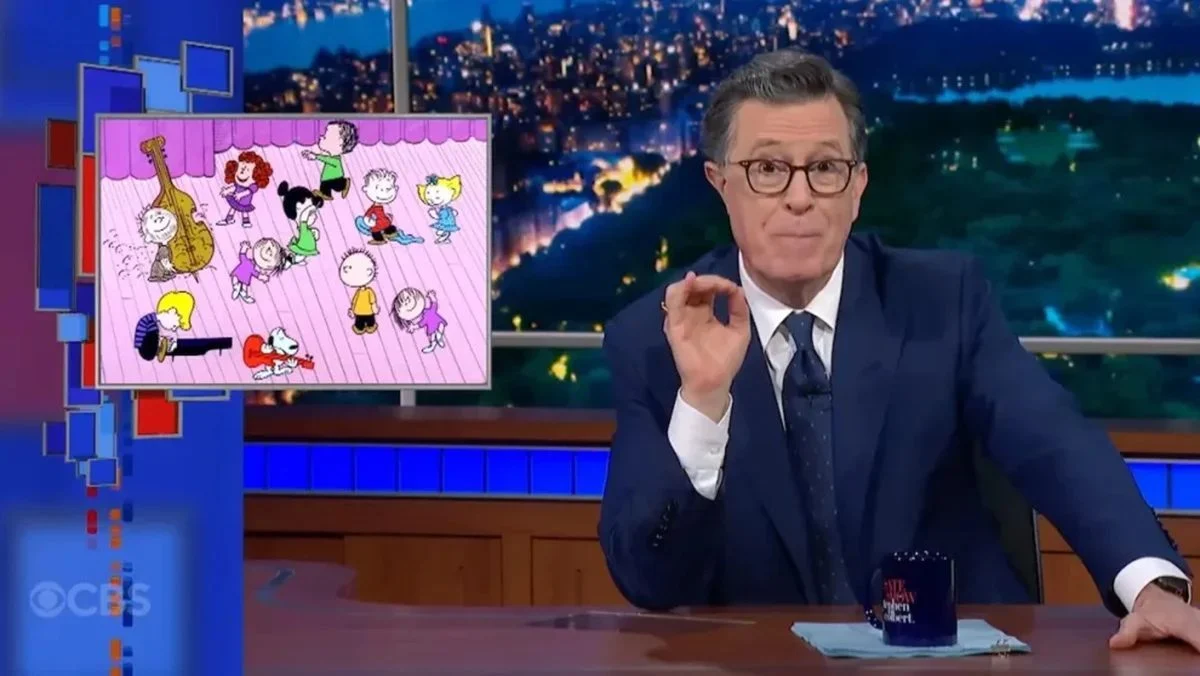
It has been less than a month since Stephen Colbert delivered his final bow as the host of CBS’s The Late Show, yet the cultural landscape of late-night television feels as though it has shifted into an entirely different era. As the network transitions into a challenging new chapter—one currently plagued by reports of cratering ratings and internal uncertainty regarding the timeslot—Colbert’s legacy remains a point of intense focus. However, the legendary host managed to leave behind one final, calculated act of disruption. In a parting gesture that was both a comedic meta-commentary on intellectual property law and a genuine logistical headache for his former employer, Colbert utilized a piece of copyrighted music without a license during his series finale. The result? CBS has been forced to settle the tab.
The Chronology: A Calculated Act of Defiance
The incident in question occurred during the May 21 series finale of The Late Show with Stephen Colbert. During the broadcast, Colbert invited his house band, Louis Cato and the Great Big Joy Machine, to perform an energetic rendition of "Linus and Lucy," the iconic jazz composition by the Vince Guaraldi Trio famously associated with the Peanuts franchise.
The performance was not a spontaneous oversight; it was a deliberate, scripted moment of irony. Before the band struck the first chord, Colbert addressed the audience with a knowing smirk, explicitly acknowledging that the production had not secured the necessary synchronization license to broadcast the track. He referenced the aggressive stance Lee Mendelson Film Productions, Inc. (LMFP)—the rights holders of the Guaraldi catalog—had taken against unlicensed uses of the music.
"Oh no," Colbert quipped during the broadcast, his delivery dripping with his signature brand of mock sincerity. "I hope this doesn’t cost CBS any money."
As it turns out, his hope was in vain. Following the broadcast, the reality of copyright enforcement caught up with the "eyeball network." The ensuing negotiations between CBS and LMFP have concluded, resulting in a mandatory payment from the network to the rights holders for the unauthorized use of the composition.
Supporting Data: The Copyright Landscape
The "Linus and Lucy" incident highlights the often-opaque world of music licensing in television. In the commercial broadcast environment, every piece of music used—from a five-second bumper to a full musical number—must be cleared through a complex web of rights holders.
While the specific dollar amount of the settlement between CBS and LMFP remains strictly confidential, the implications of such a fine serve as a cautionary tale for major media conglomerates. Industry analysts suggest that while the settlement amount is unlikely to impact the bottom line of a parent company like Paramount, the optics of the situation are significant. The payment is widely viewed as a "nuisance fee" compounded by the cost of legal overhead required to settle the dispute.

For context, the amount is almost certainly a drop in the bucket compared to the high-stakes financial maneuvers currently defining Paramount’s corporate structure. For instance, reports indicate that Paramount recently paid out $16 million in relation to the Skydance media merger—a figure that dwarfs any licensing fine. Nevertheless, for a network currently struggling to maintain its audience share, every public misstep adds to a growing narrative of institutional instability.
Official Responses: From Legal Enforcement to Altruism
The resolution of the dispute took a surprisingly benevolent turn. Rather than pocketing the settlement funds, LMFP announced that the entirety of the payment from CBS would be donated to World Central Kitchen, the non-profit organization founded by Chef José Andrés.
World Central Kitchen has become a global leader in providing immediate, nourishing meals to communities impacted by natural disasters, humanitarian crises, and civil unrest. The choice of charity was not accidental; it was, in fact, Colbert’s own preferred organization, which he has supported frequently throughout his career.
Jason Mendelson, Chairman of LMFP, provided a formal statement that managed to balance the sternness of legal enforcement with a touch of levity. "LMFP found the music’s use on The Late Show funny and entertaining, and is proud to support World Central Kitchen’s mission," Mendelson said.
However, he was quick to pivot to the broader, more serious objective of the organization’s actions. "A principal goal of our enforcement actions is to educate individuals, businesses, and government entities about the need to obtain written license agreements to use music in a commercial setting. Copyright law exists to protect the creators, and even in a comedic context, the rules of intellectual property must be respected."
The Implications: Why Licensing Matters in the Modern Era
The Colbert incident serves as a microcosm for the broader challenges facing late-night television. As traditional broadcast networks fight for relevance against streaming platforms and social media influencers, the "rules of the road" regarding content creation are being tested.
1. The Death of "Fair Use" Confusion
Many viewers operate under the misconception that using a song in a comedic or "transformative" way constitutes "fair use." In the eyes of the law, particularly when dealing with commercial broadcast television, the threshold for fair use is exceptionally high. By explicitly calling out the lack of a license, Colbert effectively signaled that he was aware of the rules but chose to bypass them to prove a point about the rigidity of intellectual property enforcement.
2. The Relationship Between Talent and Corporate Governance
There is a long-standing tradition of late-night hosts testing the boundaries of their corporate overlords. From David Letterman’s pranks on GE to Conan O’Brien’s battle for his timeslot, the history of late-night is peppered with friction between the creative team and the boardroom. Colbert’s stunt serves as a final reminder of the inherent tension in that relationship. While the network is the entity that pays the bill, the host is the one who controls the narrative—even when that narrative ends with a legal invoice.
3. The Future of Late-Night Programming
As CBS moves forward in the post-Colbert era, the network faces an uphill battle. With audience numbers in decline and the cultural relevance of the 11:35 p.m. slot in question, the network cannot afford many more "unforced errors." The cost of the licensing fee is negligible, but the message it sends—that the network is still navigating the basics of broadcast compliance—is one that CBS executives would prefer to avoid.
Conclusion: A Fitting Final Act
In many ways, the "Linus and Lucy" affair was the perfect summary of Stephen Colbert’s tenure at The Late Show. It was intellectually curious, slightly mischievous, deeply aware of its own place in the media ecosystem, and ultimately, it found a way to leverage the power of the platform to support a cause he believed in.
By forcing CBS to write a check that would end up in the hands of World Central Kitchen, Colbert managed to turn a potential copyright infringement suit into a final act of charity. It was a move that satisfied his inner contrarian while ensuring that his final, unauthorized note left a positive mark on the world.
As for CBS, the network is left to pick up the pieces, navigate its ratings slump, and perhaps, in the future, pay a little closer attention to the synchronization licenses of their house band’s setlist. The Peanuts theme may be light and whimsical, but in the halls of copyright law, the music always demands a price—and this time, Stephen Colbert ensured that price was paid for a good cause.

 Siti Muinah
 Azzam Bilal Chamdy