Rifan Muazin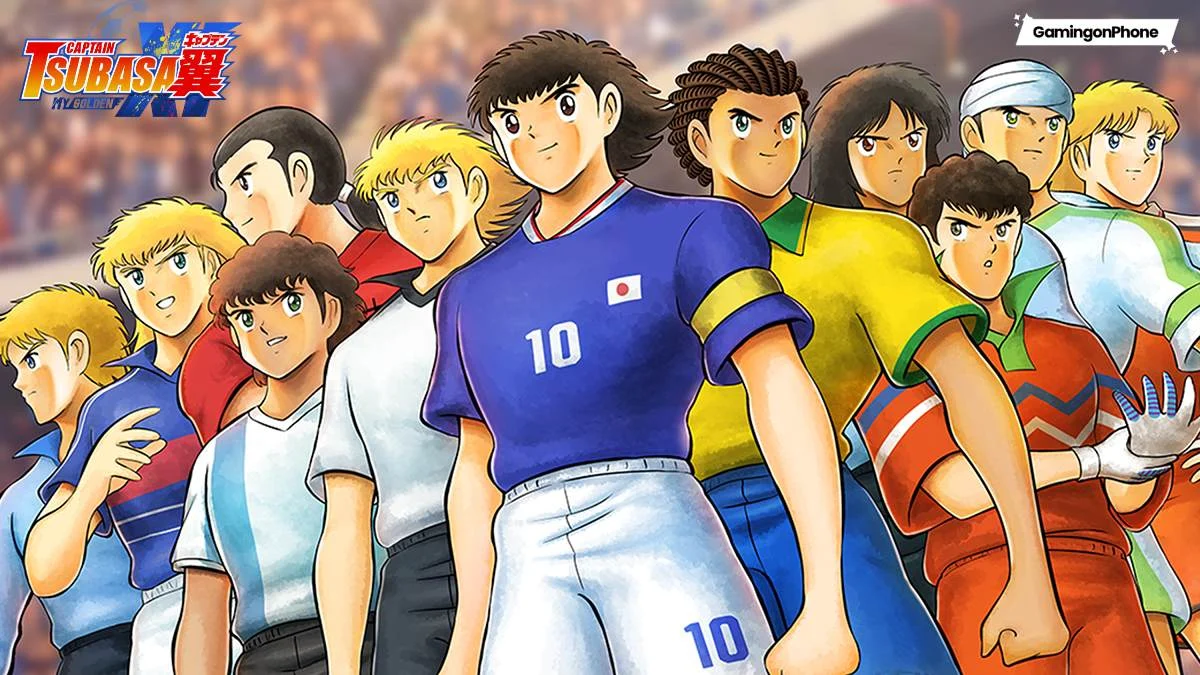
The landscape of mobile sports gaming has been fundamentally altered by the release of Captain Tsubasa: My Golden XI. Developed by ALPSE, this title deviates from the conventional arcade-style football experience, opting instead for a deep, strategic simulation that captures the spirit of the legendary manga series. While games like FIFA or eFootball rely on twitch reflexes and real-time joystick control, My Golden XI demands the mind of a tactician, focusing on team composition, character growth, and the calculated deployment of iconic special moves.
For newcomers, the sheer density of the game’s mechanics—ranging from complex gacha systems to board-based training modules—can be intimidating. This guide serves as a definitive roadmap for navigating the complexities of the game, ensuring that both casual fans and competitive players can build a championship-caliber squad.
Gameplay Overview: Beyond the Whistle
At its core, Captain Tsubasa: My Golden XI is an exercise in resource management and tactical foresight. Players are tasked with assembling a roster of iconic characters, such as Tsubasa Ozora, Kojiro Hyuga, and Genzo Wakabayashi. Each athlete is defined by a set of core statistics: Stamina, Speed, Body, Technique, Vision, and Power. These attributes dictate their performance on the pitch, but they do not function in a vacuum.

Unlike action-oriented football games, the matches here are primarily automated simulations. Your role as the manager is centered on the pre-match preparation. Success is dictated by your ability to analyze your squad’s strengths and weaknesses, placing players in positions that align with their inherent attributes and ensuring your chosen formation counters the opponent’s strategy. When the whistle blows, the game transitions into a visual spectacle where the iconic anime cutscenes—from Hyuga’s "Tiger Shot" to Tsubasa’s signature drives—trigger during pivotal duels, tackles, and saves.
Chronology of Progression: A Strategic Roadmap
New players often fall into the trap of attempting to develop their entire roster simultaneously. This is a suboptimal strategy that dilutes resources and stalls progression. A disciplined approach to the game’s progression cycle is essential.
Phase 1: The Foundation (Early Game)
Upon launching the game, your immediate objective should be the completion of the introductory missions. These are not merely tutorials; they are the primary source of early-game currency and character fragments. Utilize the free recruitment banners provided at launch to secure a base squad. Focus entirely on your "Starting Eleven." Ignore the temptation to level up secondary or bench players until your core team has reached a stable level of synergy and power.

Phase 2: Mastering the Training Board
The training system in My Golden XI is a departure from the industry standard of "EXP feeding." Instead, the developers have implemented a board-based mini-game, conceptually similar to titles like Monopoly GO!. Players roll to move across a board, landing on tiles that grant specific training cards. These cards are the keys to unlocking stat boosts. The depth of this system lies in your ability to trigger combination bonuses. By strategically choosing which cards to keep and which to swap, you can generate exponential growth in your players’ stats. This is the most efficient way to break through power-level plateaus.
Phase 3: The Versus Grind
Once your team has a baseline of strength, the "Versus Matches" mode becomes your primary engine for growth. This mode requires you to challenge AI-controlled squads with escalating power requirements. Success here rewards you with essential upgrade materials and rare character fragments. It is crucial to monitor the specific "boost effects" tied to these matches, as fielding specific players can significantly amplify your rewards.
Supporting Data: The Mechanics of Team Success
To excel in Captain Tsubasa: My Golden XI, one must move beyond surface-level stats. The game utilizes a sophisticated compatibility engine that influences every facet of the match.

Positional Integrity
The game tracks "positional ratings" with high sensitivity. For instance, placing Kojiro Hyuga in a midfield role, while technically possible, will result in a significant drop in team efficiency. His stats are weighted toward offensive pressure and raw striking power; therefore, he must be positioned in the final third to maximize his utility. Conversely, players with high Vision and Technique attributes act as the engine room of the squad and should be placed in central midfield roles to dictate the flow of the match.
Tactical Formations
The game features a variety of classic football formations, including 4-4-2, 4-3-3, and the more aggressive 3-4-1-2. These are not just aesthetic choices. Each formation applies unique modifiers to your team’s collective power. Before every kickoff, you must evaluate the opposition. If an opponent relies on heavy wing-play, a 4-4-2 setup might be safer, while a 4-3-3 could allow you to overwhelm a weaker defensive line.
Combination Skills
Once a player reaches the E+ tier, "Combination Skills" become available. These are passive and active bonuses triggered by specific player groupings. If you have characters with established narrative history or playstyle synergy, the game rewards you with stat multipliers. Building a team around these combinations is the difference between a mid-tier squad and a legendary one.

Official Perspectives and Development Philosophy
In discussions regarding the game’s mechanics, ALPSE has emphasized that My Golden XI was designed to mirror the "high-stakes, high-emotion" nature of the anime. By choosing a simulation-based approach, the developers aimed to highlight the individual personalities and unique techniques of the cast rather than simply rewarding fast fingers. The inclusion of the training board system was a deliberate choice to ensure that player growth feels like an active, engaging process rather than a passive accumulation of numbers.
The development team has also indicated that the Gacha banners are designed to rotate periodically, introducing limited-time variants of classic characters. They advise players to exercise patience, noting that the game’s resource economy is balanced to reward those who save currency for high-value, event-specific pulls rather than those who spend recklessly on every banner.
Implications: The Long-Term Outlook
For the mobile gaming community, Captain Tsubasa: My Golden XI represents a maturation of the sports-simulation genre on handheld devices. It bridges the gap between traditional management sims and modern hero-collector RPGs.

Key Tips for Sustained Success
- Prioritize the Starting Eleven: Do not spread resources thin. Vertical growth (strengthening your main 11) is always superior to horizontal growth (leveling your whole bench).
- Daily Consistency: The daily mission system is the most reliable source of premium currency. Even if you only have ten minutes, completing these tasks is mandatory for F2P (free-to-play) success.
- Manual Oversight in High-Difficulty Matches: While the "Auto" and "Skip" features are excellent for grinding resources, they are not a replacement for human judgment in high-difficulty Versus matches. When the power gap is narrow, manual intervention in strategy adjustment is the deciding factor.
- Farm Fragments: Never ignore the character fragment nodes in the mission tabs. They are the most consistent way to unlock and upgrade your star players without relying solely on the randomness of the gacha.
As the meta evolves, the importance of "Combination Skills" will likely grow. Players who stay ahead of the curve by experimenting with different lineup synergies will find themselves dominating the leaderboards. With its blend of nostalgic storytelling and rigorous strategic depth, Captain Tsubasa: My Golden XI is poised to remain a staple for sports fans and strategy enthusiasts alike. Whether you are a long-time fan of the franchise or a newcomer to the Captain Tsubasa universe, the path to the championship is clear: prepare, train, and build your golden eleven.


 Ali Ikhwan
 Nana Wu