Ali Ikhwan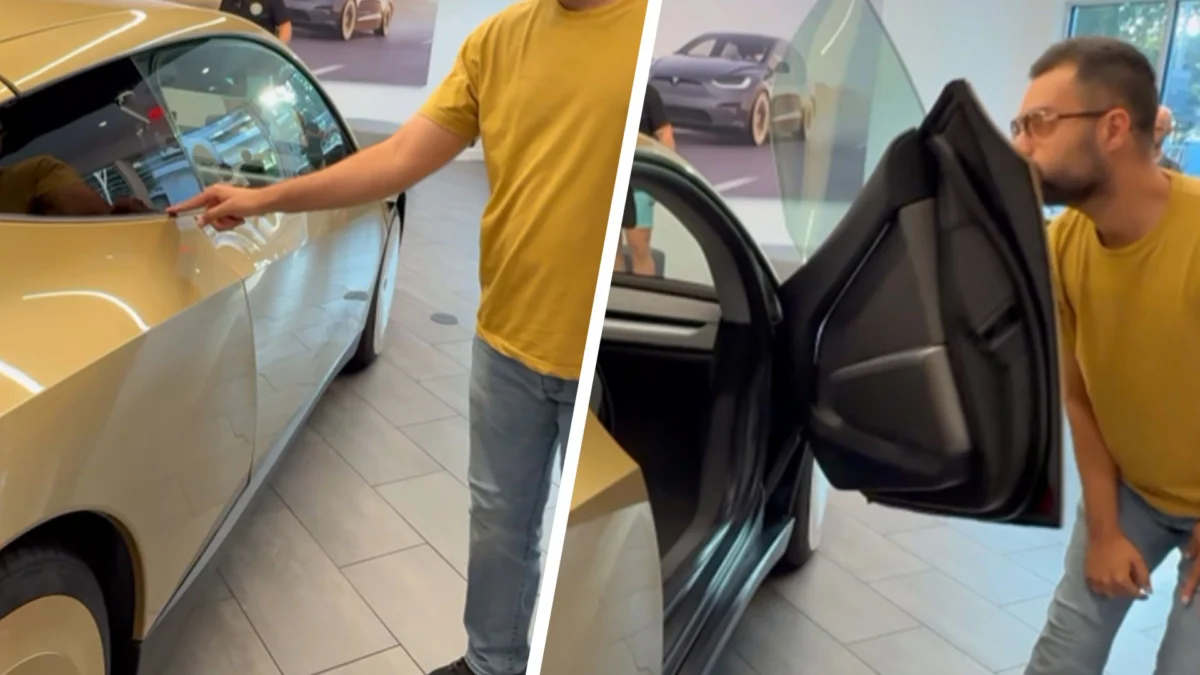
In the evolving narrative of Tesla’s design philosophy, form has frequently taken precedence over traditional automotive utility. Following the polarizing reception of the Cybertruck—a vehicle that has faced relentless scrutiny regarding its real-world performance, manufacturing quality, and aerodynamic practicality—the spotlight has shifted to Tesla’s latest vision for the future of urban mobility: the Cybercab. However, as the autonomous vehicle begins to emerge in testing environments, it is encountering a familiar foe: design-led controversy.
While the primary debate surrounding the Cybercab has focused on the safety of fully autonomous, steering-wheel-free transit, a more immediate, tactile issue has surfaced. Recent reports and social media documentation have highlighted a problematic interaction between the vehicle’s dramatic, upward-swinging butterfly doors and unsuspecting pedestrians. This "love tap" phenomenon, as some have characterized it, has sparked a broader conversation about the risks of prioritizing aesthetic ambition over human-centric safety standards.
The Core Conflict: When "Cool" Becomes Dangerous
The Cybercab’s design is unmistakably futuristic. Eschewing the conventional sliding or hinged doors typical of ride-hailing vehicles, Tesla opted for butterfly doors that arc upward and outward. The intent is clearly to evoke the sleek, high-end profile of a concept sports car, positioning the vehicle not merely as a utility tool, but as an aspirational piece of technology.
However, the physical reality of these doors in crowded, high-traffic urban environments is proving to be a point of friction. Emerging video evidence shows that when the vehicle’s sensors fail to register a person standing in a specific blind spot, the door does not exhibit a sophisticated "halt-on-contact" mechanism. Instead, it continues its mechanical arc, striking the individual with enough force to be felt, if not necessarily to cause immediate severe injury.
For many, this raises a fundamental question: Is the design of the Cybercab fundamentally incompatible with the chaotic reality of city streets?
A Chronology of Design Skepticism
To understand the current tension surrounding the Cybercab, one must look at the precedent set by its predecessor, the Cybertruck. The timeline of Tesla’s recent design evolution provides context for why public trust in these "disruptive" features is currently fragile.
- Late 2019: The Cybertruck is unveiled, with Elon Musk promising an "exoskeleton" design that is virtually indestructible. The design is met with both awe and ridicule for its sharp, brutalist aesthetic.
- 2023-2024: As the Cybertruck hits the road, reports surface of structural concerns, including susceptibility to corrosion, performance issues in extreme weather, and the failure of Musk’s promise that the vehicle could serve as a "boat."
- October 2024: Tesla officially debuts the Cybercab, a dedicated autonomous vehicle. The removal of all manual controls (pedals and steering wheel) signals a total commitment to Level 5 autonomy.
- September 2026: User-generated video footage circulates online, demonstrating that the Cybercab’s butterfly doors lack a fail-safe mechanism, leading to physical contact with bystanders.
This timeline reflects a recurring pattern: Tesla launches a product that prioritizes a "wow" factor, only for consumers and testers to discover that the vehicle’s design creates unforeseen, and often frustrating, usability or safety gaps.
Supporting Data and User Experiences
The "love tap" incident is not merely an isolated anecdote; it represents a failure in obstacle detection systems that are expected to be flawless in an autonomous vehicle. The individual who captured the footage noted that the door seems to ignore objects within a specific blind spot.
The Arguments in Defense
Proponents of the current design argue that these incidents are minor and that the force exerted by the motor is insufficient to cause significant harm. The "love tap" descriptor is used by supporters to minimize the incident, suggesting that the "safety" of the vehicle remains intact because it does not possess the mass or force of a heavy mechanical door closing.
The Arguments in Opposition
Critics, however, highlight the diversity of the passenger population. As one social media commentator noted, what constitutes a "gentle tap" for an able-bodied adult is a potential safety hazard for a child, an elderly person with limited mobility, or someone carrying fragile items. The psychological toll of an autonomous robot car "hitting" a pedestrian—even if the impact is minor—could significantly hinder public adoption of autonomous transit.
The Implications of "Style-First" Engineering
The controversy surrounding the Cybercab doors serves as a case study for the implications of style-first engineering. In the automotive industry, human-machine interface (HMI) design is usually dictated by decades of ergonomic research. When a company bypasses these standards to create a unique visual identity, it risks alienating the very users it intends to serve.
1. Liability and Regulatory Hurdles
If a vehicle—even an autonomous one—consistently makes physical contact with pedestrians, the regulatory landscape becomes significantly more complex. Autonomous vehicles are already under the microscope of agencies like the National Highway Traffic Safety Administration (NHTSA). A flaw that seems "minor" to a software engineer could be classified as a recurring safety hazard by regulators, potentially leading to mass recalls or forced design changes that could delay the rollout of the entire fleet.
2. The Erosion of User Trust
Tesla’s brand equity is built on the promise of the future. However, if that future includes "getting hit by the door of your taxi," that promise loses its luster. Trust is the most vital currency in the autonomous vehicle market. If a passenger fears that their vehicle is physically aggressive or poorly calibrated, they will inevitably return to traditional ride-sharing services that prioritize passenger comfort and predictability.
3. Practicality in Urban Environments
The butterfly door is inherently space-inefficient. In a crowded city center or a dense airport pickup zone, a door that swings upward and outward requires significantly more clearance than a standard sliding door. The design, while striking, may be fundamentally ill-suited for the very environments where the Cybercab is designed to operate.
The Broader Context: Learning from the Cybertruck
The Cybercab does not exist in a vacuum. It follows a series of high-profile design critiques leveled at the Cybertruck. From reports of the vehicle struggling to navigate snowy terrain to the revelation that the "unbreakable" steel is not quite as resilient as once claimed, the public perception of Tesla’s design department has shifted from "visionary" to "untested."
When a company consistently markets its design choices as features while users experience them as bugs, a gap in credibility opens. The Cybercab’s door issue is, in many ways, the latest manifestation of this gap. It highlights a culture that appears to prioritize a specific aesthetic vision—one that looks good in a press release or a high-gloss promotional video—over the messy, unpredictable, and often fragile nature of the real world.
Conclusion: A Pivot Point for Autonomous Transit
The Cybercab represents the pinnacle of Tesla’s engineering ambition, yet it remains tethered to the same problems that have plagued its previous vehicle launches. While the "love tap" of a door might seem like a triviality to some, it is a symptomatic issue that highlights a deeper concern regarding Tesla’s design methodology.
As the industry moves toward a future defined by autonomous transit, manufacturers must reconcile the desire for sleek, futuristic aesthetics with the uncompromising demands of safety and accessibility. If Tesla is to succeed in the autonomous ride-hailing market, it will need to prove that its designs are not just visually compelling, but also fundamentally respectful of the people and environments they interact with. For now, the Cybercab’s doors stand as a reminder that in the race to automate the world, the most sophisticated software in the world cannot compensate for a lack of basic, human-centric design.

 Asep Darmawan
 Azzam Bilal Chamdy