Azzam Bilal Chamdy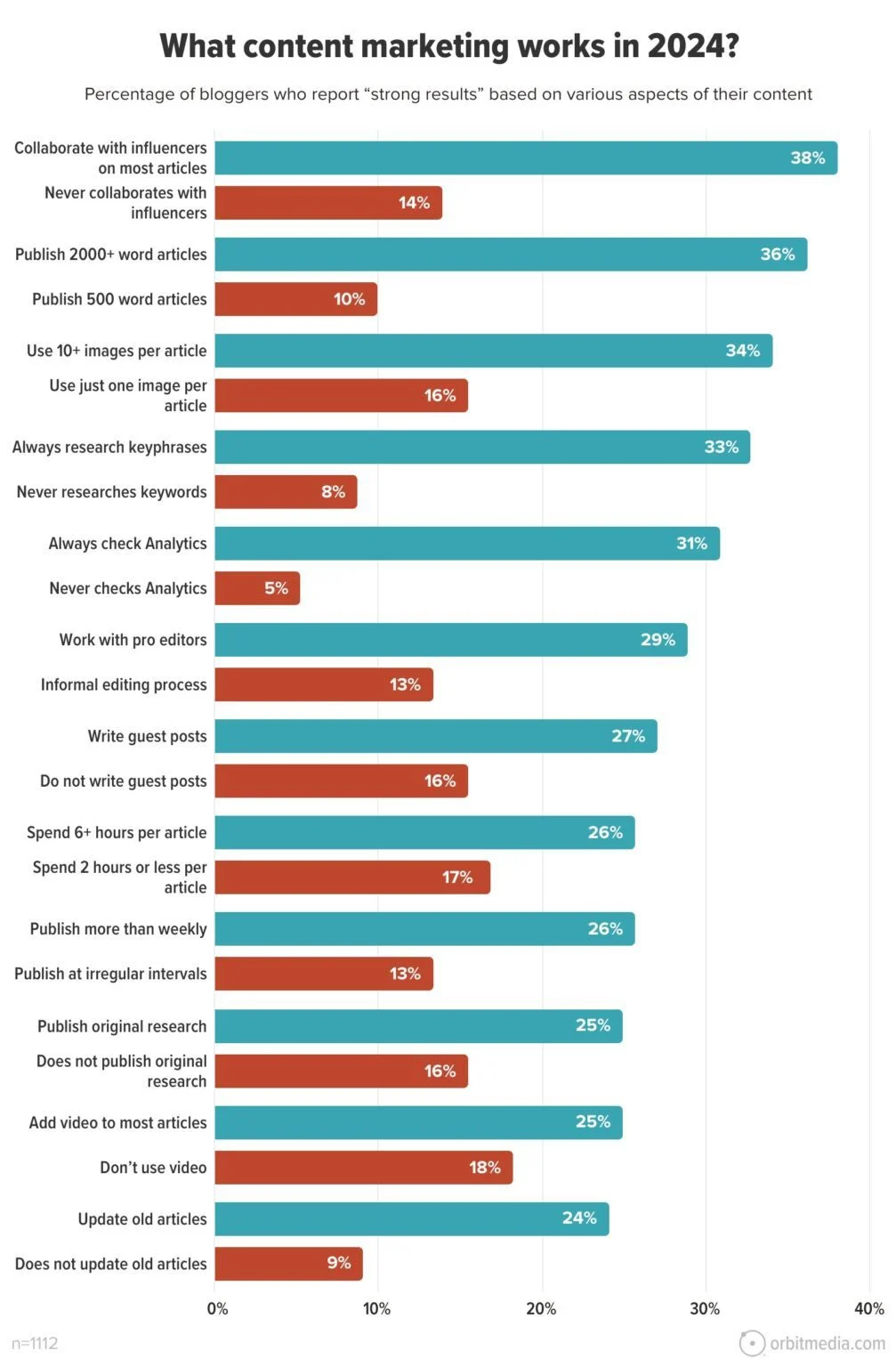
For over a decade, the digital landscape has shifted beneath the feet of content marketers. While the fundamental promise of blogging—improved SEO, thought leadership, and audience engagement—remains a pillar of modern business, the execution has become increasingly complex. As generative AI floods the market and search engine algorithms evolve, the "spray and pray" approach to content is officially dead.
To navigate this new era, marketers are turning to the 11th Annual Blogger Survey by Orbit Media, a definitive industry benchmark that offers a sobering yet optimistic look at the state of professional blogging.
The State of the Blog: Main Facts and Current Trends
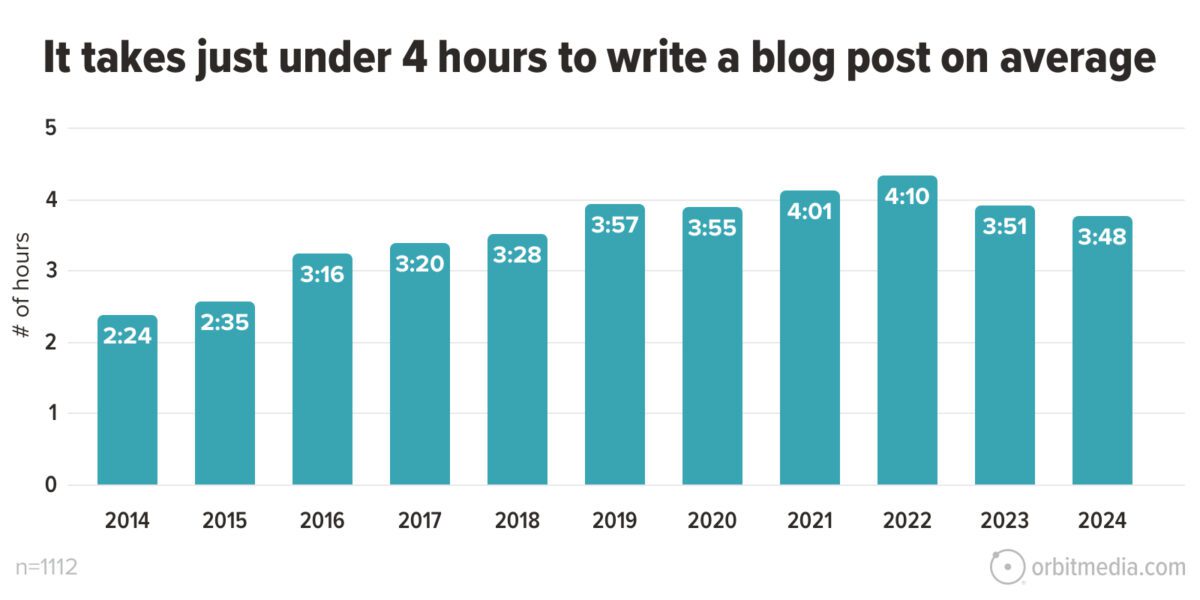
The most striking revelation from this year’s survey is the resilience of the human element. Despite the explosion of AI tools that promise to slash production time, the average time required to write a blog post remains remarkably high: three hours and forty-eight minutes.

This figure is just three minutes less than what was reported the previous year. This continuity defies the narrative that automation is making high-quality content generation effortless. Instead, the data suggests that while AI may assist in brainstorming or drafting, the heavy lifting of strategic alignment, fact-checking, and creative refinement remains a human-centric endeavor.
A Chronology of Declining Traffic and Rising Standards
To understand where we are, we must look at where we have been. Over the last five years, the survey has tracked a steady, troubling trend: fewer content marketers are reporting "strong results" from their blogging efforts.
- The Traffic Dilemma: For years, search engines were the primary engine of growth for blogs. However, as Google transitions toward "zero-click" searches and AI-generated answers, organic traffic is becoming harder to capture.
- The "Harder to Achieve" Shift: Respondents consistently report that it has become significantly more difficult to gain traction with traditional blog formats.
- The Pivot: Because the "easy" traffic from search is drying up, marketers are being forced to evolve their strategies—moving away from passive content toward platforms where the audience is already engaged.
Supporting Data: The Anatomy of a High-Performing Blog
Orbit Media’s research isolates specific variables that distinguish successful blogs from those struggling to gain momentum. The findings offer a roadmap for those looking to pivot:
1. The Power of "Big Effort"
The data shows a direct correlation between time investment and results. Bloggers who consistently spend four or more hours per post and aim for long-form content (2,000+ words) are statistically more likely to report "strong results." There is no shortcut to authority; depth of research and comprehensive coverage are still the primary drivers of trust.
2. The Cadence of Consistency
Frequency matters. The survey suggests that a bi-weekly posting cadence is the minimum requirement for maintaining strong performance. The modern reader has high expectations; they are intolerant of subpar content and uninterested in erratic publishing schedules.
3. Treat Your Blog Like a Social Feed
Perhaps the most significant takeaway is the recommendation to treat a blog with the same strategic rigor as a social media stream. Social platforms invest millions in user engagement metrics; successful blogs must mirror this by focusing on:

- Iterative Testing: Using data to see what works.
- Visual Storytelling: Incorporating elements that capture attention.
- Interactive Components: Keeping the user engaged rather than just reading and leaving.
Insights from the Expert: A Q&A with Andy Crestodina
To provide context to these findings, we sat down with Andy Crestodina, CMO and Co-Founder of Orbit Media, a veteran in the digital marketing space.
Q: What research findings were the most surprising to you this year?
Crestodina: "The data consistently shows that big efforts drive big outcomes. What’s surprising isn’t that this is true, but that so many programs continue to stick with low-effort strategies. They post short-form content on an erratic cadence, avoid collaboration, and skip video. If you aren’t doing the work, you should expect low results. The data is a mirror; it tells us exactly why we aren’t seeing the ROI we want."
Q: You’ve noted that podcasters report higher success rates. Why is that?
Crestodina: "It tracks perfectly with the broader data. Podcasters are rarely ‘going it alone.’ They are collaborating, they are hitting the record button, and they are creating multi-format content. They aren’t just typing into a keyboard. The podcasting format naturally forces you to do the ‘other’ things—like interviewing experts and producing original insights—that drive actual results."

Q: With traffic harder to come by, how should we measure success?
Crestodina: "We need to look deeper than the most visible metrics. Traffic is easy to track, but it’s often a vanity metric. The most important outcomes—word-of-mouth, top-of-mind awareness, and bottom-of-funnel conversions—are the hardest to measure, yet they are the ones that actually sustain a business. We must move away from the obsession with search traffic and focus on the business impact of our content."
Implications: The Strategic Pivot for 2025
The data from the 11th Annual Blogger Survey provides a clear mandate for marketing leaders: the era of the passive, search-reliant blog is over. To thrive, brands must implement the following changes:
1. Embrace "Rented Land"
Crestodina’s own experience serves as a case study. Despite the old industry dogma of "don’t build on rented land," he launched a LinkedIn newsletter. The result? Lower blog traffic, but significantly higher visibility and engagement. Brands should be where their audience lives, whether that is on LinkedIn, in email newsletters, or through community-driven platforms.

2. Repurpose with Intent
Every piece of content should be the start of a chain reaction. A single, high-effort article should serve as the source material for social media snippets, video scripts, and newsletter segments. If you are writing a piece that cannot be repurposed, you are failing to leverage your assets.
3. Focus on "Bottom-of-Funnel" Value
Content should no longer exist solely to capture a random searcher looking for a definition. It should exist to answer the specific questions of a prospect who is already considering your brand. By focusing on deep, problem-solving content, you move from "traffic generation" to "revenue generation."
4. Human-AI Hybridization
AI is a tool for efficiency, not a replacement for strategy. As the survey shows, 80% of bloggers are using AI, yet performance has not skyrocketed because AI lacks the human nuance of brand storytelling. Use AI for drafting, but use human experts for the final polish, the unique perspective, and the strategic direction that AI simply cannot provide.

Conclusion: Setting Realistic Expectations
The data provided by Orbit Media is a necessary reality check. If your marketing program is built on low-effort, high-frequency, unoriginal content, the data tells us exactly what to expect: diminishing returns.
The path forward is defined by higher standards. It requires a commitment to deep, well-researched, and strategically distributed content. It requires a shift in focus from "how many people clicked this" to "how many people were influenced by this."
As we look toward 2025, the winners will be the brands that stop chasing the algorithm and start chasing the audience. By leaning into collaborative formats, prioritizing high-effort production, and embracing the multi-channel reality of modern content, marketers can navigate this transition and build a sustainable, high-performing content machine.


 Siti Muinah
 Dwi Wanna