

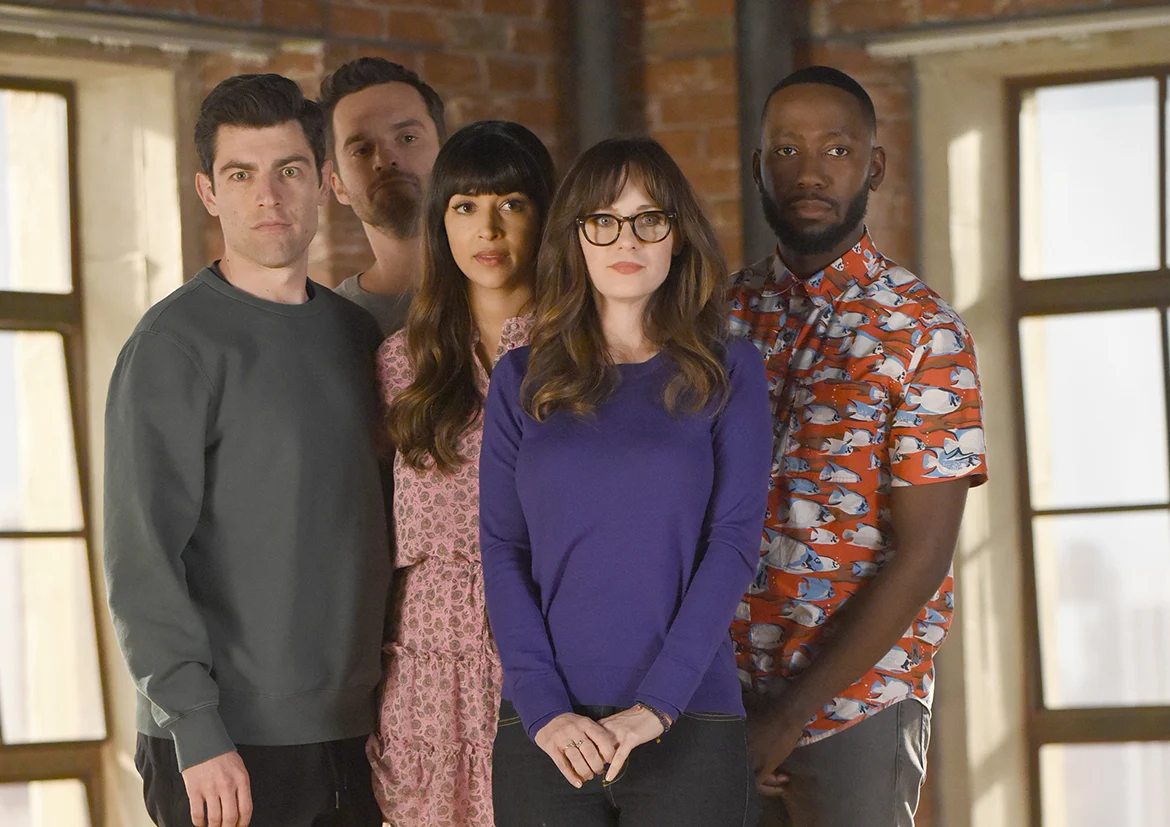
It is nearly impossible for fans of modern television to imagine the loft at 836 Traction Avenue without the eccentric, cat-loving, puzzle-obsessed antics of Winston Bishop. Yet, according to series lead Zooey Deschanel, the character—and the actor who brought him to life—almost never happened. In a recent revelation that highlights the often-fickle nature of television casting, Deschanel shared that the New Girl ensemble had to stage a grassroots internal campaign to convince studio executives that Lamorne Morris was the only man for the job.
The story of how Morris ascended to his role as a cornerstone of the ensemble comedy is a testament to the power of cast chemistry and the persistence of creators who recognize lightning in a bottle.
The Genesis of an Ensemble: A Casting Hurdle
To understand the stakes of the casting process, one must look back at the chaotic early days of New Girl. Created by Elizabeth Meriwether, the show debuted on Fox in 2011 with a premise that seemed simple enough: a quirky teacher moves into a loft with three single men after a bad breakup.
However, the pilot process was far from seamless. Initially, the role of "Coach"—a former athlete turned personal trainer—was occupied by Damon Wayans Jr. When Wayans Jr. had to depart the series due to contractual obligations with another project, the show’s producers were left with a void. This paved the way for the creation of Winston Bishop, a character who would eventually become the show’s wild card and fan-favorite eccentric.
Lamorne Morris, already a familiar face in the audition circuit, had initially tested for the role of Coach. Despite a strong performance, the opportunity slipped through his fingers, and he pivoted to another pilot that ultimately failed to gain traction. When the producers returned to the drawing board for the role of Winston, the cast members, who had spent months navigating the grueling pilot season together, remembered the actor who had impressed them months prior.
A Grassroots Campaign: The Cast’s "Fight" for Morris
During an appearance on the Zach Sang Show, Deschanel offered an intimate look at the behind-the-scenes lobbying that took place. According to the actress, the casting process for the role of Winston had become repetitive and uninspired.
"I remember reading with so many guys for the role of Winston," Deschanel recounted. "And I just kept thinking, ‘What about Lamorne? That guy is so good.’"
The sentiment was not hers alone. Jake Johnson (Nick Miller) and Max Greenfield (Schmidt), who had spent their own audition processes crossing paths with Morris, were equally convinced. "Jake loved him. Max loved him. They all knew him because they had all been in the audition process together originally," she noted.
However, studio and network executives remained unconvinced, citing the typical industry concerns regarding "fit" and "marketability." In an era where studio heads often rely on demographic data and traditional pilot test results, the ensemble’s insistence on Morris was seen as a gamble.
"He was the one that everybody was like, ‘Oh, I don’t know,’" Deschanel said. Refusing to accept the rejection, the cast took an unusual step: they organized a letter-writing campaign. Deschanel, along with her co-stars, reached out to the heads of the studio and the network directly.
"We were all like, ‘Just putting my two cents in, you know… we think Lamorne is the best, best, best for this character,’" Deschanel recalled. "I was like, ‘I can’t see anyone else playing this part.’"
This collective advocacy is rare in the high-stakes environment of network television, where actors are often expected to remain passive observers of the casting process. The cast’s decision to risk their political capital for a fellow actor underscores the genuine camaraderie that eventually translated into the show’s legendary on-screen chemistry.
Chronology: From Pilot Woes to Emmy Glory
- Early 2011: Lamorne Morris auditions for the role of Coach in the pilot of New Girl. The role is eventually cast with Damon Wayans Jr.
- Mid-2011: Wayans Jr. exits the project. Production seeks a new roommate to round out the loft.
- Late 2011: The cast of New Girl lobbies network and studio executives on behalf of Morris for the role of Winston Bishop.
- 2011–2018: New Girl airs on Fox for seven seasons, becoming a cultural touchstone. Morris’s portrayal of Winston evolves from the "straight man" to the show’s most unpredictable and comedic element.
- 2024: Lamorne Morris cements his status as a dramatic and comedic heavyweight by winning an Emmy Award for his role as Deputy Witt Farr in the FX series Fargo.
The Impact of the "Winston Effect"
When Morris finally stepped into the role of Winston Bishop, the show’s dynamic shifted significantly. Initially written as a somewhat brooding former basketball player returning from Latvia, Winston slowly morphed into the character fans adore today: a sensitive, cat-loving, prank-obsessed, and often baffling individual who serves as the moral and comedic anchor of the group.
The implications of Morris’s casting go beyond the success of the show itself. New Girl is often cited in academic and industry circles as a prime example of the "ensemble comedy" done right. Had the network successfully blocked Morris, the show likely would have lacked the bizarre, high-frequency energy that made Winston the perfect foil to the neurotic Schmidt and the cynical Nick Miller.
The success of the cast’s intervention serves as a case study in "creative intuition." Executives rely on algorithms and test audiences; actors rely on their ability to perceive comedic timing and interpersonal chemistry. By trusting their gut, the New Girl cast ensured that the final piece of their puzzle was not just a replacement, but a transformation.
Official Responses and Industry Recognition
The industry has long since validated the cast’s intuition. While New Girl was a ratings success, the individual accolades for its cast have continued to grow long after the show’s conclusion.
Lamorne Morris’s journey culminated in 2024 with an Emmy win for his gripping performance as Deputy Witt Farr in the fifth season of FX’s Fargo. The award was a watershed moment, proving that the comedic chops he honed on the set of New Girl provided the perfect foundation for a versatile dramatic career.
In interviews following his win, Morris has frequently referenced his time on New Girl as his "acting school." He has credited his co-stars with helping him navigate the pressures of a major network hit, acknowledging that the bond they formed during those early, uncertain days of the pilot set the tone for the rest of his career.
Looking Back: A Legacy of Collaboration
The story of how Lamorne Morris became Winston Bishop is more than just a piece of trivia for superfans. It is a story about the collaborative nature of television production. It reminds us that behind the polished episodes and the carefully crafted scripts, there is a human element—a group of actors working to protect the integrity of the project they have committed their lives to.
Zooey Deschanel’s admission that the cast had to "fight" for Morris serves as a poignant reminder that success is never guaranteed. In the competitive landscape of Hollywood, where thousands of actors audition for a handful of roles, the difference between a forgotten pilot and a seven-season hit can often come down to a single, well-timed email from a lead actress to a studio executive.
As New Girl continues to find new generations of fans through streaming services, the character of Winston Bishop remains a beacon of character-driven comedy. His presence is a permanent tribute to the fact that when the cast of a show believes in each other, the audience will follow.
"I can’t see anyone else playing this part," Deschanel concluded. Thirteen years later, millions of viewers around the world would wholeheartedly agree. The loft was never the same, and television was all the better for it.










