Muslim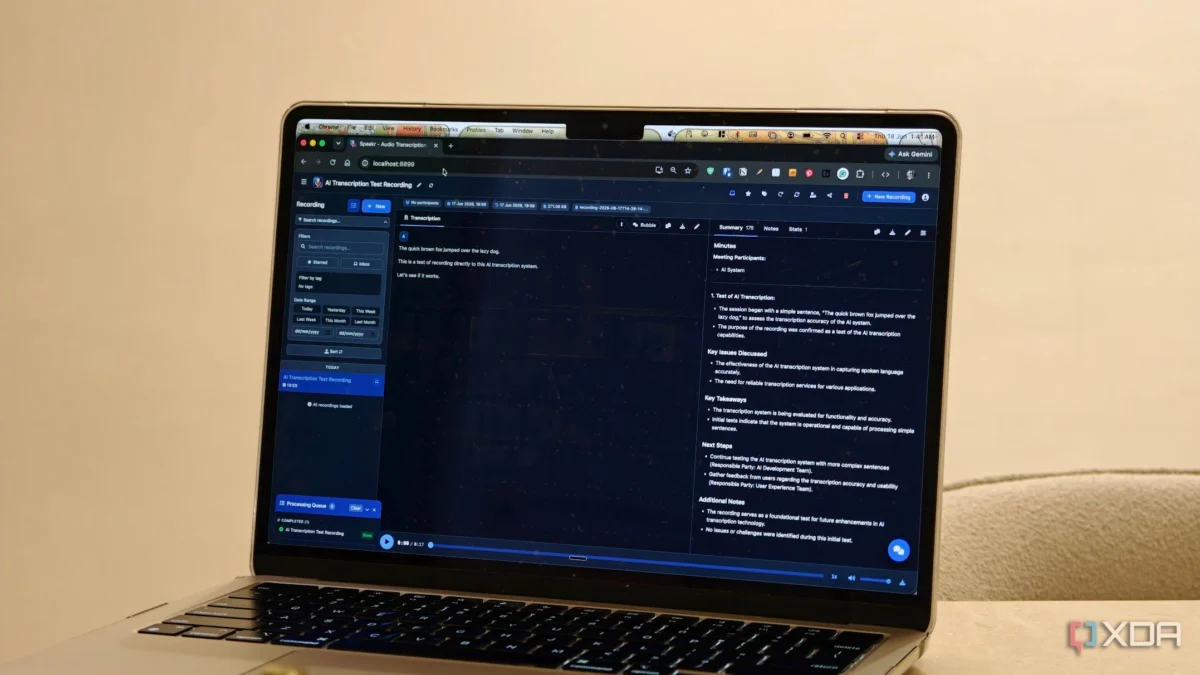
In the modern professional landscape, the sheer volume of information generated during meetings, interviews, and brainstorming sessions is staggering. For journalists, consultants, and business owners, the "audio note" has become the primary vessel for raw thought. However, the paradox of these recordings is that they are often useless until they are processed. Listening back to an hour-long meeting is an inefficient drain on productivity, and navigating a folder of smartphone recordings—often labeled with cryptic, auto-generated filenames—is a recipe for frustration.
For years, the industry standard has been cloud-based transcription services like Otter.ai. These platforms offered the promise of searchable, organized text. Yet, as the digital economy shifts toward "subscription fatigue" and privacy concerns move to the forefront of the tech conversation, many power users are reconsidering the necessity of offloading their most sensitive data to third-party servers.
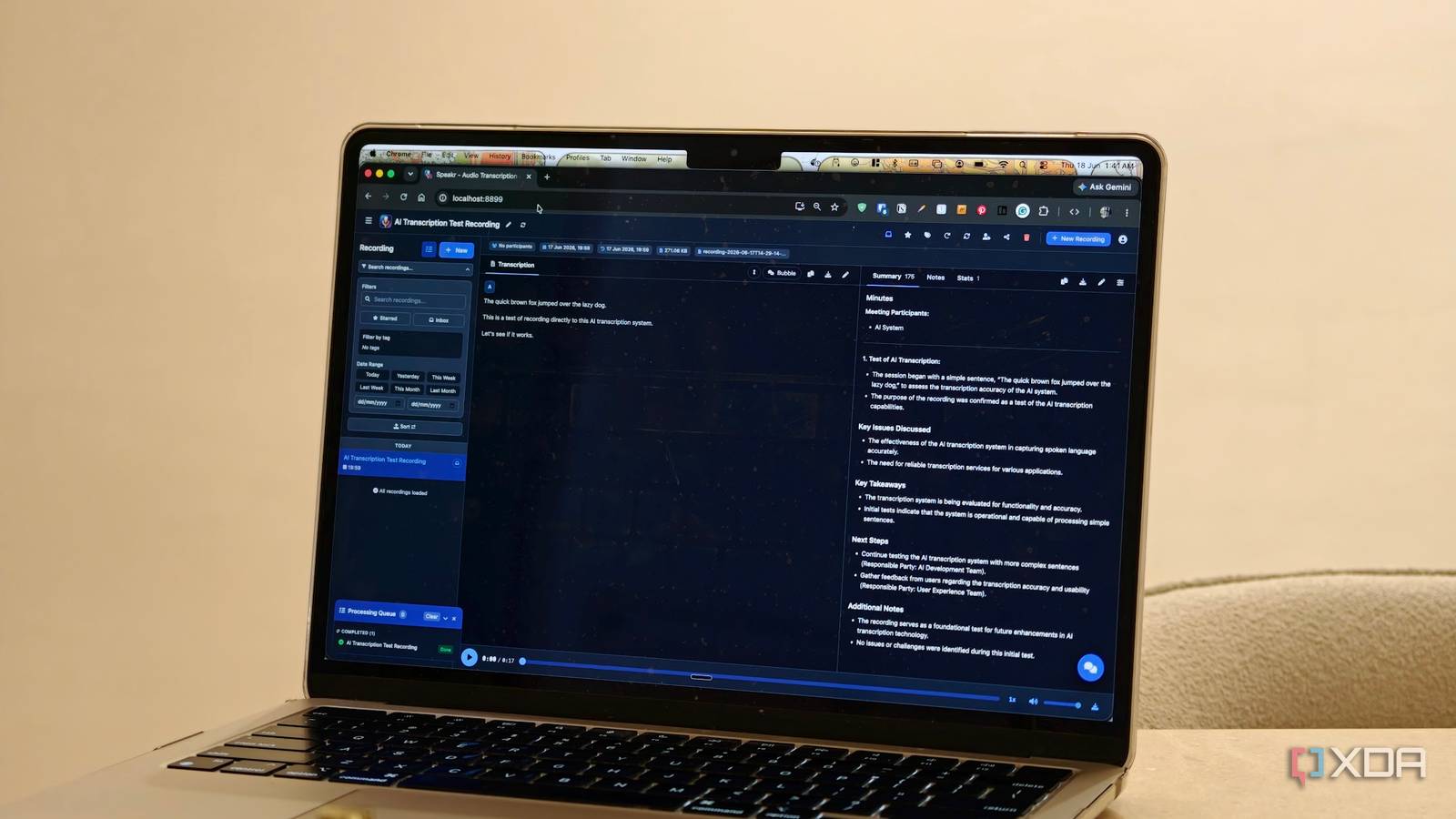
Enter Speakr, an open-source, self-hosted transcription platform that is fundamentally changing how professionals manage their voice data. By running entirely on your own hardware, Speakr provides the utility of commercial AI transcription without the monthly costs or the security risks of cloud-based storage.
The Core Problem: Privacy, Cost, and Data Silos
The primary motivation for shifting to a self-hosted stack like Speakr is a trifecta of concerns: data sovereignty, subscription bloat, and operational security.
The Security Dilemma
As a journalist, I frequently handle sensitive information under Non-Disclosure Agreements (NDAs) or embargoes. When you upload a recording to a third-party server, you are essentially outsourcing the security of that information. Should the service provider suffer a breach or change their terms of service, your privileged data is suddenly beyond your control. For anyone dealing with corporate secrets, legal matters, or sensitive interviews, moving these workflows to a local environment is no longer just a "tech enthusiast" project—it is a professional necessity.
The Financial Burden
We live in an era of subscription overload. Every tool, from note-taking apps to project management suites, demands a monthly fee. While commercial transcription services provide significant value, they often gatekeep their most useful features behind premium tiers. Speakr challenges this model by offering a robust, feature-rich alternative that costs nothing in monthly premiums, effectively eliminating the need for yet another recurring line item on the company balance sheet.
Chronology of a Workflow Shift
My transition to Speakr was not an overnight decision but rather a culmination of evaluating my daily productivity pipeline.
- Phase 1: The Status Quo (2008–2024): Relying on traditional recorders and, eventually, early-stage cloud transcription tools. These tools were helpful but created "data silos" where my recordings were trapped in a proprietary cloud environment.
- Phase 2: The Search for Autonomy (2025): Experimenting with local LLMs and Obsidian plugins (such as Whisper-based local transcription). This proved that hardware-level processing was fast enough to be viable for daily use.
- Phase 3: Implementing Speakr (2026): Integrating Speakr into my Docker-based home server stack. By centralizing my audio processing into a single, self-hosted interface, I gained the ability to manage years of audio notes in a unified, searchable database.
Technical Infrastructure: How Speakr Operates
Speakr is designed for those who appreciate the flexibility of Docker. The deployment process is remarkably streamlined. By pulling the Docker Compose file and configuring a few environment variables, a user can have a fully functional transcription engine up and running in minutes.

Local LLMs vs. Cloud APIs
One of the most impressive aspects of Speakr is its modularity. If you are a privacy purist, you can link the service to a local instance of Whisper (the gold standard for open-source speech recognition) and a local Large Language Model (LLM) like Llama 3 or Mistral. This ensures that not a single byte of your audio or text ever leaves your local network.
Conversely, for users who require the advanced reasoning capabilities of state-of-the-art models, Speakr allows you to plug in your own API keys for services like OpenAI or Anthropic. This hybrid approach offers the best of both worlds: the cost-efficiency of self-hosting with the raw intelligence of top-tier cloud models.
Supporting Data: Why Local Transcription Wins
The performance of local transcription has reached an inflection point. As recently as three years ago, local hardware often struggled to transcribe long-form audio without significant latency. Today, modern consumer CPUs and GPUs handle these workloads with ease.
- Transcription Accuracy: Using models like Whisper v3, the accuracy rate often matches or exceeds paid commercial services.
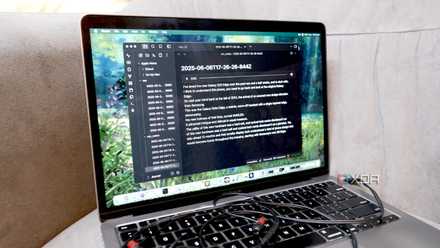
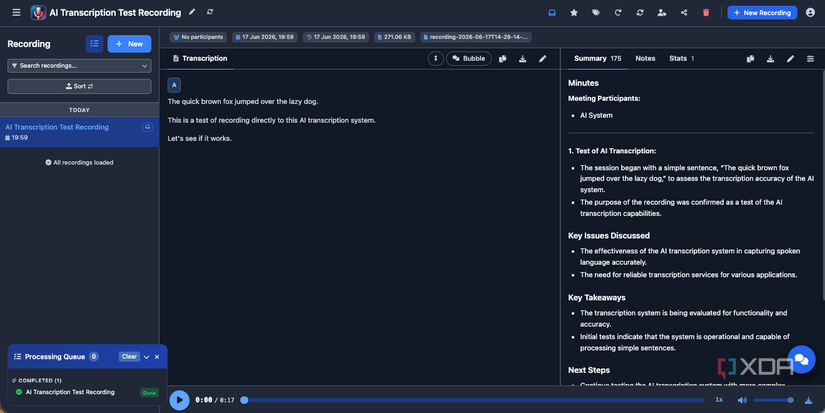
- Searchability: By generating JSON-formatted transcripts, Speakr enables instantaneous keyword searching. You aren’t just searching for a filename; you are searching for the specific sentiment or term used within the conversation.
- Speaker Identification (Diarization): Speakr’s ability to segregate speakers is a game-changer for group meetings. By identifying when "Speaker A" stops and "Speaker B" begins, it allows for a much more natural review process, effectively turning an audio file into a readable script.
Official Perspectives and Implications
While Speakr is a community-driven open-source project, its existence signals a broader trend in the tech industry: the "Return to Local." As corporations and individuals alike grow weary of the "rent-everything" model, self-hosting is seeing a massive resurgence.
The Implications for Productivity
The shift toward tools like Speakr suggests that in the coming years, "productivity" will be defined less by how many subscriptions you pay for, and more by how well you can curate your own digital infrastructure. By owning your tools, you gain:
- Stability: Your workflow doesn’t break if a third-party company shuts down or changes its API pricing.
- Performance: Local processing avoids the bottlenecks of internet latency and server-side traffic.
- Ownership: You retain the intellectual property of your transcripts, allowing you to use them in local AI training or long-term archival without risk.
The Future of AI Integration
The inclusion of AI summarization in Speakr is the "killer feature." The tool doesn’t just provide a transcript; it provides an executive summary. It extracts key takeaways, actionable "next steps," and thematic highlights. While the AI is not infallible—it can occasionally misinterpret nuance—it is an excellent assistant for scanning a 60-minute meeting in under 30 seconds.
Conclusion: Is Self-Hosting Right for You?
If you are a professional who records more than three hours of audio a week, the transition to a self-hosted stack like Speakr is a logical step. It removes the recurring cost of subscriptions, protects your sensitive data from potential cloud leaks, and provides a level of searchability that standard folders simply cannot offer.
You do not need to be a systems engineer to get started. With the ubiquity of Docker, the barrier to entry has never been lower. Whether you are a journalist protecting sources, a student keeping lecture notes, or a business owner managing client calls, Speakr represents the democratization of transcription technology. By taking control of your audio, you aren’t just saving money—you are reclaiming your data and, ultimately, your time.
As we look toward the remainder of 2026, the trend is clear: the most efficient tools are the ones you own, the ones you host, and the ones that work for you—not for a subscription provider. Speakr is not just an app; it is a declaration of independence in an increasingly cloud-dependent world.


 Evan Lee Salim