Neng Nana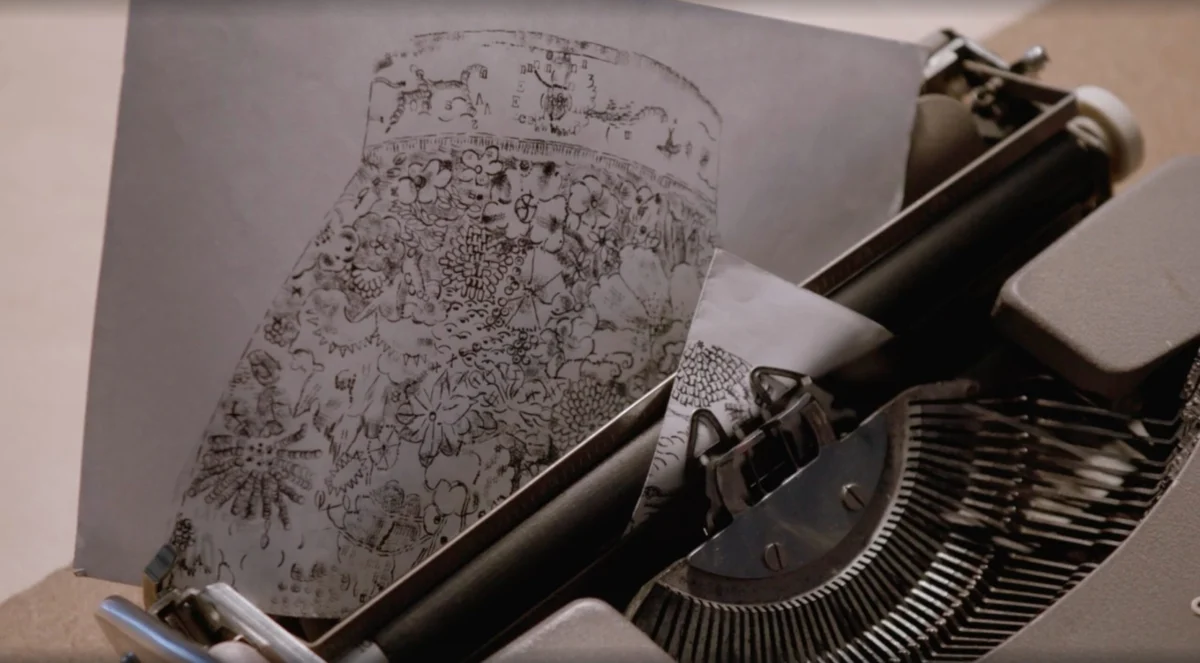
In the realm of contemporary art, few practitioners bridge the gap between the mundane and the profound as seamlessly as Lenka Clayton. A Cornwall-born, Pittsburgh-based artist, Clayton has spent her career interrogating the objects that populate our daily lives, transforming the debris of domesticity into poignant commentary on human experience. A recent documentary produced by Art21, part of their acclaimed Human Nature series, offers a rare, intimate look into her creative philosophy—one rooted in the deliberate subversion of utility.
"Looking at things that are supposed to behave a certain way and purposefully misunderstanding how they should be used, it’s really important to me," Clayton explains in the opening of the film. This statement serves as the manifesto for a practice that is as much about observation as it is about creation.
The Philosophy of the Mundane: Main Facts
Clayton’s work defies easy categorization. She is an artist of the "in-between," moving fluidly from meditative, typewriter-based animations to large-scale, immersive installations that elevate the discarded and the overlooked. Her methodology is fundamentally built upon the act of collecting—not merely as an archival impulse, but as a conceptual strategy. By gathering artifacts of her life, she strips them of their intended function, recontextualizing them to reveal the hidden narratives embedded within them.
Her work is deeply personal, often drawing from the textures of her own life in Pittsburgh and her journey through motherhood. This is perhaps best exemplified by her establishment of the Artist Residency in Motherhood, an open-source program designed to support parents in maintaining their creative practices amidst the relentless demands of childcare. This project highlights a central pillar of her career: the refusal to view domestic life as an obstacle to art, but rather as the primary site of its production.
A Chronology of Discovery: How Experience Becomes Art
To understand Clayton’s trajectory, one must look at how her life milestones have dictated her aesthetic evolution.
The Early Years and the Shift to Observation
Born in Cornwall, England, Clayton was initially drawn to the interplay of language and objects. Her early work often utilized typewriters, not as tools for documentation, but as instruments for rhythm and visual meditation. By treating the mechanical output of the typewriter as a visual medium, she began to explore the "purposeful misunderstanding" of technology, turning a tool meant for clerical efficiency into a device for abstract contemplation.
The Pittsburgh Transition
Relocating to Pittsburgh provided a new canvas for her work. The industrial history of the city, coupled with the slow, repetitive nature of life in a new environment, pushed her to focus on the scale of the "tiny." It was during this period that her work began to emphasize the grid—a structural device she uses to bring order to the chaos of collection.

The Motherhood Project
The most pivotal moment in her career occurred when she became a mother. Faced with the reality of having a child, she did not retreat from art; she incorporated the reality of child-rearing into it. Her famous project involving the objects retrieved from her son’s mouth remains one of the most compelling visual records of caregiving. Every spool of thread, button, acorn, and stray bottle cap was documented, photographed, and arranged into a massive, imposing grid. This wasn’t just a record of items; it was a map of vigilance, a visual testament to the constant, microscopic labor involved in protecting a developing life.
Supporting Data: The Anatomy of an Installation
Clayton’s studio practice is characterized by rigorous organization. In the Art21 documentary, viewers are invited into her space, where a culinary installation featuring colorful tongs hung in a precise grid takes center stage. This installation is a perfect microcosm of her work:
- Materials: Common kitchen utensils (tongs), which are utilitarian and mass-produced.
- Methodology: The grid, which forces the viewer to look at the objects individually and collectively.
- The Intent: By removing the tongs from the drawer and placing them on the wall, she forces the viewer to confront the object’s design, color, and potential for motion, rather than its ability to grip or serve food.
This commitment to the grid is echoed in her documentation of her son’s "finds." These grids act as a form of forensic art—a way to catalog the world one object at a time. The sheer volume of these collections speaks to the patience required to observe the world closely.
Perspectives on the Human Condition: Official and Personal Responses
The Art21 Human Nature episode places Clayton in conversation with Colombian artist Delcy Morelos. While their mediums differ—Morelos working with earth and soil, and Clayton with domestic objects—the thematic overlap is profound. Both artists are preoccupied with how humans inhabit their environments and how we leave traces behind.
The Role of Connection
Clayton’s work is frequently described as an exercise in empathy. When she remarks, "There is only connection in life, and my work is just looking at those connections, so that we can create a shared experience," she is identifying the core purpose of her art. She is not creating objects to be sold as luxury items; she is creating prompts for the viewer to reconsider their own relationship to their daily surroundings.
Critical Reception
Critics have often noted that Clayton’s work acts as a mirror. By presenting the mundane—the button, the thread, the tong—she invites the viewer to fill the void with their own experiences. The "misunderstanding" she speaks of is actually a form of "re-understanding." We see the object again, but for the first time, freed from the burden of its utility.
Implications: The Legacy of the Everyday
What does it mean to "purposefully misunderstand" the objects in our lives? In an age of high-speed digital consumption, the implications of Clayton’s practice are radical.

Reclaiming Agency over the Domestic
By framing motherhood and domesticity as intellectual and artistic spaces, Clayton challenges the historical marginalization of "women’s work." Her Artist Residency in Motherhood is an institutional intervention that suggests that the home is not a place where art stops, but a place where it is uniquely synthesized.
The Environmental and Philosophical Impact
There is also a subtle, perhaps unintentional, environmental critique in her work. By gathering and cataloging thousands of small objects, she highlights the sheer mass of stuff we produce and discard. When these objects are displayed with the reverence of museum artifacts, the viewer is forced to reckon with the lifecycle of the material world.
A Call to Slow Down
Perhaps the most lasting implication of Clayton’s work is its demand for slowness. In a culture that values the "new," the "efficient," and the "disposable," Clayton offers a path of resistance. She asks us to pause, to look at the tong, the button, or the stray cap, and to find the connection.
"My work is just looking at those connections," she says. Through this lens, the act of art-making becomes an act of witnessing. Whether she is animating the movement of a typewriter or cataloging the contents of a toddler’s hand, Lenka Clayton remains a persistent observer of the human condition.
As we look toward the future of contemporary art, her influence is clear: the most profound art does not always require grand gestures or exotic materials. Sometimes, it simply requires the courage to look at the things we use every day and decide that they are worth more than their function. By choosing to misunderstand the utility of the world, Clayton allows us to finally understand the humanity within it.
The Human Nature episode, featuring both Clayton and Morelos, stands as a testament to this philosophy. For those interested in exploring her work further, her digital presence on platforms like Instagram provides a window into the ongoing, quiet, and deeply significant work she continues to produce in her Pittsburgh studio. Through her lens, the world is not just a collection of tools; it is a tapestry of moments, waiting to be connected.


 Laily UPN
 Ali Ikhwan