Nila Kartika Wati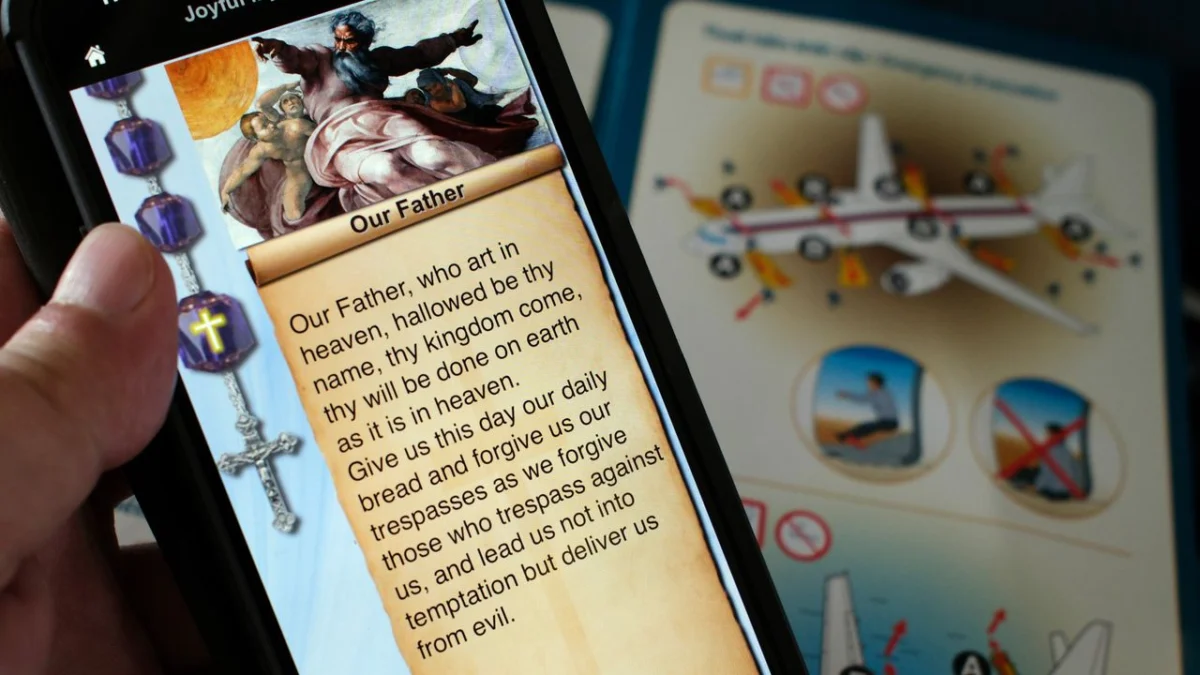
In an era where digital transformation touches every facet of life—including religious practice—the intersection of faith and technology has produced a new, unforeseen frontier for cybercrime. A startling investigation into Click To Pray, the official prayer app of the Pope’s Worldwide Prayer Network, has revealed a catastrophic lapse in cybersecurity. For months, the private data of nearly 720,000 users was left exposed to anyone with a basic understanding of API requests, turning a tool meant for spiritual connection into a potential hunting ground for malicious actors.
The incident highlights a growing concern in the tech industry: that even the most benign-seeming applications, when developed without rigorous security protocols, can serve as a massive repository of sensitive Personal Identifiable Information (PII) that is ripe for exploitation.
The Discovery: A Six-Month Silence
The vulnerability was first identified in January 2026 by a security researcher operating under the handle "BobDaHacker." During a routine audit, the researcher discovered that the Click To Pray application lacked even the most rudimentary security safeguards. The backend infrastructure, specifically its API endpoint, was wide open.
Upon discovering that user data could be scraped with little effort, the researcher followed industry-standard protocols, attempting to contact the parties responsible for the application’s maintenance. Between January and June 2026, BobDaHacker reached out to nine different stakeholders and administrative contacts associated with the Vatican-linked network. Despite these repeated attempts to disclose the vulnerability responsibly, the researcher was met with absolute silence. No acknowledgement was sent, no patch was deployed, and the data remained exposed to any bad actor who happened to stumble upon the same flaw.
Chronology of the Exposure
- January 2026: BobDaHacker discovers a critical API vulnerability in the Click To Pray application. The flaw allows for unauthorized access to user databases.
- January–June 2026: The researcher makes multiple attempts to reach nine different contacts associated with the app’s development and management. All attempts are ignored.
- July 2026: With over 720,000 accounts now confirmed at risk, the researcher contacts security journalist Nate Nelson of Dark Reading.
- Late July 2026: Following public exposure of the vulnerability in the media, the developers finally address the security lapses.
- Post-Exposure: The app is updated, though the initial researcher remains unacknowledged by the app’s operators.
The Anatomy of the Breach: Why It Was So Easy
The technical failures found within the Click To Pray infrastructure were described by experts as "elementary." The most alarming aspect was the nature of the User IDs assigned to accounts. The system used sequential numbering, meaning that once a single valid ID was identified, an attacker could simply increment the number (e.g., from 10001 to 10002) to view the next user’s profile.
Because the API lacked rate limiting—a standard security feature that prevents a user or bot from making too many requests in a short period—an attacker could theoretically automate a script to scrape the entire database in a matter of hours. By sending a simple GET request to the API, an unauthorized user could pull a treasure trove of information, including full names, email addresses, birthdates, and other personal identifiers.
Furthermore, the "validation_hash" used to confirm account signups was stored in plain text. This allowed anyone with API access to verify accounts by simply intercepting emails, further compromising the integrity of the user base. The app’s internal communication protocols were also noted to be poorly configured, causing legitimate notification emails to mirror the structure of known phishing tactics, thereby increasing the likelihood that users would fall for future, more sophisticated social engineering attacks.
The Human Cost: Targeting the Vulnerable
While 720,000 accounts may seem modest compared to the multi-billion-account breaches that periodically hit global tech giants, the nature of the Click To Pray user base makes this breach particularly predatory.
Cybersecurity experts emphasize that demographic context matters. The typical user of a religious app may skew older and may be less familiar with the nuances of digital hygiene or the warning signs of phishing. When a malicious actor gains access to a database of 720,000 verified email addresses belonging to individuals who trust the source, the conversion rate for scams increases exponentially.
If an attacker successfully lures just 1% of the user base into a scam—such as a fake donation request or a sophisticated phishing link—that translates to 7,200 victims. The potential for financial loss, identity theft, and the violation of trust is immense. These users, who downloaded the app to seek solace or community, were inadvertently placed on a "target list" for criminals.
The Vacuum of Accountability
The most troubling aspect of this incident is not the technical flaw itself—software bugs are, unfortunately, common—but the total lack of a security disclosure culture. The six-month window between the initial discovery and the eventual fix represents a "danger zone" where the data was essentially public property.
When organizations fail to provide a channel for security researchers to report vulnerabilities, they are not protecting their users; they are shielding their own negligence. The fact that the vulnerability was only addressed after the issue gained media traction via Dark Reading suggests a reactive, rather than proactive, approach to user safety. By the time the patch was deployed, the window for exploitation had been wide open for more than half a year.
Broader Implications for "Faith-Tech"
The Click To Pray incident serves as a wake-up call for non-profit and religious organizations that have rushed to digitize their services. Often, these organizations lack the internal expertise to maintain secure servers or to oversee the third-party developers they hire to build their platforms.
As digital tools become more deeply embedded in daily religious life, the threshold for security requirements must be raised. Developers must prioritize:
- Rate Limiting: To prevent bulk scraping of user data.
- Non-Sequential IDs: To prevent account enumeration attacks.
- Encrypted Data Storage: To ensure that hashes and sensitive info cannot be read in plain text.
- Responsible Disclosure Programs: Establishing a clear "security@…" contact for researchers to report flaws.
Conclusion
The story of Click To Pray is a sobering reminder that the digital world does not differentiate between the "sacred" and the "profane." To a hacker, a database is a database, regardless of whether it contains prayer requests or credit card numbers.
While the immediate vulnerability has been patched, the reputational damage and the lingering risk to the thousands of users whose data was exposed remain. As we move further into the digital age, the organizations that steward our personal information—whether they be global tech corporations or religious networks—must be held to the highest standards of digital stewardship. If they cannot guarantee the safety of the people they serve, they risk losing the very trust upon which their missions are built.
In the aftermath, the silence from the app’s developers regarding the researcher’s contribution remains a point of contention. Acknowledge and transparency are the bedrocks of modern cybersecurity; without them, the cycle of vulnerability is destined to repeat itself.

 Nana Wu
 Ammar Sabilarrohman