

For any student embarking on the journey of learning Japanese, the acquisition of its three distinct writing systems—Hiragana, Katakana, and Kanji—is the fundamental rite of passage. While Hiragana serves as the phonetic backbone of the language, Katakana acts as its dynamic counterpart. Often described as the "alphabet of foreign words," Katakana is indispensable for navigating modern Japan. Whether you are reading a menu, deciphering street signs, or navigating tech manuals, Katakana is the key that unlocks the meaning of countless loanwords.

This guide serves as an intensive, structured overview of the Katakana script, providing the logical framework, stroke-order rules, and advanced phonetic modifications necessary for mastery.
The Strategic Importance of Katakana
Why Learn It Now?
If you have already mastered Hiragana, you have already conquered the most difficult hurdle in Japanese orthography. However, the temptation to move immediately toward Kanji can be a trap. Expert linguists and educators strongly recommend learning Katakana immediately following Hiragana.

Because the two systems share a similar phonetic structure—the "gojuon" (fifty-sound) grid—the patterns you have just learned will be fresh in your mind. While the two scripts have different visual appearances, the underlying logic is identical. By learning them back-to-back, you capitalize on cognitive momentum, allowing your brain to solidify the connection between the sounds of the Japanese language and their visual representations.
The Linguistic Role of Katakana
Katakana is primarily used for loanwords (words borrowed from other languages), onomatopoeia, scientific names, and for adding emphasis to specific terms. Because Japan has integrated thousands of English terms into its lexicon—from konpyūta (computer) to kurisumasu (Christmas)—Katakana allows learners to bridge the gap between their native tongue and Japanese with surprising speed.
Chronology of the Writing System: From Vowels to Consonants
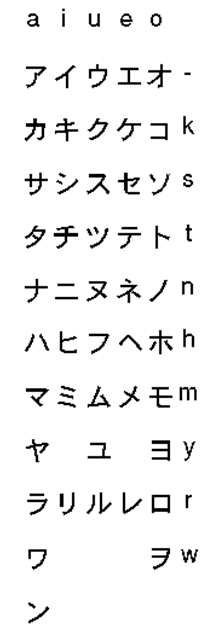
To learn Katakana effectively, one must look at it not as a list of 46 random symbols, but as a mathematical grid. The system is organized into columns (vowels) and rows (consonants).

The Vowel Foundation (A, I, U, E, O)
Every Katakana character is built upon the five core vowel sounds. Mastering these five is the first step in unlocking the entire chart.
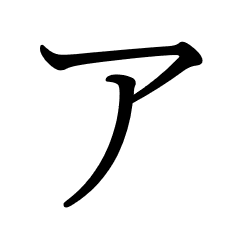
- A (ア): A two-stroke character.
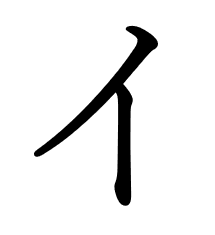
- I (イ): A two-stroke character.
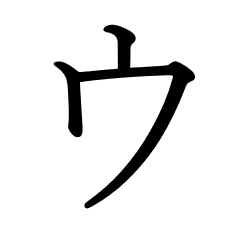
- U (ウ): A three-stroke character; note the importance of strict stroke order to maintain proper form.
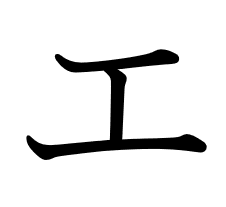
- E (エ): A three-stroke character.
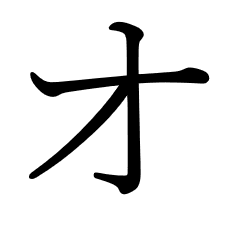
- O (オ): A three-stroke character.
The Consonant Rows
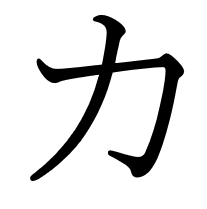
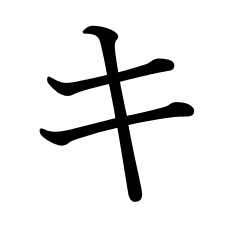
Once the vowels are internalized, the consonant rows (K, S, T, N, H, M, Y, R, W) follow a consistent pattern.

- The K-Row (Ka, Ki, Ku, Ke, Ko): These characters rely on angular strokes, a hallmark of the Katakana aesthetic, which is designed to look more rigid and sharp than the flowing curves of Hiragana.
- The S-Row (Sa, Shi, Su, Se, So): This row includes one of the most important variations: Shi. Unlike Sa, which is written with three strokes, Shi is an irregular phonetic character that sounds like the English pronoun "she."
- The T-Row (Ta, Chi, Tsu, Te, To): Perhaps the most challenging for beginners is Tsu (ツ). It is frequently confused with Shi (シ) by beginners. A helpful mnemonic is to think of the English phrase "Cat Soup"—the sound of the "T" and "Sou" is the key to mastering this character.
Supporting Data: Visual Mnemonics and Stroke Order
Success in learning a syllabary relies on mnemonics. When looking at the N (ン) and So (ソ) characters, for instance, it is easy to become confused. The key differentiator is the stroke direction: So is an abbreviation of the Hiragana so, meaning the longer, primary stroke begins from the top. In contrast, N begins its stroke from the bottom.
The "N" (ン) vs. "So" (ソ) Dilemma
This specific distinction is a common point of failure for students. By visually analyzing the "eye" of the character, you can discern the origin of the stroke. As you continue to practice through the R-row and the N-character, you will find that these visual "hooks" become second nature.

The "Na" and "Ni" Connection
The Ni (ニ) character is particularly easy to remember because it resembles the Japanese Kanji for the number two (二). Associating these characters with existing knowledge—such as numbers or known Hiragana—drastically reduces the time required for long-term retention.
Official Guidelines: Modifying Sounds
Japanese phonetics are not static; they can be modified using specific diacritical marks. Understanding these is essential for advanced reading.

The Ten-Ten (")
The ten-ten is a set of two small, slanted lines placed in the upper right corner of a character. It acts as a "voicing" modifier, turning unvoiced sounds into voiced ones:
- K-row (Ka, Ki, Ku, Ke, Ko) becomes G-row (Ga, Gi, Gu, Ge, Go).
- S-row (Sa, Shi, Su, Se, So) becomes Z-row (Za, Ji, Zu, Ze, Zo).
- T-row (Ta, Chi, Tsu, Te, To) becomes D-row (Da, Ji, Zu, De, Do).
- H-row (Ha, Hi, Fu, He, Ho) becomes B-row (Ba, Bi, Bu, Be, Bo).
The Maru (°)
The maru, a small circle, is exclusively used for the H-row, transforming it into the P-row (Pa, Pi, Pu, Pe, Po). This creates the harder, percussive sounds necessary for many foreign loanwords.

Implications for the Learner: Advanced Combinations
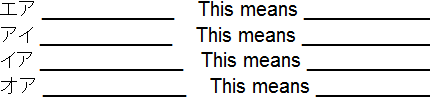
The final step in mastering Katakana involves the small Ya, Yu, and Yo. When these are written as smaller subscripts after a consonant-vowel character, they create a compound sound.
Compound Sounds (K-Ya, R-Yo, etc.)
The logic is straightforward: take the consonant, drop the vowel, and append the Ya/Yu/Yo sound. For example, Ki plus a small Ya becomes Kya. This is treated as a single syllable, not two. Mastering these combinations allows you to read virtually any modern Japanese word, including names and places that do not have traditional Japanese origins.
The "Small Tsu" (ッ)
While not discussed as a character in the grid, the small Tsu is a vital piece of the Katakana puzzle. It serves as a glottal stop, or a "pause," in a word. For example, in the word Betto (bed), the small Tsu tells the reader to pause slightly before the ‘t’ sound.

Conclusion: Achieving Fluency
The transition from learning individual characters to reading full words is where the real progress happens. By dedicating time to the Ten-Ten and Maru modifications and practicing the compound sounds, you will find your reading speed increases exponentially.
Remember that Katakana is a living, breathing part of the Japanese language. It is constantly evolving as new loanwords enter the lexicon. By mastering these foundational steps—from the vowel grid to the advanced compounds—you are not just learning a set of characters; you are gaining the ability to interact with the modern, globalized face of Japan.

For those seeking to solidify this knowledge, engagement with dedicated practice quizzes and immersion-based materials, such as the Beri-Beri-Shoshinsha beginner bundles, will provide the necessary reinforcement. Keep practicing, keep reading, and soon, the characters that once looked like abstract shapes will reveal themselves as the building blocks of a fascinating language.











