

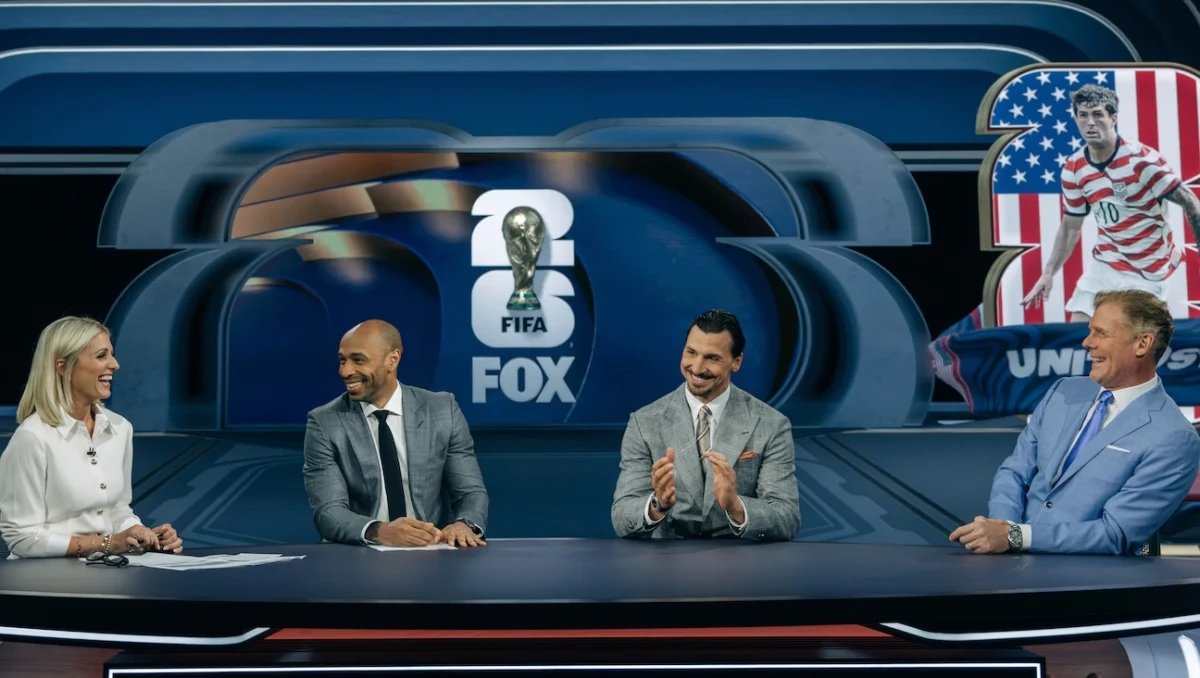
The 2026 FIFA World Cup is proving to be a watershed moment for sports broadcasting in North America. As the tournament reaches the conclusion of its opening phase, data from Nielsen confirms that Fox Sports is experiencing a historic surge in viewership, with pregame programming and match coverage alike shattering benchmarks set during the 2022 Qatar tournament.
With the United States, Mexico, and Canada serving as co-hosts, the "home turf" advantage is not merely a narrative for the players on the pitch; it is a tangible engine driving unprecedented television ratings. This surge suggests that the localization of the world’s biggest sporting event has successfully bridged the gap between niche soccer fandom and mainstream American television consumption.
Main Facts: A Statistical Triumph for Fox
The most striking figure emerging from the first 12 days of the tournament is the meteoric rise of the pregame show. According to Nielsen figures, Fox’s pregame coverage is averaging 2.4 million viewers through the second leg of the group stage—a staggering 117 percent increase over the 1.11 million viewers recorded at the same point in 2022.
This performance indicates that viewers are not just tuning in for the kickoff; they are engaging with the entire broadcast ecosystem. Even more impressive is the fact that the pregame show’s growth percentage is outpacing the matches themselves. Total viewership across Fox, FS1, and the streaming platform Tubi for the first two legs of the group stage reached 5.62 million viewers, a 113 percent jump from the 2.64 million recorded in 2022.
The success is not limited to English-language broadcasts. The combined reach of Fox and Telemundo/Peacock, which holds the Spanish-language rights, has pushed the average audience per match well above 10 million viewers. This data underscores a fundamental shift: the World Cup has moved from a secondary television event to a primary destination for American audiences, rivaling the reach of major domestic sports leagues.
Chronology of the Ratings Surge
The trajectory of this viewership growth can be traced through the distinct phases of the tournament’s opening weeks:
- Pre-Tournament Anticipation (Late May – Early June): Advertising spend and promotional buzz hit an all-time high as the industry anticipated the return of the tournament to a traditional summer schedule.
- The Kickoff (June 11 – June 15): Early matches saw an immediate uptick, with casual viewers drawn in by the convenience of North American time zones, which eliminated the "early morning" barrier that hindered the 2022 Qatar broadcast.
- The Second Leg (June 16 – June 23): This period marked the consolidation of the audience. As the tournament drama intensified, the viewership numbers for the pregame shows solidified, proving that the high ratings were not a fluke of the opening ceremony, but a sustained interest in the studio analysis.
- Conclusion of Group Stage (Late June): As the tournament moved toward the knockout rounds, the final data sets for the group stage—expected to be fully processed in the coming days—are widely projected to show a cumulative reach that could define the 2026 World Cup as the most-watched sporting event in U.S. history.
Supporting Data: Time Zones and Accessibility
The primary catalyst for this growth is the reversal of the logistical challenges that plagued the 2022 tournament. The Qatar World Cup was held in the fall to mitigate extreme desert heat, forcing U.S. viewers to contend with an eight- to 11-hour time difference. This meant that matches often occurred during work hours or in the early morning, drastically shrinking the potential audience.
In 2026, the scheduling aligns perfectly with the North American market. Pregame shows now air in the late morning or midday Eastern Time, allowing for "appointment viewing" that fits into the average American’s daily routine. Furthermore, by returning to the summer calendar, the World Cup no longer has to compete with the height of the NFL season or the dense clutter of the college football and NBA calendars. This "clean air" in the sports broadcasting landscape has allowed soccer to capture the undivided attention of the American public.
The Studio Dynamic: Friction and Fascination
A significant, if unconventional, component of the 2026 coverage has been the chemistry—or lack thereof—in the Fox studio. The network assembled an elite lineup: host Rebecca Lowe, on loan from NBC’s prestigious Premier League coverage, alongside legendary analysts Thierry Henry and Zlatan Ibrahimović, and long-time Fox fixture Alexi Lalas.
Early in the tournament, social media and industry critics closely scrutinized the interactions between the panelists. Observers noted a palpable, often frosty tension between the international icons (Henry and Ibrahimović) and Lalas, whose analytical style has been a staple of Fox’s soccer coverage since 2015.
While some viewers found the friction uncomfortable, television executives often argue that "conflict drives content." Whether the tension is a result of clashing football philosophies or simply distinct broadcasting personalities, it has undoubtedly contributed to the "water cooler" factor of the coverage. Regardless of the critical reception of the studio desk, the viewership numbers confirm that the controversy has only served to increase engagement, keeping eyes locked on the screen to see what happens during the next break.
Implications for the Future of Sports Media
The success of the 2026 tournament carries profound implications for the future of sports broadcasting rights.
The Power of Localized Time Zones
The 113 percent increase in viewership serves as a stark reminder that time zone accessibility is perhaps the most important variable in sports media. Rights holders will likely prioritize events that can be broadcast in prime or near-prime windows, as the "home turf" effect creates a communal viewing experience that is difficult to replicate with international broadcasts.
The Rise of Multi-Platform Integration
Fox’s use of Tubi as a critical component of its broadcast strategy has proven to be a masterstroke. By making match coverage accessible on a free, ad-supported streaming platform, Fox has lowered the barrier to entry for younger, cord-cutting demographics who may not have traditional cable subscriptions. This hybrid model of linear broadcast and digital streaming is likely to become the blueprint for future major sporting events.
The "World Cup" Ceiling
With average viewership per match exceeding 10 million, the World Cup is now operating in the same stratosphere as the NBA Finals or the MLB World Series. This shifts the perception of soccer in the United States from a "growing sport" to a "major sport." The financial implications for future sponsorship deals, advertising rates, and broadcasting rights for the 2030 and 2034 cycles will be significant, as networks will now be bidding on a product with a proven, massive, and consistent audience.
Conclusion
As the 2026 World Cup progresses, the numbers speak for themselves. Through a combination of favorable scheduling, high-stakes production, and the sheer cultural gravity of hosting the event, Fox Sports has successfully tapped into a latent American enthusiasm for soccer. Whether it is the analysis of the studio team, the drama of the matches, or simply the convenience of watching a global phenomenon in a local time zone, the 2026 World Cup has officially moved beyond the margins of the sports landscape and into the center of the American television experience. As full group-stage data becomes available, it will likely provide further evidence that the world’s game has finally found its permanent home in the United States.










