

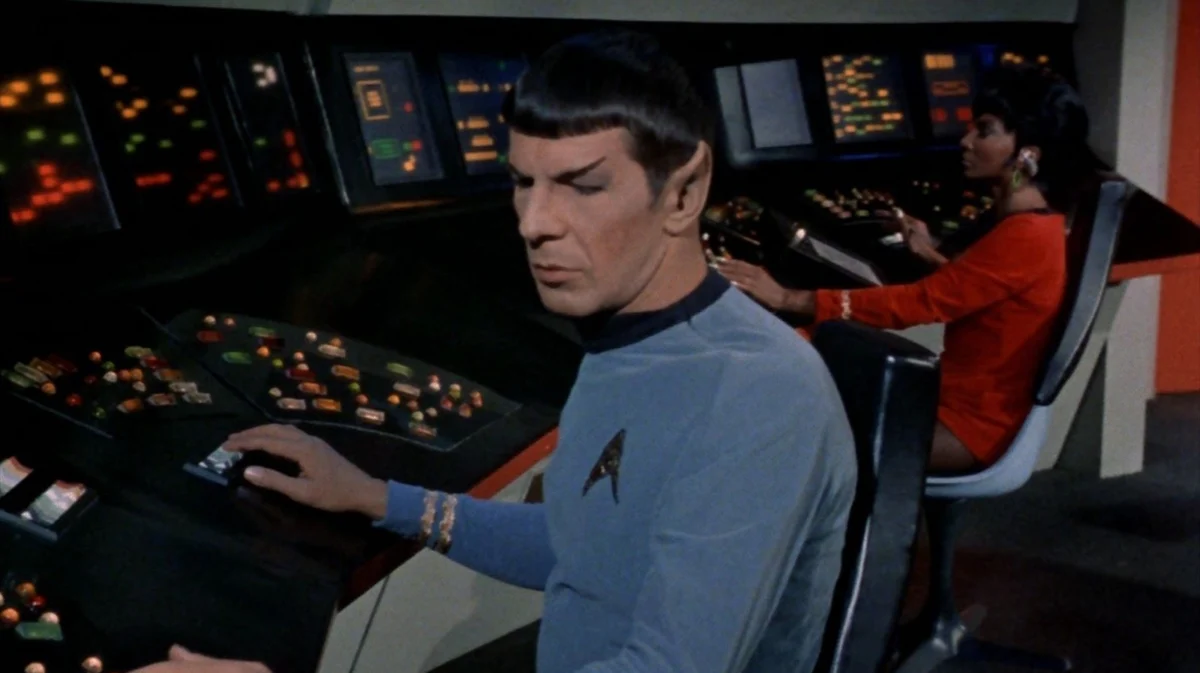
In the vast annals of science fiction history, few characters occupy as hallowed a space as Spock, the half-Vulcan, half-human science officer of the USS Enterprise. With his arched eyebrows, distinctive pointed ears, and unwavering devotion to logic, Spock became the definitive "alien" for generations of television viewers. However, the origin of this iconic look was not merely a creative choice born of high-concept world-building; it was a pragmatic, and perhaps desperate, solution to the severe budgetary limitations facing Gene Roddenberry during the production of Star Trek: The Original Series in the mid-1960s.
The Reality of 1960s Television Economics
To understand why Spock looked the way he did, one must first understand the landscape of 1966 television. Producing a weekly hour-long science fiction drama was an unprecedented logistical and financial challenge. Networks like NBC were wary of the genre’s high production costs, and Desilu Studios, where Star Trek was filmed, was under constant pressure to keep expenditures lean.
In the mid-1960s, special effects and prosthetics were in their infancy. Creating truly "alien" beings—creatures that lacked human symmetry or anatomy—required extensive makeup application, complex animatronics, and custom-built costumes. Each hour of television had a rigid budget, and allocating thousands of dollars per episode for heavy prosthetics was simply not feasible for a show struggling to find its footing.
Chronology: The Genesis of the Vulcan Aesthetic
The evolution of Spock’s appearance can be traced back to early pre-production meetings between creator Gene Roddenberry and actor Leonard Nimoy.
- The Pitch (1964-1965): When Roddenberry began fleshing out the crew of the Enterprise, he was adamant that the bridge must reflect a multi-species coalition. He wanted the audience to immediately understand that humanity had moved beyond its terrestrial boundaries and was functioning as part of a larger galactic community.
- The Casting of Nimoy: Leonard Nimoy, an actor who had worked with Roddenberry previously, was brought in with a clear mandate. In his own recollections, Nimoy noted that he was looking for steady work, and Roddenberry was looking for someone who could embody a "non-human" presence without requiring a total physical transformation.
- The Makeup Trials: Makeup artist Fred Phillips was tasked with creating a look that was distinct enough to be alien, but subtle enough to be applied within the tight time constraints of a daily shooting schedule. The solution—the now-famous rubber ear tips, the slight adjustment of the eyebrows, and a specific palette of makeup—was finalized. It was a masterpiece of "less is more."
Supporting Data: The "Humanoid" Dilemma
While later iterations of the franchise, such as The Next Generation, provided a canonical explanation for why most aliens look like humans—the "Ancient Humanoids" theory introduced in the episode "The Chase"—the reality was always rooted in the practical limitations of the studio lot.
If one examines the production costs of The Original Series, the recurring expense of the "alien-of-the-week" was a constant point of friction. By utilizing human actors with minimal cosmetic alterations, the production team could allocate the majority of their budget to other areas: set design, stock footage of space, and the occasional cost-intensive prop.
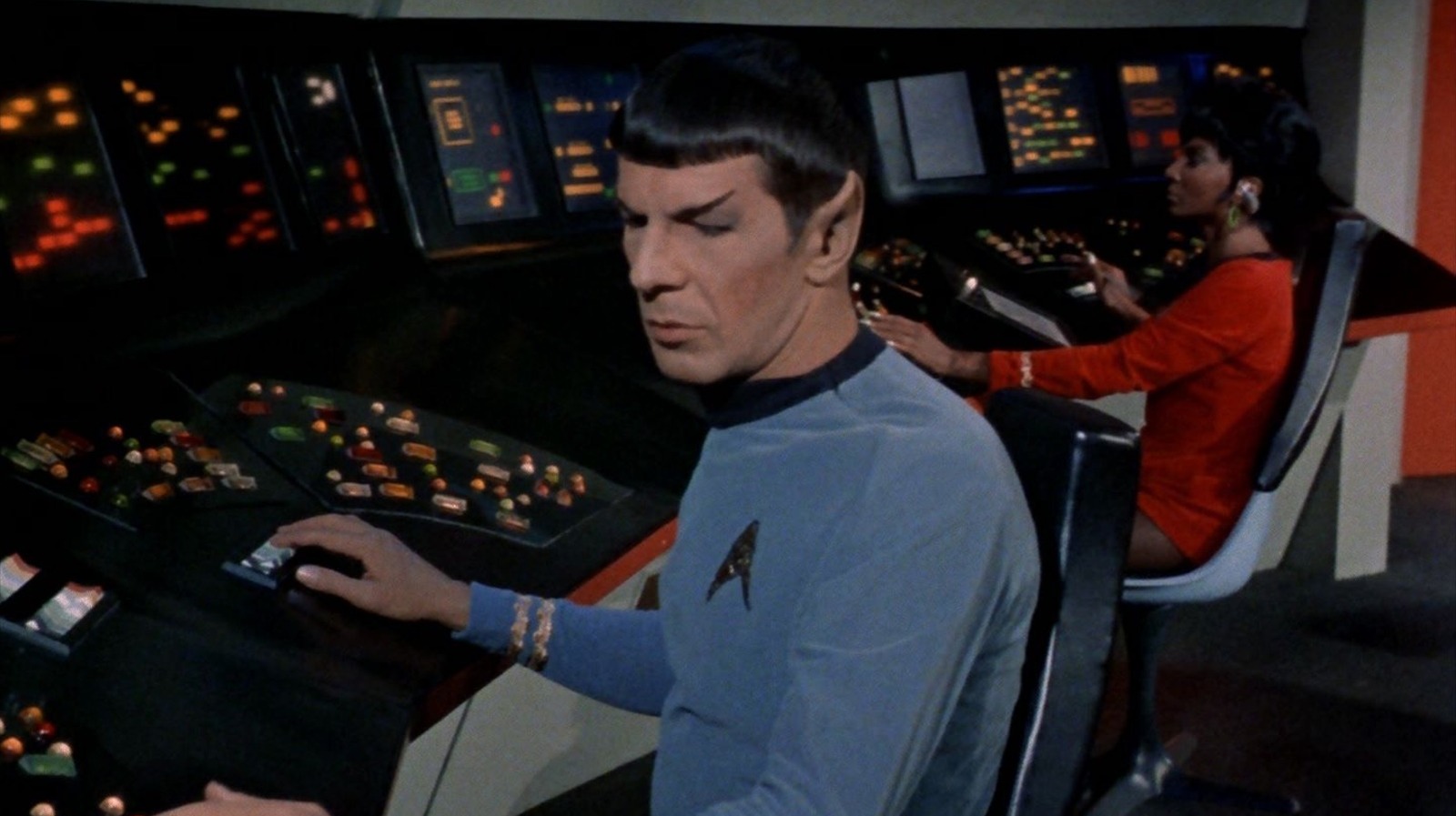
The strategy was, in hindsight, brilliant. By keeping the aliens humanoid, Roddenberry was able to:
- Enhance Relatability: Audience members could project their own emotions onto the alien characters more easily if they shared human facial structures.
- Facilitate Acting: Actors were not obscured by heavy rubber masks, allowing for the subtle emotional performances—specifically Nimoy’s deadpan, micro-expression-based acting—that defined the character of Spock.
- Ensure Consistency: The makeup process, which took roughly 45 minutes to an hour, was efficient. In contrast, elaborate monster suits could take four to six hours to apply, effectively killing the production schedule.
Official Accounts: Roddenberry’s Candid Admission
The most compelling evidence regarding the financial motivations behind Spock’s appearance comes from the oral histories collected by the Smithsonian Institution and other cultural historians. Leonard Nimoy himself was quite candid about his conversations with Roddenberry.
According to Nimoy, Roddenberry was explicit about the necessity of the design. "Gene told me that he was determined to have at least one extraterrestrial prominent on his starship," Nimoy recalled. "He’d like to have more, but making human actors into other life-forms was too expensive for television in those days."
This wasn’t just a budget issue; it was a narrative one. Roddenberry knew that if he could get the audience to accept one alien as a "normal" part of the bridge crew, he had successfully established the premise of the entire series. By making Spock the science officer—a position of intellectual authority—he signaled that this future was one of cooperation and meritocracy. The pointed ears were the visual shorthand for an entire philosophy of galactic coexistence.
The Implications: A Legacy of "Budget-Friendly" Storytelling
The success of the "Spock look" had profound implications for the rest of the science fiction genre. It proved that a character’s identity is not defined by the complexity of their prosthetics, but by the depth of their writing and the quality of the performance.
The fact that Spock’s original ear tips are now housed in the Smithsonian National Air and Space Museum is a testament to how this budget-driven necessity evolved into a cultural artifact. The constraint that initially threatened the show’s credibility ended up becoming one of its most recognizable trademarks.
Looking Back at the "Humanoid" Trope
Decades later, the "humanoid alien" remains the standard in major science fiction franchises. While CGI has evolved to the point where we can create beings like Project Hail Mary’s Rocky or the various creatures of the Marvel Cinematic Universe, the "Spock Model" remains the gold standard for intimate, character-driven science fiction.
By limiting his options, Roddenberry forced his creative team to focus on character development. Spock’s struggle to balance his human emotions with his Vulcan logic was infinitely more compelling than any amount of elaborate creature design could have been.
Conclusion: The Art of Necessity
In the world of television production, constraints are often viewed as the enemy of creativity. However, the history of Star Trek proves that, occasionally, the most restrictive boundaries yield the most enduring art. Gene Roddenberry’s inability to afford complex prosthetics did not result in a diminished product; rather, it resulted in the creation of a character who could be understood, loved, and analyzed for over half a century.
Leonard Nimoy’s performance, combined with the elegant simplicity of the Vulcan aesthetic, proved that the most powerful element of science fiction is not the "alien" itself, but the way that alien reflects our own humanity back at us. Whether it was a choice of design or a choice of necessity, Spock remains the definitive proof that in the vastness of the galaxy, the most important trait is not how many arms or eyes one has, but the logic and empathy one brings to the table.
As we look back at the humble origins of the USS Enterprise’s science officer, we are reminded that some of the greatest contributions to pop culture were born in the cramped corners of a budget spreadsheet. Spock was not just a character; he was a masterclass in how to build a universe, one budget-conscious decision at a time.










