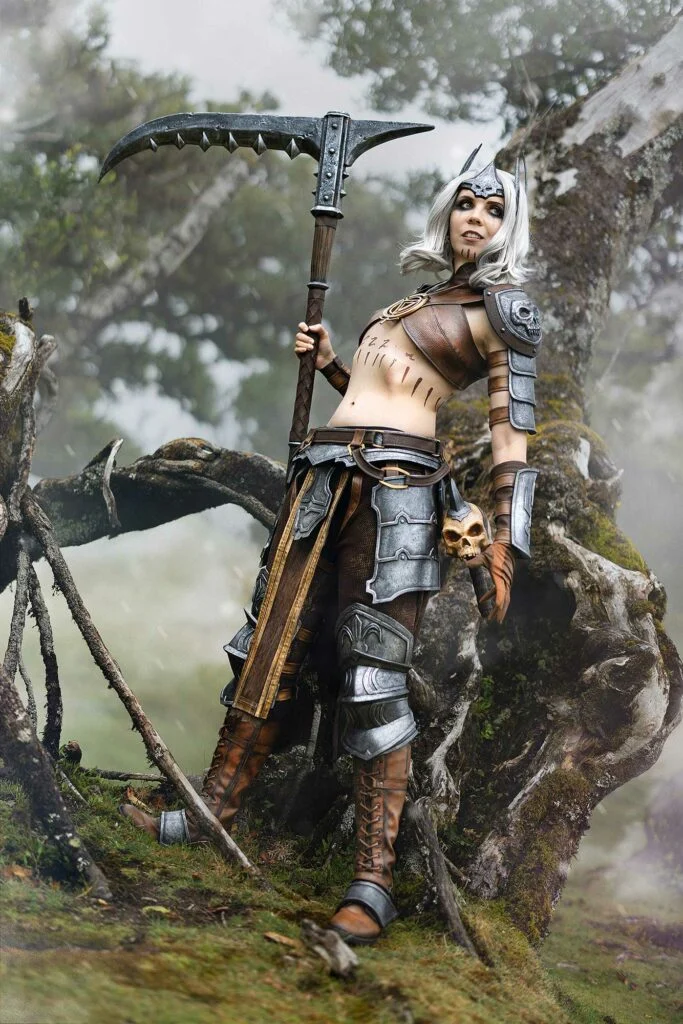
In the world of high-end professional cosplay, the timeline for a complex, armor-heavy build is usually measured in months. However, for legendary crafter Kamui Cosplay, the launch of Blizzard Entertainment’s Diablo IV presented a challenge that defied standard industry logic: complete a full, screen-accurate Necromancer ensemble in just 14 days.
Set against the chaotic backdrop of an international relocation, this project stands as a testament to the intersection of rapid prototyping, digital design, and artistic dedication. With over two decades of experience working with Blizzard properties, this project was not merely a hobbyist endeavor; it was a high-stakes collaboration between a creator and a developer, bringing the dark aesthetic of Sanctuary to life.
The Genesis of the Necromancer: A Developer-Artist Collaboration
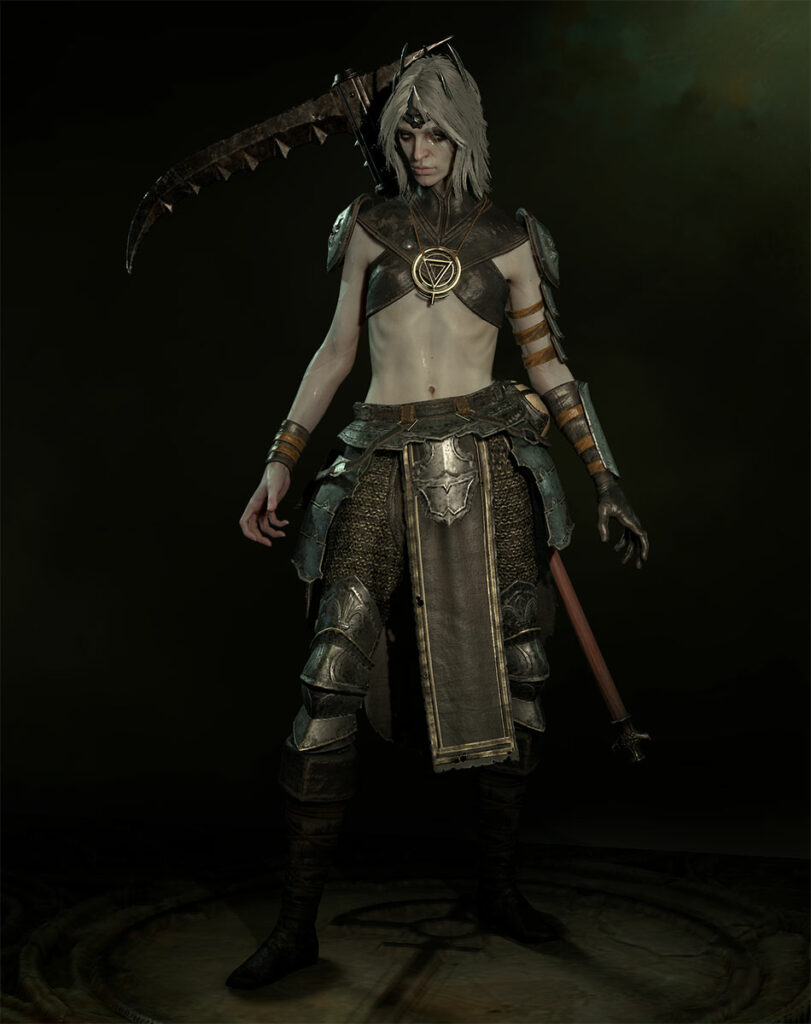
The project began with a unique advantage that few independent artists ever experience: direct support from the game’s developers. As the game had not yet launched, Blizzard provided Kamui with exclusive reference materials. These high-fidelity renderings allowed for a level of detail—from specific tattoo patterns to intricate armor geometry—that would have been impossible to derive from promotional trailers alone.

"Every cosplayer can only dream of such a service from a game studio," says the artist. With the character’s look solidified, the challenge shifted from conceptualization to physical execution. The objective was clear: the costume needed to reflect the grim, gothic aesthetic of the Necromancer class, balancing heavy, weathered armor with the flowing, dark fabrics that define the class’s silhouette.
Chronology of a 14-Day Build
Days 1–5: Patterning and Fabric Foundations
The initial phase focused on building the "base" of the costume. To ensure a perfect fit, the artist utilized the classic, albeit grueling, method of duct-tape body casting. By covering the chest in tape and draping the skirt in heavy curtain fabric, the fundamental structure was established.
This phase was critical for shaping the silhouette. Because the Necromancer requires a blend of rigid plate and soft, layered textiles, selecting the right materials was paramount. The choice of thick, brown furniture pleather provided the necessary structure for the leather components, while the heavy-duty curtain fabric offered the weight and drape required for the skirt.
Days 6–10: Digital Precision and Rapid Fabrication
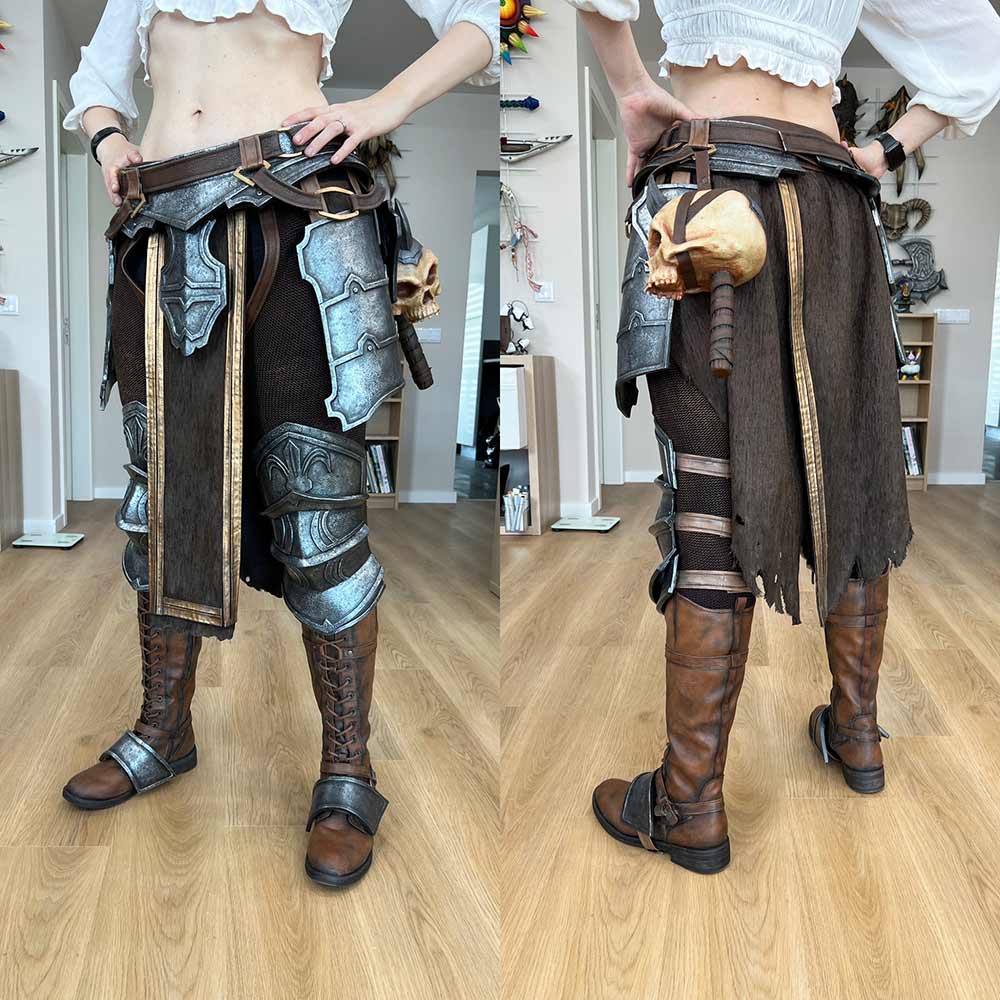
The complexity of the leg armor necessitated a shift from manual drafting to digital precision. With the help of a custom 3D design by her partner, Benni, the team used Blender to create patterns that mirrored the game’s assets exactly. This allowed for a streamlined assembly process, where foam pieces could be cut with near-perfect alignment.
By the end of the second week, the armor was nearing completion. The team relied on 5mm EVA foam for the base structure, with 2mm foam layered on top for surface detailing. This "sandwich" technique allowed for high visual complexity without the weight of traditional materials like metal or fiberglass.
Days 11–14: The Final Polish and the Scythe
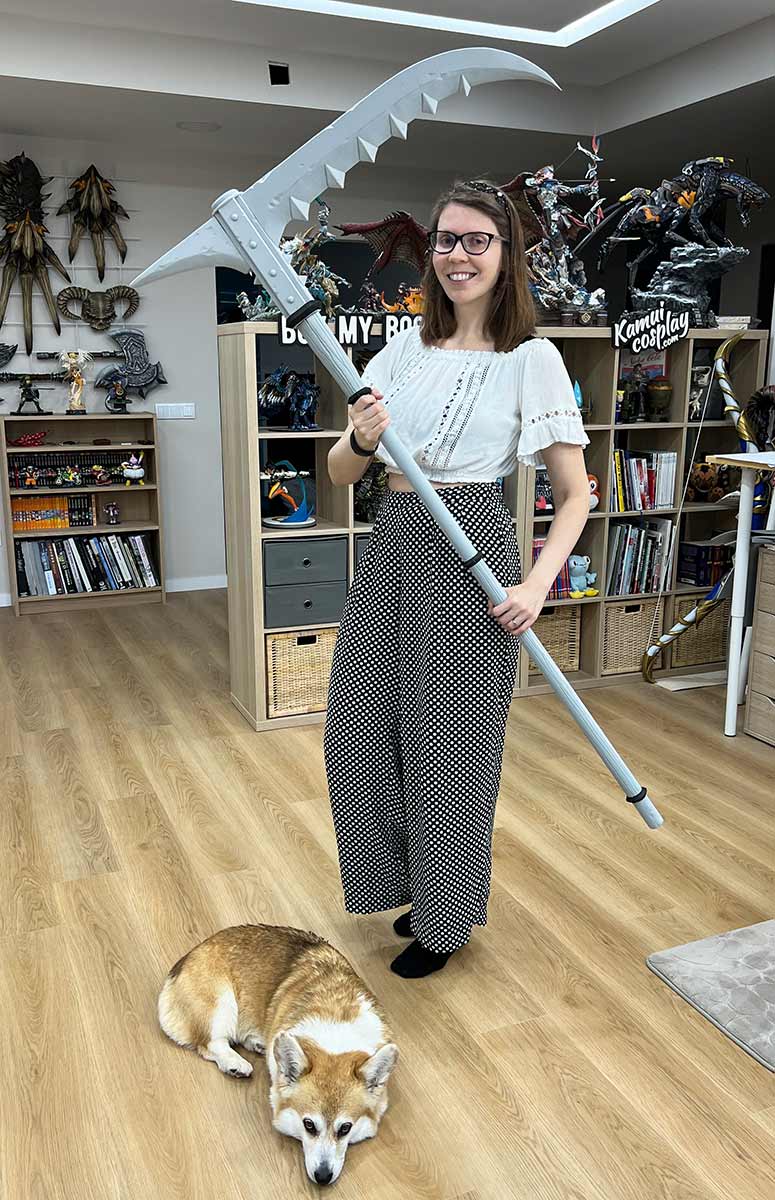
The final days were dedicated to surface treatments and the construction of the Necromancer’s signature scythe. The weapon was designed to be modular, utilizing PVC pipes and high-strength magnets to allow for easy transport—a necessity given the constraints of international travel.
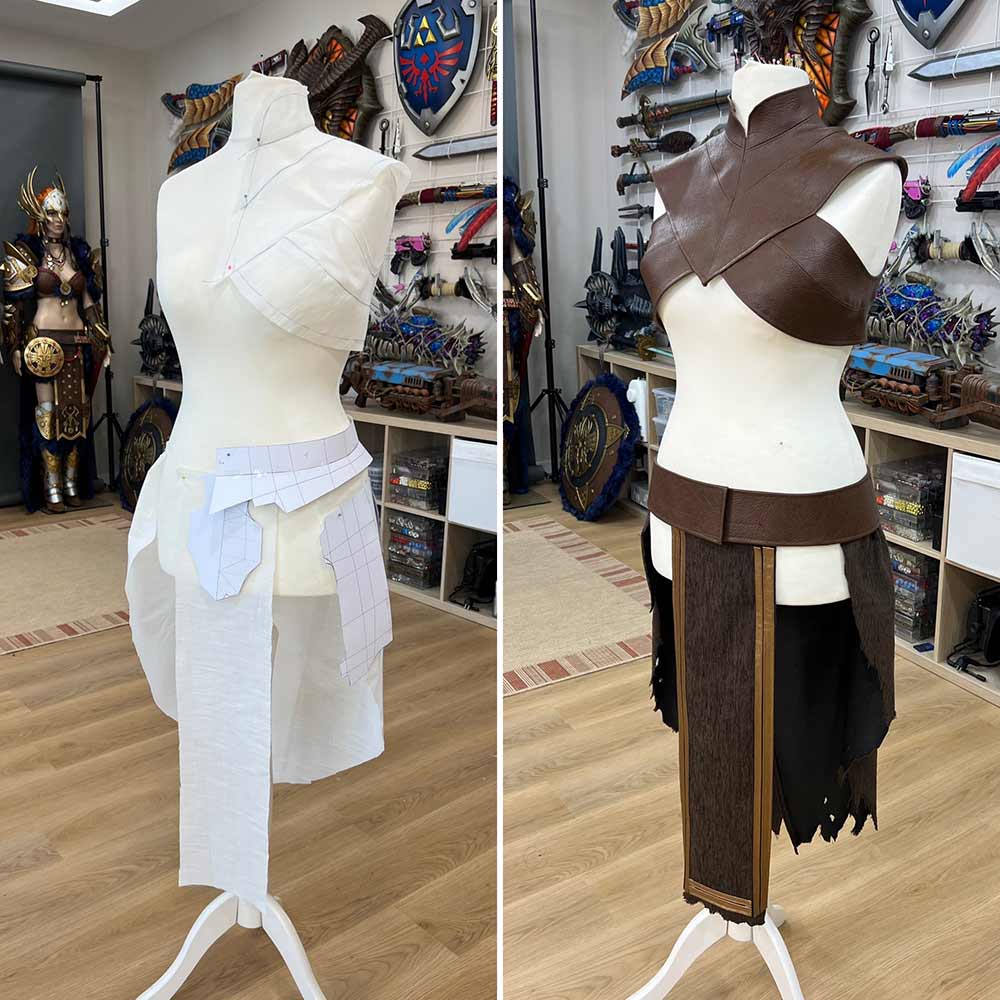
The finishing process involved a multi-step priming technique using Flexbond mixed with black acrylics, followed by a hand-dabbed texture to simulate the wear and tear of a battlefield veteran. The metallic sheen was achieved through the application of Rub ’n Buff, a favorite among professional prop-makers for its realistic, oxidized-metal finish.
Technical Breakdown: Materials and Methodology
The success of a two-week turnaround relies heavily on a refined toolkit and the selection of materials that require minimal drying or curing time.
Core Materials
- EVA Foam (5mm and 2mm): Chosen for its versatility, ease of cutting, and lightweight nature.
- Furniture Pleather: Used for structural integrity in belts and harness components.
- Heavy Curtain Fabric: Selected for the skirt to provide a rustic, aged aesthetic.
- Flexbond & Acrylics: The primary priming medium, ensuring the foam surface was sealed and ready for metallic pigments.
- 3D Printed Elements: Specifically the "Wilson" skull prop, which required specialized 3D printing and post-processing.
Essential Tools
The workflow was optimized for speed, utilizing heat guns for foam shaping, precision craft knives for intricate cuts, and contact cement for high-strength bonding. The use of magnetic connectors for the scythe served as the project’s most critical engineering feature, proving that even rapid-build projects can be modular and travel-friendly.
The Mystical Backdrop: Filming in Fanal
A costume is only as good as its presentation. To capture the essence of the Diablo universe, the team traveled to the Fanal Forest in Madeira. This ancient laurel forest, known for its permanent fog and 500-year-old trees, provided the perfect, ethereal atmosphere for the Necromancer.
Despite the lack of natural fog during the shoot, the team leveraged high-end equipment—a Canon EOS R5 paired with a 50mm 1.2f lens—to capture the character in sharp detail. Post-production efforts, including the digital addition of fog and atmospheric lighting, solidified the final images as some of the most convincing representations of the class to date.
Professional Implications: The Evolution of Cosplay
The Diablo IV Necromancer project is more than just a fan tribute; it represents the modern evolution of professional cosplay. The integration of 3D modeling (Blender) and digital collaboration with game studios marks a significant shift in how cosplayers interact with intellectual property.
Why This Matters for the Industry
- Rapid Prototyping: By using digital patterns, cosplayers are moving away from trial-and-error, allowing for "crunch" timelines that were previously impossible.
- Developer Relations: When studios provide assets to cosplayers, it creates a symbiotic marketing cycle that benefits both parties. The cosplayer gains professional-grade references, and the developer gains high-quality, authentic promotional content.
- Modular Engineering: As seen in the scythe construction, the move toward modular, magnetic, and collapsible props is becoming an industry standard for professional cosplayers who travel internationally.
Challenges of the "Crunch"
However, the project also highlights the intense pressure of the professional cosplay circuit. Balancing a move to a new country with a high-profile, two-week build is a recipe for burnout. The success of this project serves as a case study in project management: identifying which parts of a build can be simplified (like the velcro-based attachment system) without sacrificing the visual quality.
Conclusion: A Testament to Passion
Looking back at the process, the project was defined by its constraints. The lack of time, the background construction noise during the move, and the logistical hurdles of filming on a remote island could have easily derailed a lesser team. Instead, these obstacles were absorbed into the creative process.
The final result—a fully realized, battle-ready Necromancer—serves as a benchmark for what can be achieved with the right combination of skill, digital tools, and a deep-seated love for the source material. For fans of Diablo IV and aspiring cosplayers alike, the project proves that while the "crunch" is real, the reward of seeing a digital character brought to life is worth every hour of labor. As the industry continues to professionalize, collaborations between game studios and expert crafters like Kamui Cosplay are set to become the gold standard for game launches worldwide.