

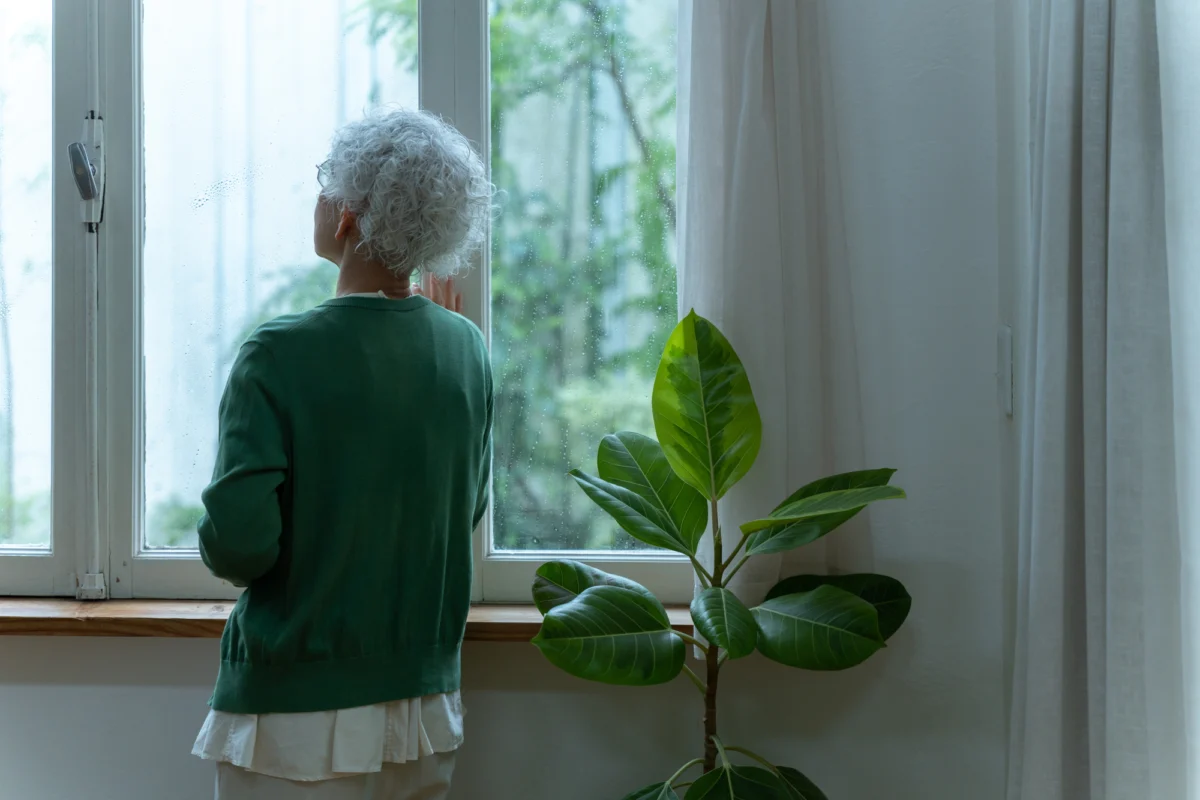
For decades, the global perception of Japanese social withdrawal—known as hikikomori—has been frozen in a specific cultural snapshot: a young, disaffected man, sequestered behind the locked door of his childhood bedroom, refusing to engage with a hyper-competitive society. This image, popularized by media narratives in the early 2000s, served as a convenient shorthand for the pressures of modern Japanese life. However, time has marched forward, and the "shut-in" youth of yesterday have grown up. They are now middle-aged adults, still living within the same four walls, and their parents—once their primary protectors—have reached their 70s and 80s.
This demographic evolution has birthed a profound societal crisis known as the "80/50 problem" (8050 mondai): households where octogenarian parents are struggling to care for their adult children in their 50s. Far from being a relic of the past, this phenomenon has deepened, creating a complex, often invisible crisis that is straining Japan’s social safety net to its breaking point.
The Evolution of a Social Phenomenon
The trajectory of hikikomori is one of missed transitions. In the late 1990s and early 2000s, the phenomenon was largely viewed through the lens of adolescence—a temporary rebellion or a failure to launch. It was framed as a localized issue involving school refusal or the "freeter" lifestyle, where young people bounced between part-time jobs.
However, as these individuals aged, the nature of their withdrawal became more entrenched. The transition from the 20s to the 40s and 50s meant that many of these individuals missed critical life milestones: establishing a career, building an independent household, or developing a peer support network. As their physical world shrank, their reliance on their parents solidified. By the time these children reached their 50s, the parental support system—once robust—began to collapse under the weight of the parents’ own aging, illness, and eventual mortality.
Data-Driven Reality: A Growing Demographic
The scale of the problem is far more extensive than many realize. According to a landmark nationwide survey conducted by the Japanese Cabinet Office in late 2022 and released in 2023, approximately 1.46 million people between the ages of 15 and 64 are living in a "broad hikikomori" state. This statistic suggests that roughly one in every 50 working-age adults in Japan is currently experiencing some form of prolonged social withdrawal.
The figure is staggering when compared to previous estimates. In just four years, the number of individuals identified as hikikomori rose by roughly 310,000. It is crucial to note that the government’s definition of hikikomori has evolved to be more inclusive. It no longer refers only to those who never leave their rooms; it now encompasses individuals who, for six months or longer, leave their homes only for specific tasks, such as shopping at a convenience store or pursuing solitary hobbies.
While the 2022 survey took place as the world was emerging from the shadow of the COVID-19 pandemic, the results indicate that the pandemic was not the sole cause. While 20% of respondents cited COVID-19 as a factor in their isolation, 80% attributed their state to other, more deep-seated issues. This confirms that for the majority, the withdrawal is a chronic condition that predates the global health crisis.
Beyond the Stereotype: Who Are the Hikikomori?
The popular image of the male shut-in obscures a more nuanced reality. While bullying and academic pressure are frequently cited as catalysts for younger generations, the triggers for those in the 40-to-64 age bracket are often rooted in the labor market and domestic expectations.
The Impact of Economic Volatility
The 2023 survey revealed that 44.5% of respondents aged 40 to 64 identified the loss or abandonment of a job as the primary trigger for their withdrawal. Japan’s labor market underwent significant structural changes over the last two decades, shifting toward precarious, contract-based employment. For many, the inability to find stable, full-time work—or the trauma of enduring power harassment and toxic workplace environments—led to a complete withdrawal from the professional sphere. Once an individual spends a significant amount of time outside the workforce, the "stigma of the gap" makes re-entry exponentially more difficult, creating a vicious cycle of unemployment and isolation.
The Hidden Majority: Women and Domesticity
Perhaps the most surprising finding in recent data is the gender distribution. Among hikikomori aged 40 to 64, women actually constitute a slight majority, at 52.3%. The misconception that hikikomori are exclusively men persists because, in many cases, women who withdraw are categorized under the guise of "housework" or "caregiving." The National Federation of Families of Hikikomori (KHJ) has noted that societal expectations often normalize the presence of women in the home, meaning their isolation is less likely to be identified as a crisis until it is too late.
The "80/50" Dilemma: A Ticking Time Bomb
The 80/50 problem represents a precarious intersection of poverty and dependency. In Japan, where the official retirement age is 60, many parents in their 80s are living on fixed pensions. When these parents are forced to act as the sole financial providers for an adult child who has not worked for decades, household savings are rapidly depleted.
The situation is further complicated by the fact that 90.3% of hikikomori in the 40-to-69 age range have had some work experience. Many express a desire to work but feel "unhireable" due to age, lack of recent experience, or the psychological toll of past workplace abuse. For the remaining 10% who have never held a job, the situation is even more critical. These individuals are entirely dependent on their parents for housing and sustenance; when those parents pass away or require nursing care, these individuals are left with no financial or social safety net, putting them at immediate risk of homelessness or starvation.
The Failure of Support Systems
Compounding the problem is the persistent stigma surrounding mental health in Japan. Many hikikomori suffer from undiagnosed or untreated mental health conditions, yet the societal shame attached to seeking psychiatric care prevents families from accessing professional help.
This vacuum of legitimate, evidence-based care has allowed predatory "support" businesses, known as hikidashi-ya ("pull-out agents"), to flourish. These companies often charge families exorbitant fees to forcibly remove the hikikomori from their homes and place them in "rehabilitation" facilities. In reality, these services are frequently unregulated, coercive, and damaging, often worsening the psychological state of the individual.
The Invisible Crisis: When Isolation Becomes Fatal
The most tragic outcome of the 80/50 problem occurs when the household remains invisible until a catastrophic failure of the support system occurs. Japanese media frequently covers cases described as "parent and child collapsing together"—a euphemism for situations where the death of an elderly parent leads to the secondary death of the child from starvation or, conversely, where the adult child is found deceased alongside their parents.
These households are often discovered only after a crisis: a landlord notices unpaid rent, a utility company cuts off power to an abandoned home, or local government officials investigate unpaid taxes. The shame associated with having an adult "shut-in" child causes many parents to withdraw from their neighbors, relatives, and local community activities, effectively sealing the family off from the outside world. By the time help arrives, the family is often beyond the reach of social services, having already succumbed to poverty, declining physical health, or severe mental breakdown.
Official Responses and the Path Forward
Recognizing the gravity of the 80/50 problem, the Japanese government has begun to shift its approach. Since 2018, the Ministry of Health, Labour and Welfare has established a network of regional hikikomori support centers. These hubs are designed to act as a bridge between welfare offices, employment services, and public health agencies.
Furthermore, a 2021 revision to the Social Welfare Act introduced a more integrated framework. The goal is to move away from fragmented, specialized care and toward a comprehensive model where consultation services and practical assistance are coordinated across different government sectors. In many successful interventions, officials are alerted to a hikikomori household not because the family seeks help for the withdrawal itself, but because the elderly parent applies for nursing care for their own declining health.
Despite these efforts, there is no "silver bullet." Organizations like KHJ argue that the most critical intervention is proactive guidance for parents before they reach the breaking point. By supporting the parents and reducing the shame surrounding the family’s situation, it is possible to create an opening for the hikikomori to gradually reintegrate into society.
Conclusion
The 80/50 problem is a stark reflection of the hidden costs of Japan’s rapid modernization and the societal pressures that prioritize productivity above all else. It is a crisis that thrives in the dark, fed by shame, isolation, and a rigid social structure that finds it difficult to accommodate those who have fallen off the conventional path.
As Japan’s population continues to age, the challenge of the hikikomori will only grow more acute. The solution requires more than just government policy; it requires a fundamental shift in how Japanese society views mental health, employment, and the responsibilities of family members to one another. Until the stigma of "shut-in" status is replaced by a culture of early intervention and compassionate support, the silent, slow-motion tragedy of the 80/50 households will continue to unfold behind closed doors.











