Evan Lee Salim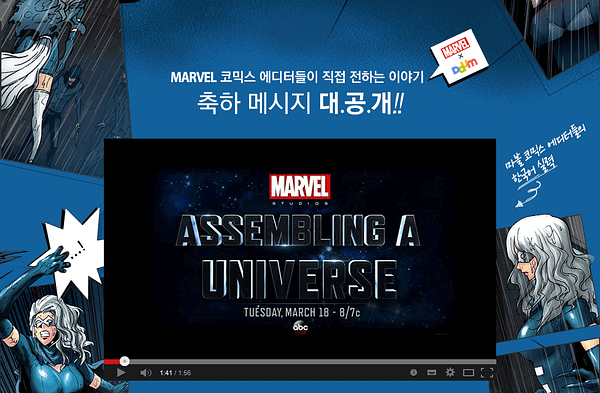
The landscape of global comics is shifting, and the boundaries between traditional American publishing and the digital-first "manhwa" culture of South Korea have never been thinner. A significant milestone in this cross-cultural fusion was the launch of Avengers: Electric Rain, a pioneering webtoon project that brought Earth’s Mightiest Heroes into the heart of Seoul. Illustrated by the acclaimed Korean artist Younghoon Ko, the series not only expanded Marvel’s reach into the burgeoning digital comic market of East Asia but also introduced a brand-new character specifically designed to resonate with a local audience.

The Convergence of Two Comic Cultures
For decades, the comic industry was defined by a clear divide: the color-saturated, serialised pamphlets of the American "Big Two" and the sprawling, black-and-white, pocket-sized volumes of Japanese manga and Korean manhwa. However, the rise of the internet ushered in the era of the "webtoon"—long-form, vertically scrolling digital comics designed specifically for mobile consumption.

In the mid-2010s, this format became a dominant force in South Korea, with platforms like Daum leading the charge. Recognizing the immense potential for intellectual property expansion, Marvel Entertainment, in collaboration with Disney Korea and the publisher Daum, greenlit an ambitious experiment: Avengers: Electric Rain. This project was not merely a translation of existing stories but a ground-up creation designed to marry the iconic aesthetics of the Avengers with the unique, high-octane visual language of Korean digital art.

A Chronology of the Project’s Inception
The development of Avengers: Electric Rain was a meticulous process involving intense coordination between Marvel’s editorial offices in New York and the creative talent pool in Seoul.

- Early 2014: Strategic Alignment: Marvel and Disney Korea initiate discussions with Daum to explore the possibility of a localized Marvel title. The objective was to create a series that felt authentically Korean while maintaining the continuity and spirit of the Avengers.
- Mid-2014: Creative Selection: Marvel scouts select Younghoon Ko, an artist known for his dynamic character work and mastery of digital coloring techniques, to spearhead the visual direction of the series.
- September 2014: The Promotional Blitz: As the project nears its launch, Marvel executives—including CB Cebelski, Axel Alonso, Tom Brevoort, Ellie Pye, Jordan White, and Nick Lowe—begin a series of promotional video campaigns. These videos were designed to introduce the American editorial team to the Korean audience and vice-versa, highlighting the enthusiasm surrounding the collaboration.
- Late 2014: The Launch: Avengers: Electric Rain officially begins serialization on Daum. The response from the local audience was immediate, marking a successful entry point for Western superheroes into a market traditionally dominated by local content.
The Artistic Vision of Younghoon Ko
At the center of the series is Younghoon Ko, whose art style provided the "electric" feel promised by the title. Unlike traditional print comics that rely on static panel layouts, Ko had to embrace the "infinite canvas" of the webtoon format. His work on Electric Rain is characterized by vibrant, neon-soaked palettes, fluid action sequences that utilize the vertical scrolling space to create a sense of motion, and a unique redesign of classic costumes to better fit a modern, urban Korean setting.

Ko’s contribution went beyond just drawing existing heroes; he played a pivotal role in the introduction of a brand-new character—a localized hero intended to act as a bridge between the Avengers and the people of Korea. By grounding the story in the familiar geography of Seoul, Ko made the high-stakes world of the Avengers feel immediate and tangible, a stark departure from the typical New York-centric narratives of the source material.

Official Responses and Cross-Cultural Friction
The promotional campaign for Avengers: Electric Rain was a spectacle of corporate synergy, though it was not without its lighthearted hurdles. The series of videos released by Marvel featured high-ranking editors and producers attempting to navigate the Korean language.
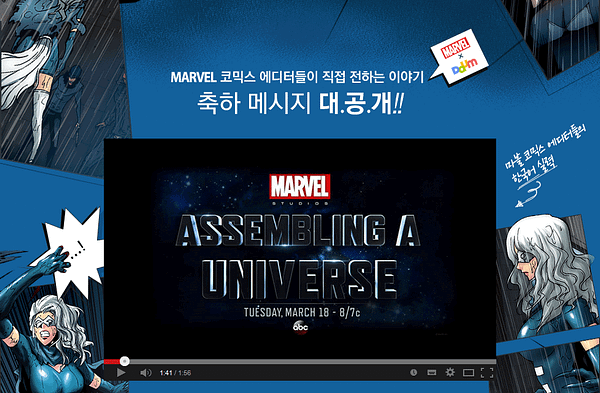
While the attempts to speak Korean were met with humor and, at times, what fans jokingly referred to as "the mutilation of the language," the sincerity of the intent was clear. Executives like Axel Alonso and Tom Brevoort expressed genuine excitement about the potential for cross-pollination. The official stance from Marvel was that this project was a test case: if Electric Rain could succeed in Korea, it would provide a blueprint for future localized Marvel content in international markets.

The contrast in these videos was striking: while the Marvel executives struggled with the nuances of Korean pronunciation, Younghoon Ko’s segments—where he showcased the finished art—demonstrated a seamless command of the medium. It highlighted a central truth of the project: the art, and the universal language of storytelling, would ultimately be the bridge that connected these two vastly different creative cultures.

Implications for the Future of Comics
The legacy of Avengers: Electric Rain is profound, serving as a harbinger of the current global webtoon explosion. Several key implications arose from this collaboration:

1. The Validation of the Vertical Format
Before this project, there was skepticism in the West regarding whether traditional superhero narratives could translate to a vertical, scrolling digital format. Electric Rain proved that the format actually enhances action scenes, allowing for cinematic pacing that is impossible to achieve on a standard printed page.
2. Localization as a Strategy
Marvel learned that simply exporting American comics to foreign markets is less effective than creating localized IP. By involving local artists like Younghoon Ko, the publisher gained access to regional aesthetic sensibilities, making the product more appealing to local demographics who might otherwise find American comics alienating.
3. The Digital-First Shift
The project accelerated the industry’s realization that digital distribution is not just a secondary channel but a primary one. Following the success of this collaboration, major publishers began to view webtoon platforms not as competitors, but as essential partners for reaching younger, mobile-native audiences.
4. Cultural Exchange
The collaboration opened doors for a more fluid exchange of talent. In the years following Electric Rain, we have seen an increase in the number of Korean artists working on major American titles, and conversely, Western creators have begun to experiment with webtoon-inspired storytelling structures.
Conclusion: A Lasting Impact
Avengers: Electric Rain remains a fascinating case study in how global media giants adapt to the realities of the digital age. By stepping outside their comfort zone and engaging with the unique ecosystem of Korean webtoons, Marvel demonstrated a willingness to evolve.
While the project was a product of its time, its influence can still be felt in the way major publishers approach digital media today. The experiment proved that when you take the most recognizable icons in popular culture and place them in the hands of talented international creators, the result is more than just a translation—it is a new, vibrant interpretation of what it means to be a hero in a globalized world. Younghoon Ko’s work on the series stands as a testament to this, showing that when the rain falls, it creates something truly electric.


 Dwi Wanna
 Iffa Jayyana