On the morning of June 25, 2026, the Anaheim Convention Center became a microcosm of the modern entertainment industry. Thousands of attendees—a vibrant, chaotic tapestry of pink-sneakered tweens, gothy teens, obsessed cinephiles, and weary, supportive parents—found themselves pressed against locked doors. A minor, bureaucratic hiccup involving the local fire marshal had stalled entry, causing a snaking, serpentine line to collapse into a restless, swirling mass of humanity.
To the casual observer, it was merely a logistical headache. To those tracking the seismic shifts in media, it was a profound symbol of the current moment: a massive, self-sustaining ecosystem of digital-native fans waiting for the gates of traditional media to finally admit them.
Some 6,000 miles away, the Cannes Lions International Festival of Creativity was entering its fourth day, marking an extraordinary transition. What was once an annual advertising boondoggle for Madison Avenue titans was rapidly morphing into a “creators-go-Hollywood” takeover. The tension between these two worlds—the high-gloss, institutional pedigree of traditional media and the decentralized, fan-driven power of the creator economy—is no longer a theoretical debate. It is the defining struggle of contemporary entertainment.
The Power of the Audience: A New Currency
While the industry establishment debates the merits of legacy distribution, the real power has quietly migrated. Whether it is the viral, decentralized horror of the “Backrooms” universe or the intimate, parasocial storytelling that fuels the creator economy, the audience’s attention is now the singular commodity that matters.
For decades, the gatekeepers of film and television relied on institutional imprimatur: festival pedigree, critical reviews, and the perceived “taste” of a studio head. Today, that model is being disrupted by a cadre of digital creators who have bypassed the middleman entirely. They do not just make content; they curate communities. They hold cards that most traditional indie filmmakers—accustomed to begging for distribution and validation—have never touched.
The Startup Mindset: Every Creator is a CEO
Jim Louderback, former CEO of VidCon, has had a front-row seat to this evolution since 2010. Back then, VidCon was a modest gathering of 1,500 enthusiasts in a hotel basement, a secret society of early adopters. Today, it is an industry-defining trade show.
“Every creator over a certain level is essentially the CEO of a startup company,” Louderback observed. “But unlike traditional entrepreneurs who might have cut their teeth in corporate structures, a significant portion of this generation never had a job outside of being a creator. They are the writers, the directors, the editors, the marketing department, and the chief financial officers of their own brands.”
This professionalization was on full display at the VidCon Industry Track. Panels were not dedicated to the romantic, abstract notions of “artistic vision.” Instead, they focused on the brutal, practical realities of the business: product-market fit, audience analytics, and the economics of brand partnerships. When a metrics panel breaks down granular engagement data, they aren’t speaking to CMOs looking for a campaign—they are speaking to the creators whose very livelihoods depend on interpreting that data in real-time.

The Inoxtag Precedent: A Deal Disney Didn’t See Coming
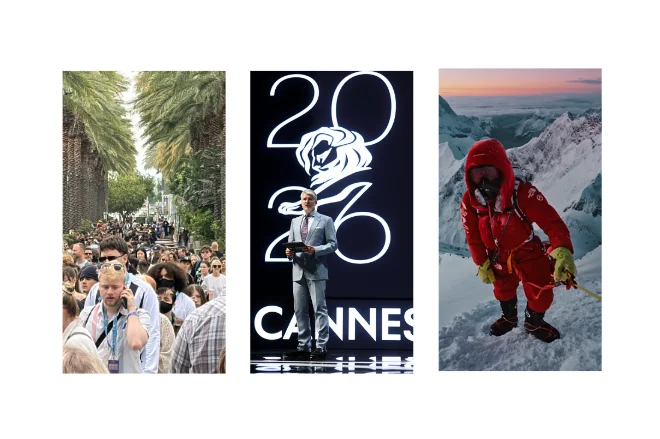
The traditional power dynamic is perhaps best illustrated by the story of Inoxtag, a French creator with 9.4 million YouTube subscribers. Last year, he documented his harrowing attempt to climb Mount Everest in a film titled Kaizen.
Gregg Bywalski, managing director of the global holding company Webedia, recalls the film’s meteoric rise. When the distributor MK2 pushed for a one-night theatrical release, they sold 350,000 tickets across 1,000 screens in 24 hours—a feat that crashed the websites of major exhibitors. When the film subsequently hit YouTube, it garnered 10 million views in a single day.
The cultural impact was undeniable, and it naturally caught the attention of the ultimate gatekeeper: Disney+. However, when Disney came to the table, they demanded the industry-standard: exclusivity. They wanted the film pulled from YouTube to drive traffic to their platform.
Inoxtag’s response was a polite, firm refusal. He had made a promise to his fans, and his distribution strategy was built on trust, not top-down licensing. For a traditional studio, this was a foreign language. “I don’t think they’re used to that kind of answer,” Bywalski said. Eventually, Disney+ conceded. You can now find Kaizen on Disney+ and on Inoxtag’s YouTube channel.
For the traditional indie filmmaker, this is a wake-up call. Inoxtag did not have “leverage” in the traditional sense of a high-powered agent or a multi-picture deal. His leverage was 350,000 ticket-buyers and a direct, unmediated relationship with his audience.
Implications for the Indie Film Landscape
The collapse of the divide between "creator content" and "indie film" is inevitable, but it is causing a fundamental shift in how value is perceived. We are witnessing the birth of "watch time" as a primary greenlight metric.
Industry executives are increasingly using accumulated time spent with a creator’s existing body of work as a proxy for potential success. In this environment, the traditional indie filmmaker, who often spends years on a single project without a consistent audience-building loop, finds themselves at a disadvantage.
Consider the modern casting process. Actors are now routinely asked to provide social media metrics as part of their audition packets. Casting directors are using follower counts as a filter—a blunt instrument that risks distorting the industry’s perception of talent. It is a transition that has happened so gradually that it has become the new norm, often without a single formal policy change.

The Crisis of Credentials
Indie filmmaking has long relied on the "critic-to-distributor-to-audience" pipeline. But what happens when the audience no longer waits for the critic?
The crisis facing indie film is one of language. Filmmakers are holding credentials—awards, critical acclaim, prestigious festival laurels—in a language that fewer and fewer stakeholders speak. If you cannot demonstrate a pre-existing audience, you are increasingly viewed as a high-risk asset.
However, this transition is not necessarily a death knell for cinema; it is a recalibration. The "creator economy" is a marketplace with its own harsh realities. While creators have independence, they are also tethered to the constant, grinding cycle of the algorithm. They are always one "slow month" away from losing the very metrics that keep them relevant.
The Path Forward: Can Film Learn from the Creator?
As the lines blur, the future of independent cinema may lie in the middle ground. The most successful creators are those who have mastered the art of high-production value (like Inoxtag) while maintaining the authenticity of their origins.
For indie filmmakers, the challenge is clear: Can they adapt to this new, audience-first reality without sacrificing the depth and craft that defines their medium? The story of Inoxtag suggests that if you have the audience, you set the terms. If you don’t, you are at the mercy of the gatekeepers.
The Anaheim Convention Center, with its thousands of eager fans and its locked doors, was a snapshot of a transition in progress. Whether the industry chooses to view these creators as a threat or as a blueprint will determine who stays on the outside, and who finally gets to walk through the doors.
Ultimately, the power has shifted. It is no longer about who the critics say is good; it is about what the audience chooses to spend their time with. In a world that is increasingly data-driven and platform-centric, the only currency that retains its value is trust—and for now, the creators have it in spades.