Basiran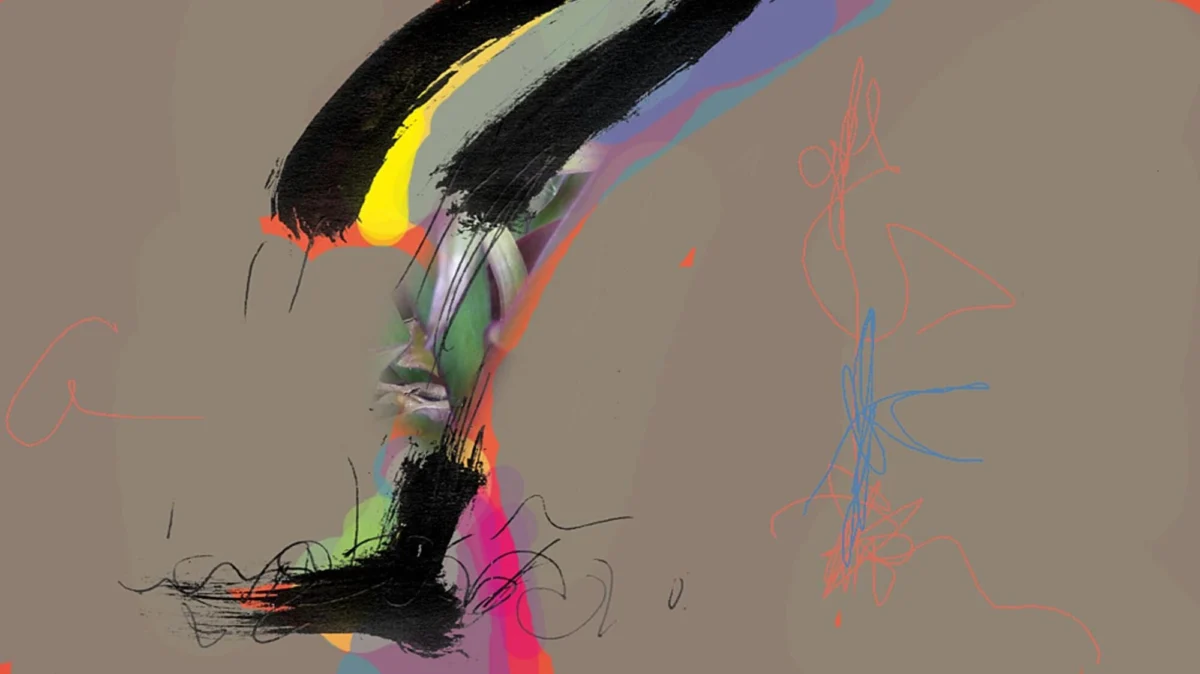
Introduction: The Architecture of Flux
In the landscape of Canadian animation, few figures loom as large—or as unpredictably—as Christopher Hinton. For decades, Hinton has been a mercurial force, a two-time Oscar-nominated animator whose work has traversed the distance between the satirical, gag-driven humor of Blackfly (1991) and the raw, abstract existentialism of Flux (2002).
Flux stands today as the fulcrum of his career—a film about motion, memory, and the Sisyphean struggle to keep life still. To look back at Hinton’s body of work is to look at a map of a restless mind, one that has consistently rejected the comfort of a signature style in favor of the next, more difficult challenge. As he enters a new chapter of his life, transitioning away from the frame-by-frame manipulation that defined him, it is worth examining how Hinton navigated the collision of digital technology, personal tragedy, and an unyielding desire for creative autonomy.
Chronology: From Sheridan to the Global Stage
Christopher Hinton’s entry into the world of animation was, by his own admission, an act of serendipity. In the late 1960s, he applied to the photography program at Sheridan College, only to find himself ushered into the animation department. It was a baptism by fire. His early instructors, proponents of rigid technique and traditional ball-and-arc physics, frequently clashed with his budding desire for experimentation.
"I can remember the first exercise," Hinton recalls. "I put some lines on the ball. I got beaten down for that big time. No inventiveness required. Just, this is what we want, this is what you give us. Don’t play." By his second year, administrators suggested he find a new career. Hinton refused to fold. Instead, he dropped out to accept a directive position at Ken Perkins Animation in Winnipeg, a move he now characterizes as the most radical and beneficial decision of his life.
In Winnipeg, Hinton found a fertile ground for experimentation, bolstered by the National Film Board of Canada (NFB). Under the guidance of Mike Scott, Hinton contributed to the Canadian Vignettes series, creating Lady Frances Simpson (1978). The film showcased his early penchant for blending historical narrative with a frenetic, often absurd visual energy. This was followed by Blowhard (1978) and Giordano (1985), before he hit his stride with A Nice Day in the Country (1988), a masterpiece of colored-pencil anxiety and dark humor.
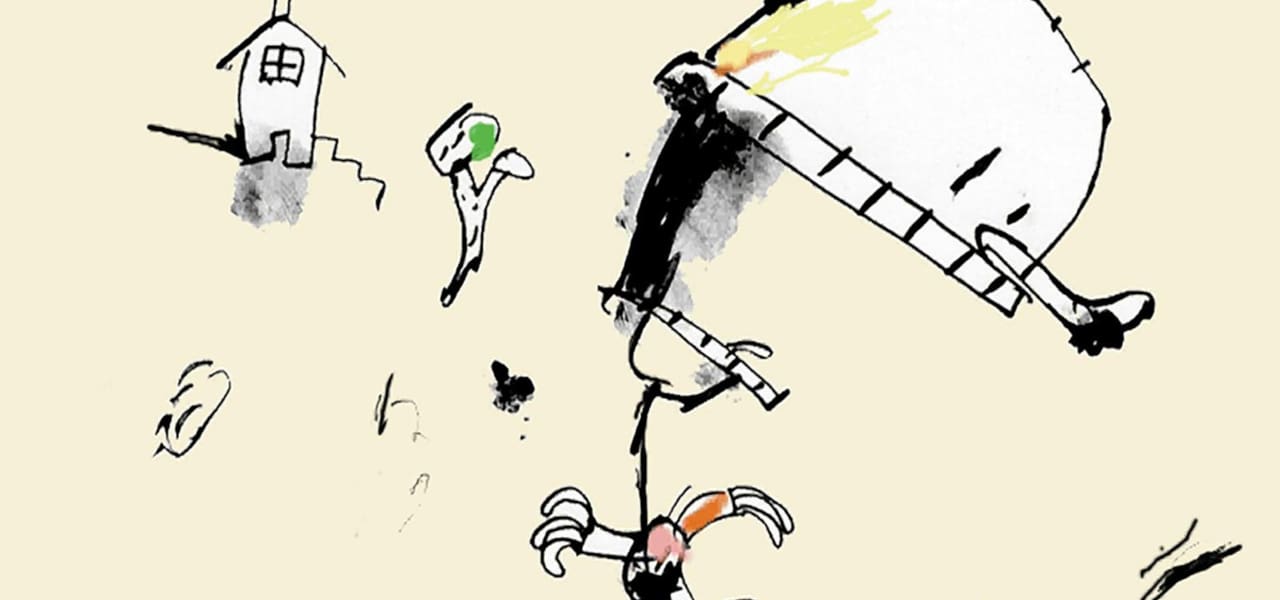
The 1990s brought international acclaim with the Academy Award-nominated Blackfly—a musical folk-comedy that remains a cultural touchstone—and Watching TV (1994). However, the latter project served as a breaking point. "I jumped into the production without adequate preparation," Hinton says. "It just became a self-important rant with no space for the audience. I realized I never wanted to work that way again."
The Turning Point: The Birth of Flux
The evolution of Hinton’s style was catalyzed by two profound events: the rapid arrival of digital animation and the death of his father. The loss forced a re-evaluation of his artistic output. "I started doing the math on how many years I had left to make films, and what was I doing here? I just decided that I was going to do things my way and tell my stories."
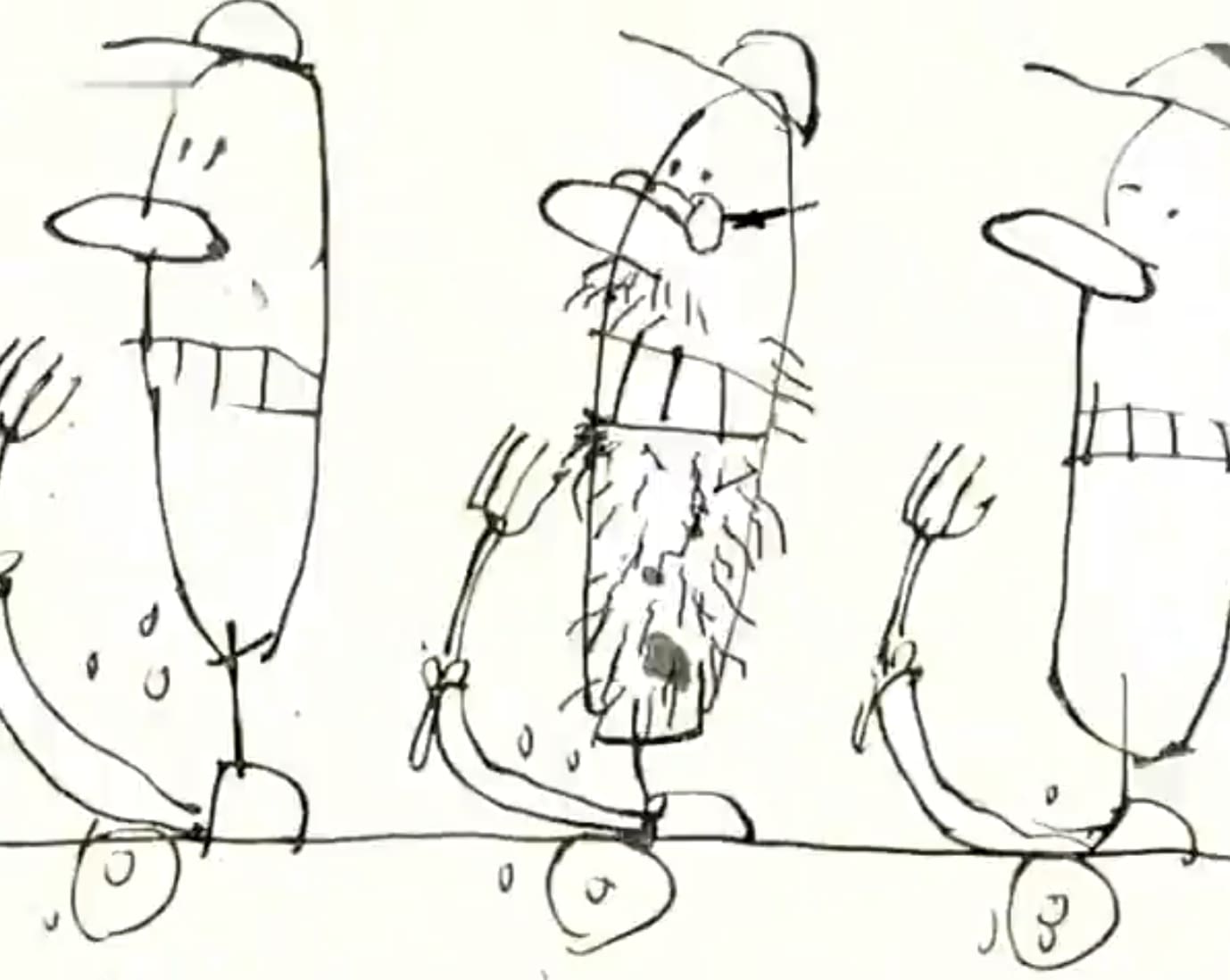
This resolve led to the creation of Flux (2002). Moving away from traditional cel animation, Hinton began experimenting with paint, ink, and crude, physical setups. He eventually settled on a simple, low-tech method: cutting copy paper into quarters, utilizing an L-shaped cardboard guide, and drawing with pen and ink.
"I loved it because I was in total control," he explains. "I didn’t need a technician, I didn’t need a light bulb, I could do it anywhere." Flux captured the chaotic, non-linear nature of memory, inspired by family dinner conversations where every participant held a different version of the same event. By stripping away horizon lines and stabilizing markers, Hinton created a visual language where everything floated—a perfect, messy metaphor for the human condition.
Supporting Data: The Evolution of Technique
Hinton’s career is a testament to the idea that technical limitations can foster creative breakthroughs. Throughout the 2000s, he maintained a prolific pace, producing Nibbles (2004)—which earned another Oscar nomination—Twang, and the experimental cNote (2005).
His process evolved into a series of "what-if" scenarios:
- Abstraction: With X-Man, he sought to determine if audiences could remain engaged by abstract blobs of paint, provided they followed the same character-animation principles as figurative work.
- Collaboration: In 2024, his collaboration with pianist Eve Egoyan (Where Light Matters, Ballet, Videogame) marked a shift toward technology-driven performance, where mechanical piano inputs directly triggered animated sequences.
Despite this continued innovation, a significant portion of his later work remains in the archives of the Cinémathèque Québécoise or buried on personal hard drives. For Hinton, the joy was in the making, not the preservation.
Official Responses and Personal Reflections
The later years of Hinton’s career were marked by profound personal hardship. The 2012 death of his daughter, Emma, in a car accident left him effectively incapacitated for years, a grief compounded by the death of his wife, Kathy, in 2019.
During these years, Hinton retreated from the public eye, continuing to experiment in isolation. He speaks candidly about the shifting landscape of the animation festival circuit, which once served as his primary source of inspiration. "I remember going to festivals in the old days, arriving home thrilled to have seen so many gems… I no longer feel this."
When his recent work, including CLIK (2025), failed to gain festival traction, it prompted a final audit of his career. "How much time do I want to invest in a film that no one might ever see? In other words, I did the math."
Implications: The Final Frame
What does it mean for an animator to stop animating? For Christopher Hinton, the answer lies in the pursuit of the next challenge. He has traded his animation desk for a writing course at the University of Victoria and the strings of a clawhammer banjo.
The implication for the industry is clear: Hinton’s departure marks the end of an era defined by the "auteur-animator" who was willing to prioritize raw, personal honesty over technical polish. His career proves that style is not a destination but a temporary vehicle for truth.
Hinton’s work remains essential because it refuses to be settled. Whether he is animating the discomfort of a blackfly infestation or the fluid, tragic beauty of intergenerational memory in Flux, he has always operated on the belief that animation should reveal ideas impossible to express in any other medium. As he moves into writing, he carries with him the same philosophy that guided his best films: if a method stops working, leave it behind. If the world stops watching, find a new way to speak.
Christopher Hinton may no longer be pushing pixels or ink across a page, but the spirit of his work—the constant, restless motion toward something new—remains his most enduring contribution to the medium. He reminds us that the "mess" is often where the most important stories are hidden, and that sometimes, the bravest thing an artist can do is stop trying to hold the image still.

 Nana Wu
 Suro Senen