Laily UPN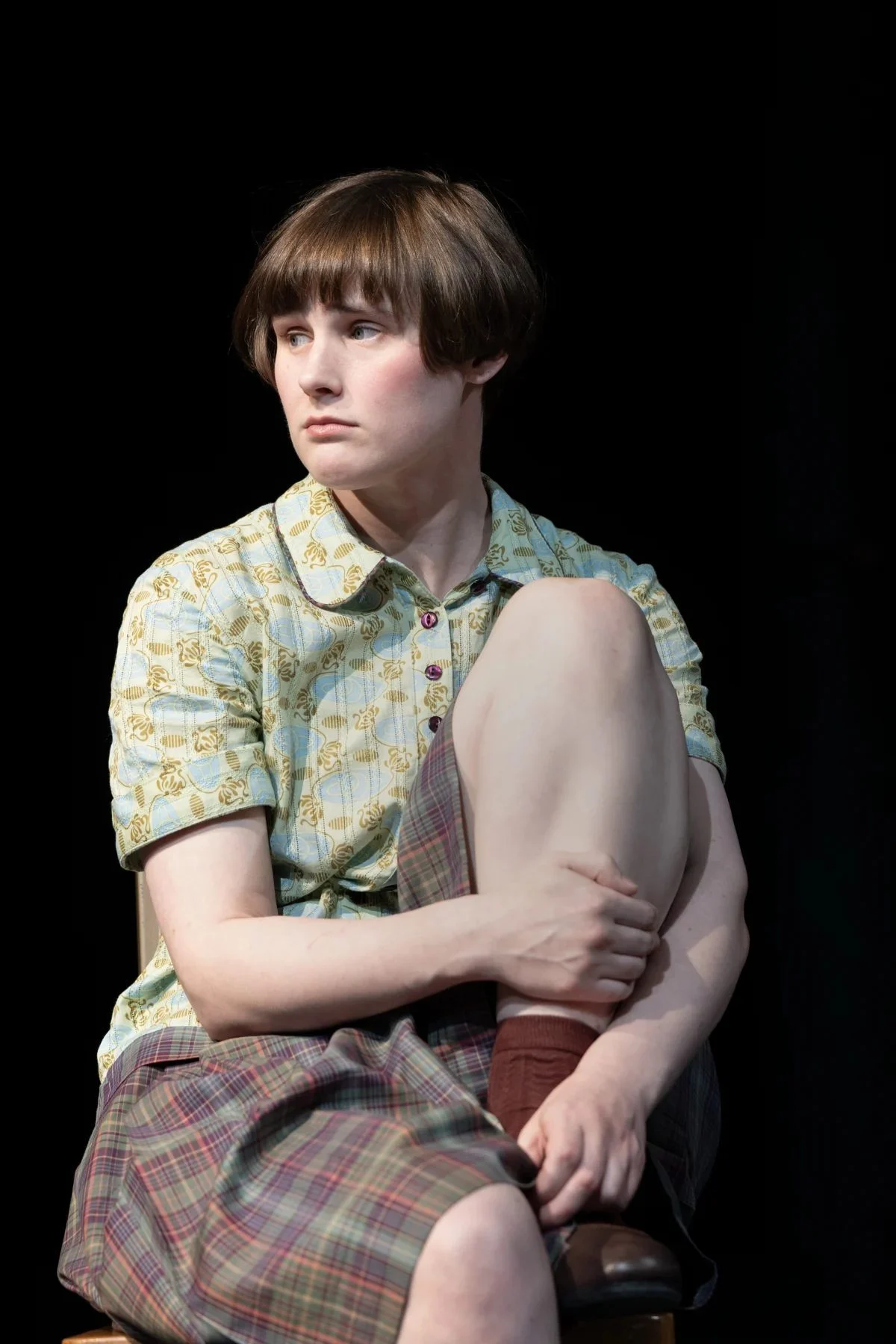
In an era defined by rapid societal shifts and a deepening sense of isolation, the necessity of community has never felt more urgent. For those whose identities exist outside the rigid "norms" of contemporary life, the search for spaces of flourishing can feel like an uphill battle. Yet, in the heart of New York City, a profound new production is offering a sanctuary for the weary and the observant. The musical adaptation of Girl, Interrupted, currently gracing the stage at The Public Theater, is not merely a retelling of a familiar narrative; it is a visceral, communal experience that forces us to confront the structures that dictate our sanity and our self-worth.
Main Facts: Returning to the Source
While many audiences remain anchored to the 1999 film adaptation, the new musical iteration of Girl, Interrupted makes a deliberate, crucial pivot back to the source material: Susanna Kaysen’s 1993 memoir. The production honors the intimate, often agonizing reality of Kaysen’s time at McLean Hospital in the 1960s.
Under the masterful creative direction of Jo Bonney, with a sharp, perceptive script by Martyna Majok, and an evocative, symphonic score by Aimee Mann, the musical strips away the Hollywood gloss to reveal the raw nerves of the original text. The choreography, designed by Sonya Tayeh, breathes physical life into the stifling atmosphere of the psychiatric ward, emphasizing the internal struggles of the women trapped within its walls.

The production features a stellar ensemble cast, anchored by Juliana Canfield as the introspective Susanna. She is surrounded by a cohort of women whose distinct personalities and struggles are given individual dignity: Mia Pak as the earnest Grace, Katherine Reis as the warm-hearted Daisy, Sally Shaw as the fragile yet hopeful Polly, Gabi Campo as the bold, standoffish Tori, and King Princess as the enigmatic Lisa.
The Chronology of an Adaptation
The journey from page to stage has been one of careful distillation. When Kaysen published her memoir, she wrote from a place of "delusion"—a perspective that, thirty years later, still resonates with those who feel "adrift, frightened, and overwhelmed by existence."
In 2022, reflecting on the enduring relevance of her work, Kaysen noted that while the stigma surrounding mental health has arguably diminished, the fundamental nature of human suffering remains constant. The musical production team took this sentiment to heart. By rejecting the film’s narrative tropes in favor of a more faithful interpretation of the memoir’s interiority, the creative team has managed to capture the "all-important" light of community that Kaysen originally sought to illuminate.

The development of the musical was a multi-year process, focused on transforming the non-linear, impressionistic nature of the book into a cohesive stage narrative. By centering the musical on the specific, lived experiences of women in a 1960s institutional setting, the creators have effectively bridged the gap between the mid-century psychiatric landscape and the modern-day audience’s anxieties.
Supporting Data: The Power of Representation and Symbolism
One of the most striking technical choices in the production is the casting of the male characters. Every man in the play—from doctors to orderlies—is portrayed by a single actor, Manoel Felciano, credited simply as "The Male Presence."
This creative decision serves as a searing critique of patriarchal systems. The intent is not to suggest that every individual man is malicious, but rather to highlight the "haunting, chilling, and suffocating" nature of systems that favor maintenance of order over the recognition of individual humanity. The uniformity of "The Male Presence" underscores the institutional pressure to force these women into a singular, manageable box.

The individuality of the women, conversely, is highlighted through meticulous stage direction. From the way they sit—Lisa sprawling in a display of androgynous defiance, Polly tucking her ankles in a gesture of vulnerability, or Daisy leaning with high-feminine grace—each character occupies space differently. This attention to detail serves as a quiet rebellion against the clinical environment that seeks to neutralize their differences.
Furthermore, the music acts as the show’s connective tissue. The soundscape is described as almost choral; even when only two characters are engaged in a duet, the rest of the ensemble provides a background of vocal support. This communal wave of sound is a literalization of the play’s thesis: that even in the depths of personal trauma—be it schizophrenia, self-harm, or abuse—the presence of an empathetic witness can make the unmanageable seem survivable.
Official Responses and Creative Vision
The artistic team has been vocal about their desire to create a "religious experience" through sound and performance. Martyna Majok’s writing does not shy away from the harrowing aspects of the source material, yet it balances this with a dark, sharp wit. The dialogue frequently acknowledges the absurdity of the characters’ situations, including meta-commentary on the difficulty of being a professional artist—a nod that resonates deeply with the creative community behind the production.

Jo Bonney’s direction focuses on a "less is more" approach to staging. By keeping the set design relatively simple, the focus remains entirely on the emotional arc of the performers. This choice invites the audience to fill in the gaps with their own imaginations, creating a collaborative atmosphere between the stage and the seats.
The climax of the production, an original ballad titled "I See You," serves as the emotional anchor for the entire evening. It ties back to the story’s framing device: Susanna’s fascination with Johannes Vermeer’s painting, Girl Interrupted at Her Music. The song transforms a static image into a living testament of mutual recognition, offering the audience a moment of true catharsis.
Implications: The Legacy of "Girl, Interrupted"
The implications of this production extend far beyond the theater doors. By framing mental health struggles through the lens of societal failure rather than purely individual pathology, Girl, Interrupted challenges the audience to consider how we treat those who do not conform.

The play does not offer a facile "happy ending." It does not suggest that community is a panacea for all deep-seated wounds, nor does it promise that the systems of the world will suddenly become compassionate. However, it posits that the act of being "seen"—of having one’s reality acknowledged by another—is a radical, necessary form of survival.
In a world that often demands we be productive, predictable, and compliant, Girl, Interrupted is a necessary, beautiful, and sometimes devastating reminder of the power of the "other." It encourages us to hold onto our identities, to acknowledge our own "beautiful otherness," and to realize that while we may be interrupted, we are never truly alone.
The production is currently scheduled to run until July 12, 2026, at The Public Theater. As it continues to play to sold-out houses, it stands as a testament to the fact that when we share our stories, we create a community capable of weathering the most difficult of times. For those seeking a production that is as intellectually rigorous as it is emotionally resonant, Girl, Interrupted is not just a show; it is an essential piece of contemporary cultural commentary.


 Siti Muinah
 Azzam Bilal Chamdy