As the calendar turns to July, the United States readies itself for its most iconic celebration: Independence Day. The familiar sensory experience—the scent of charcoal grills, the rhythmic thrum of fireworks, and the omnipresent display of red, white, and blue—serves as the annual backdrop for reflection. Yet, in an era defined by rapid digital transformation and deep-seated societal division, the question arises with newfound urgency: Do we still love America with the same fervor that defined its inception?

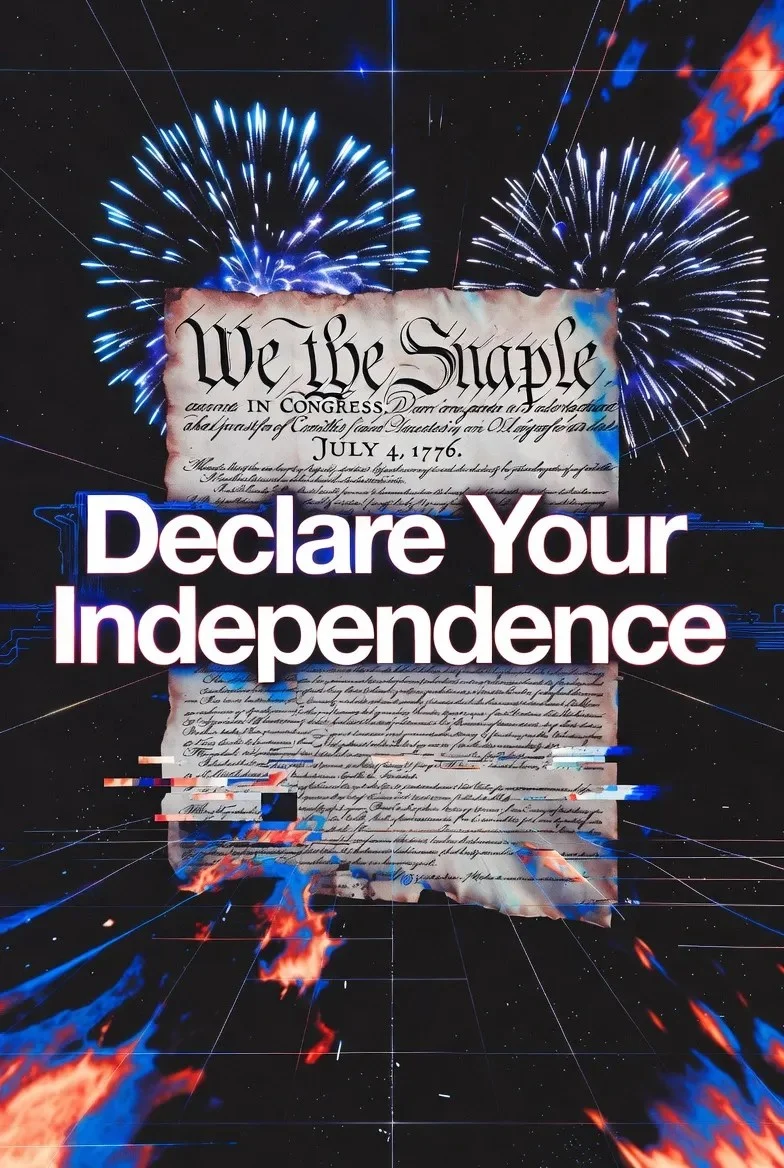
This year, Graphic Design Junction has curated a collection of 50 distinct posters, ranging from minimalist modernism to high-tech, AI-generated aesthetics. While these pieces serve as functional tools for event promotion, they also act as a mirror to our collective psyche. Through the lens of graphic design, we are forced to confront the evolving nature of the American Dream and the foundational principles that continue to anchor—or challenge—our identity.

The Evolution of Patriotic Visuals: A Chronology of Style
Graphic design has long been the silent partner of American history, translating complex political ideals into visceral, visual communication. To understand where we are, we must look at how we have historically signaled our allegiance.

The Era of Classical Patriotism (1776–1900)
Early American design was defined by heraldry, the adoption of the Bald Eagle, and formal typography. These visuals were centered on the concepts of sovereignty, agricultural abundance, and religious morality. Patriotism was a static, formal, and highly structured expression of belonging.

The Propaganda and War Poster Era (1914–1945)
The World War eras transformed American design into a tool of mass mobilization. The focus shifted from formal symbols to human connection—Uncle Sam’s "I Want You" remains the quintessential example. Design became urgent, emotive, and direct, cementing the idea that loving America meant active participation in its defense and its global mission.

The Mid-Century Commercial Boom (1950–1990)
Post-war optimism introduced pop-art influences and bold, stylized illustrations. The 4th of July became synonymous with family, commerce, and the "American Way of Life." The design aesthetic reflected suburban growth and the height of the consumer-driven dream.

The Digital and AI-Generated Renaissance (2000–Present)
Today, we are witnessing a departure from traditional iconography. The modern suite of 50 posters featured here includes "glitch-heritage" styles, minimalist geometric patterns, and AI-rendered neon landscapes. This shift suggests that our love for the country is no longer anchored solely in the past; it is being "upgraded" to include our digital reality.

Modern Interpretations: Fresh Takes on Freedom
The contemporary designs in our collection—such as Rising Freedom and Flag Constellation—represent a departure from the heavy, traditional imagery of the 20th century. By utilizing abstract forms, designers are attempting to make the concept of freedom feel "new" again.

- The Modern Minimalist approach: By stripping away the clutter, these posters emphasize that freedom is a clean, open space—a canvas for future dreams rather than just a tribute to past accomplishments.
- The Digital Aesthetic: As seen in the AI-Style series, the integration of neon, holographic effects, and "code" metaphors reflects a generation that views independence through the lens of digital innovation. "Freedom is the Ultimate Code" is not merely a slogan; it is a reflection of how the modern workforce perceives liberty: as a tool for creation and sovereignty.
Supporting Data: The Shifting Sentiment of the American Public
Sociological data from the last decade reveals a complex relationship between Americans and their national symbols. According to recent surveys by the Pew Research Center and Gallup, there has been a notable decline in "extreme pride" regarding the country.

While the majority of the population still expresses affection for the United States, the nature of that love has shifted from uncritical pride to a more "critical patriotism." This mirrors the visual trends in our collection, where designers are moving away from monolithic flags toward designs that represent "shattered unity" or "reconstructed heritage."

The data suggests that for younger generations, loving America is an act of "fixing what is broken" rather than celebrating the status quo. The increase in demand for customizable PSD flyer templates—allowing users to tweak messages and add personal brand elements—indicates that people want to own their narrative. They are no longer satisfied with off-the-shelf patriotism; they want to contribute their own interpretation of the American Dream.

Official and Industry Perspectives
Designers and cultural historians argue that the "commercialization" of Independence Day has often obscured the original purpose of the holiday.

"When we look at the ‘Vintage Propaganda’ posters versus our ‘Stylish Modern’ collection," notes a lead strategist at Graphic Design Junction, "we see a clear trajectory. The old posters were about collective duty. The new posters are about individual realization. The shift is from ‘What can I do for my country?’ to ‘How can my country help me achieve my full potential?’"

From a marketing perspective, the demand for high-quality, professional-grade patriotic templates has never been higher. This signifies that despite the political tension, the ritual of the holiday remains vital. Whether for a community block party or a corporate event, the act of distributing these visuals serves as a social glue, reinforcing the communal aspect of the holiday even when political agreement is sparse.

The Implications: A Nation in Transition
The implications of these visual shifts are profound. If our art reflects our state of mind, what does a "Glitch Heritage" poster tell us about the American condition?

- Fragmented Identity: The prevalence of abstract and deconstructed designs suggests that Americans are struggling to find a single, unified symbol that represents everyone.
- The Quest for Relevancy: The move toward futuristic, AI-generated imagery indicates a desire to bridge the gap between 18th-century ideals and 21st-century technological realities.
- The Persistence of Hope: Despite the anxiety, the sheer volume of new design work produced every year for this holiday confirms that the aspiration for a better union remains strong.
Conclusion: Reclaiming the Spirit
As we gather this year, let us consider the duality of our position. We are a nation that is both deeply rooted in history and aggressively charging toward an uncertain future. The posters featured here—from the Torch Over City to Justice in Every Byte—are more than just visual assets. They are questions.

Do we still love America? If we define love as the willingness to invest, to create, and to improve, then the answer is a resounding yes. Our desire to keep designing, to keep celebrating, and to keep discussing the nature of our freedom proves that the "American Dream" is not a static object in a museum. It is an evolving, sometimes messy, and always vibrant process.

This 4th of July, as the fireworks light up the sky, take a moment to look past the light. Consider the design of your own life and your own contribution to the collective. Whether through traditional symbols or modern digital expression, the act of declaring our independence is something we must do every single day.

Happy 4th of July. Let us continue to build, to dream, and to refine the meaning of freedom for the generations to come.

For those looking to craft their own visual message this season, our full library of fully editable PSD files is available for professional use. Contact our team at [email protected] to begin your project.