Iffa Jayyana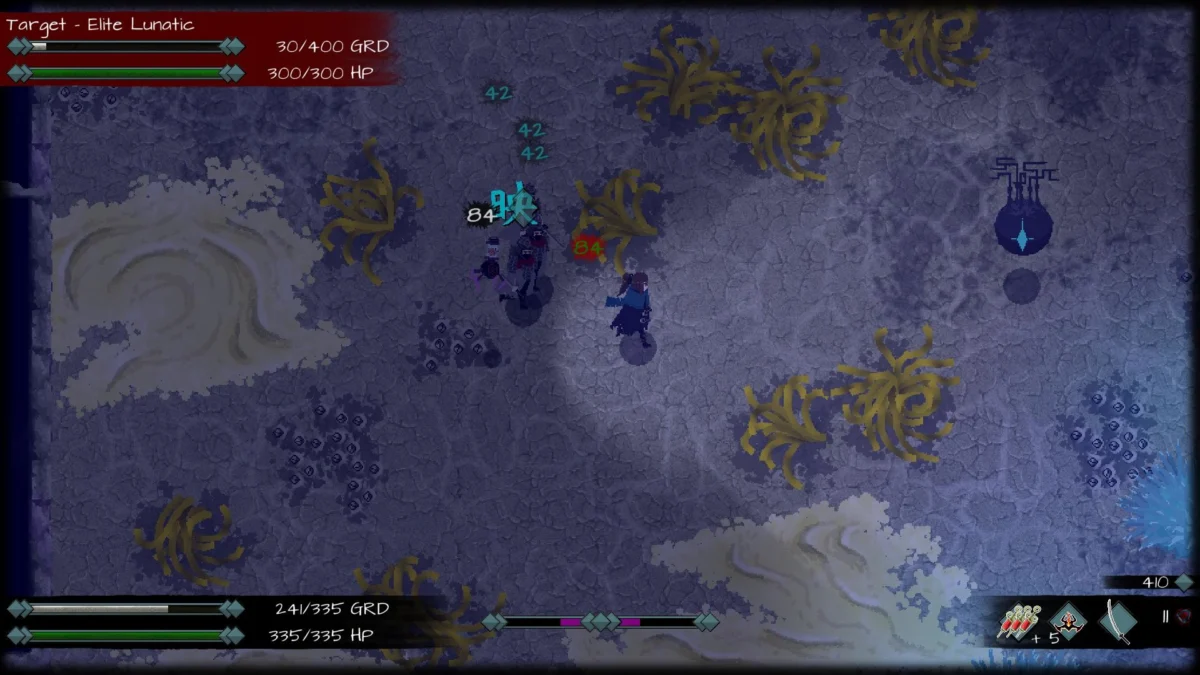
In the ever-crowded landscape of the Metroidvania genre, standing out requires more than just fluid movement and backtracking; it requires a distinct identity. Skautfold: Moonless Knight, the latest entry in the Skautfold series, stakes its claim by marrying the intricate, interconnected map design of the genre with the punishing, deliberate combat found in the "Soulslike" subgenre. Set against a backdrop of cosmic dread and alternate-history Japanese aesthetics, the game is a masterclass in atmosphere, even if its steep learning curve threatens to alienate the uninitiated.
The Premise: A World Fractured by Cosmic Horror
The narrative foundation of Skautfold: Moonless Knight is as grim as its gameplay. The game transports players to an alternate-history Japan where the celestial order has collapsed; the moon has fractured, shedding its terrestrial shackles and raining down cosmic horrors upon the earth.
Players are thrust into a sprawling, labyrinthine palace—a microcosm of a society besieged by cultists, aberrations, and the remnants of a fallen empire. This isn’t a world of heroes and high fantasy; it is a world of survival. The environment itself feels hostile, characterized by an oppressive, gritty pixel art style that eschews the vibrant, hand-drawn polish of modern contemporaries for something far more claustrophobic and haunting. The architectural choices reflect a decaying, traditional Japanese aesthetic twisted by alien corruption, serving as a constant reminder of the game’s central theme: the fragility of human reality when confronted with the infinite, uncaring void of the cosmos.
The Mechanics: Mastery of the Guard
The defining feature of Moonless Knight is its departure from traditional combat tropes. Many games in the Metroidvania genre rely on stamina bars to regulate player aggression. Skautfold opts for a more nuanced "Guard" mechanic.
The Guard System: A Tactical Pivot
In Moonless Knight, your defense is your endurance. The Guard meter acts as a dual-purpose resource: it is your primary defense against incoming strikes and your threshold for stamina management. This system necessitates a "risk-versus-reward" loop that keeps the player in a state of hyper-vigilance.
Attacking blindly is a death sentence. Instead, the player must learn the rhythmic language of the game—knowing precisely when to parry, when to dodge, and when to commit to a counter-attack. As the Guard meter depletes, the player becomes increasingly vulnerable, turning every encounter into a high-stakes calculation. This creates a gameplay loop that is intensely rewarding upon mastery, though it demands a level of precision that will undoubtedly frustrate those accustomed to the "button-mashing" ease of more forgiving titles.
Progression and Arsenal
Beyond the core combat loop, the game offers a robust progression system. Players can experiment with a variety of weapon types, each changing the cadence of battle. Relics serve as both essential gear for exploration—unlocking hidden paths and shortcuts—and tactical advantages in combat. The beauty of the game’s progression lies in its refusal to hold the player’s hand; the player’s growth is directly tied to their own internal understanding of the game’s mechanics rather than mere numerical stat-boosting.
Exploration: The Labyrinthine Challenge
The game adheres to the foundational tenets of Metroidvania design: exploration is the key to progress. The map is an interconnected web of secrets, hidden rooms, and formidable boss encounters.
However, this is where Skautfold: Moonless Knight presents its most significant hurdle. While the world-building through environmental storytelling is exceptional, the game’s navigation can feel intentionally opaque. There is a distinct lack of hand-holding; the game rarely signals where the player should go next, leading to extended periods of wandering. While this fosters a sense of genuine discovery for veteran players, the lack of signposting, combined with the game’s high difficulty, creates a formidable barrier to entry in the opening hours. For newcomers, the early game is less of an adventure and more of a test of sheer willpower.

Technical Execution: Aesthetic and Atmosphere
The visual direction of Skautfold: Moonless Knight is a deliberate choice. It avoids the polished, high-definition "storybook" aesthetic favored by many indie developers, opting instead for a gritty, dark pixel art style. This choice is vital to the game’s identity. The pixelated textures enhance the sense of decay and isolation, making the cosmic horrors feel all the more unsettling.
This visual language is supported by a haunting, minimalist soundtrack. The audio design does not attempt to overwhelm; rather, it lingers in the background, building tension and contributing to the feeling of being an intruder in a cursed place. For players who appreciate the "gothic" and "oppressive" aesthetic, the game is a masterclass in tone. For those who prefer a more vibrant or polished visual experience, the game’s aesthetic may feel too abrasive or low-fidelity.
Implications for the Genre
Skautfold: Moonless Knight serves as a litmus test for the current Metroidvania market. In an era where many games strive for accessibility, Moonless Knight leans into difficulty as a pillar of its design philosophy.
Is it for everyone?
The short answer is no. The game’s deliberate pacing, combined with its high-skill floor, makes it a niche experience. It is designed for the player who seeks a challenge, who enjoys the process of "getting good" through repeated failure, and who values atmosphere above all else.
The "Soulslike" Evolution
The integration of "Soulslike" mechanics into the Metroidvania structure is not new, but Moonless Knight executes it with a level of commitment that suggests the genre is moving toward more specialized sub-categories. We are seeing a divergence: on one side, Metroidvanias are becoming more accessible, narrative-driven, and fluid; on the other, titles like Skautfold are pushing the genre toward a more punishing, technical, and atmospheric space.
Final Assessment: A Haunting Triumph
Skautfold: Moonless Knight is not a game that asks for your time; it demands it. It is a title that requires patience, observation, and a willingness to embrace frustration as a precursor to mastery.
The game succeeds in creating a memorable, cohesive world where the combat mechanics are intrinsically linked to the narrative themes of broken reality and cosmic decay. While the navigation issues and the steep learning curve may deter casual fans, those who stick with the game will find a deeply satisfying, mechanically dense, and atmospherically rich experience that rewards dedication in ways few modern games do.
If you are a player who thrives on the challenge of a well-designed boss fight and finds beauty in the bleak, Skautfold: Moonless Knight is an essential addition to your library. Just be prepared to die—and more importantly, to learn why you died.
About the Contributor:
Marcus Orchard is a veteran of the gaming industry, known for his deep appreciation of legacy titles and his steadfast dedication to the Final Fantasy franchise. When he isn’t replaying classic RPGs, he is analyzing the intersection of narrative and mechanics in modern indie titles. His work focuses on the nuances of game design, atmosphere, and the importance of player agency.

 Sagoh
Sagoh
 Ammar Sabilarrohman