Evan Lee Salim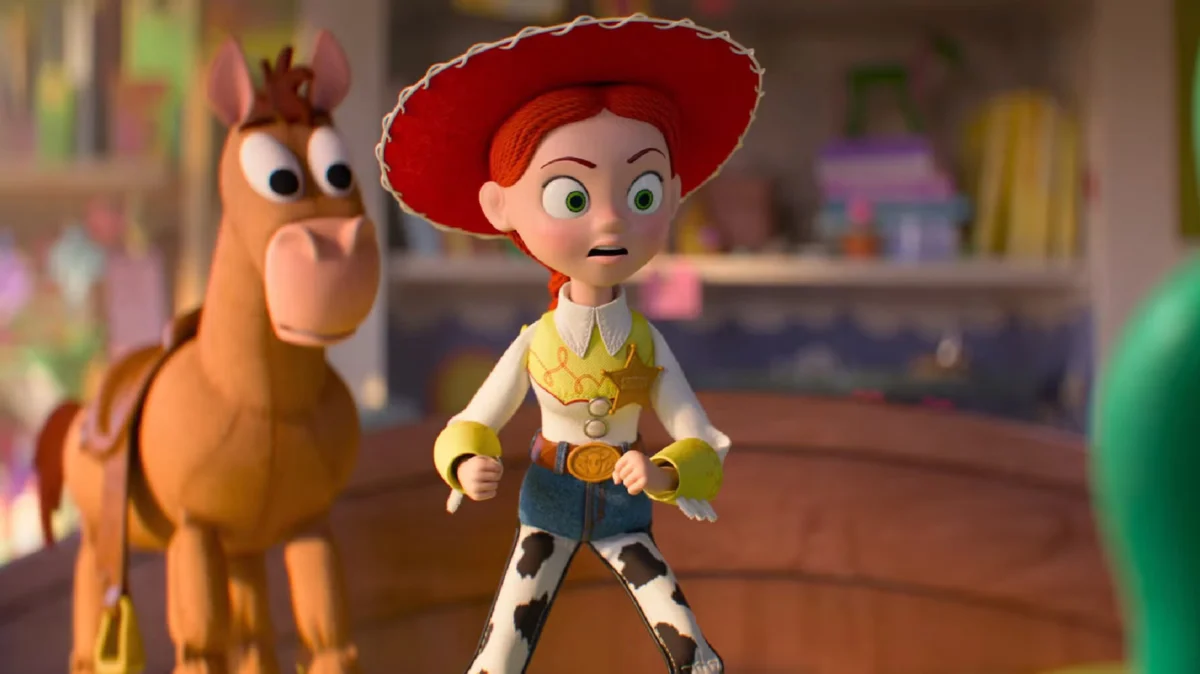
Since the debut of Toy Story in 1995, Pixar Animation Studios has masterfully navigated the bittersweet intersection of childhood innocence and the inevitable passage of time. For nearly three decades, the franchise has functioned as a poignant meditation on what it means to be a toy in a world that is constantly moving forward. With the release of Toy Story 5, the series tackles its most daunting challenge yet: the obsolescence of the physical toy in an era defined by tablets, social media, and digital immersion.
However, amidst the existential dread of the "digital takeover," the film finds its emotional anchor by reaching back to 1999. By functioning as a thematic—and in many ways, direct—sequel to the narrative arc established in Toy Story 2, the fifth installment provides a profound resolution to one of the most heartbreaking subplots in cinematic history: the story of Jessie the Yodeling Cowgirl.
The Changing Landscape: The Age of the Tablet
To understand the stakes of Toy Story 5, one must first acknowledge the shift in the franchise’s central conflict. While the original films focused on the fear of being replaced by a newer toy, the modern entries have pivoted toward a more societal concern. The children of today, represented in the film by the introduction of Lilypad (voiced by Greta Lee), are increasingly disconnected from the tactile, imaginative play that defined Woody and Buzz Lightyear’s golden years.
In the eyes of the toys, the age of the doll and the action figure is facing a formidable adversary: the tablet. This technological shift serves as the primary catalyst for the film’s tension. As Jessie, now the leader of Bonnie’s room following Woody’s departure, watches children turn to screens for instant gratification, she experiences a familiar, gnawing anxiety. She knows better than anyone what it feels like to be sidelined by a child’s changing interests, and she fears that the era of toys is reaching a permanent, silent end.
Chronology of a Cowgirl: From Emily to Bonnie
Jessie’s journey has always been the emotional soul of the Toy Story franchise. In Toy Story 2, audiences were introduced to the tragic backstory of the cowgirl through the now-iconic "When She Loved Me" montage. For those who need a refresher: Jessie was once the cherished companion of a girl named Emily. As Emily grew into her teenage years, her interests shifted toward cosmetics and social lives, eventually leading her to donate Jessie to a box destined for a thrift store.
That sequence, underscored by Sarah McLachlan’s haunting vocals, remains a benchmark for animated storytelling. It established Jessie’s trauma—a fear of abandonment that has colored every decision she has made since.
In Toy Story 5, we see the long-term effects of that trauma. Jessie is no longer the insecure toy found in Al’s Penthouse; she is a leader. Yet, the introduction of Lilypad forces her to confront the past. The film bridges the gap between the 1990s and the present day, creating a narrative loop that honors the continuity of the series while elevating the stakes of Jessie’s character arc.
The Narrative Pivot: A Journey Home
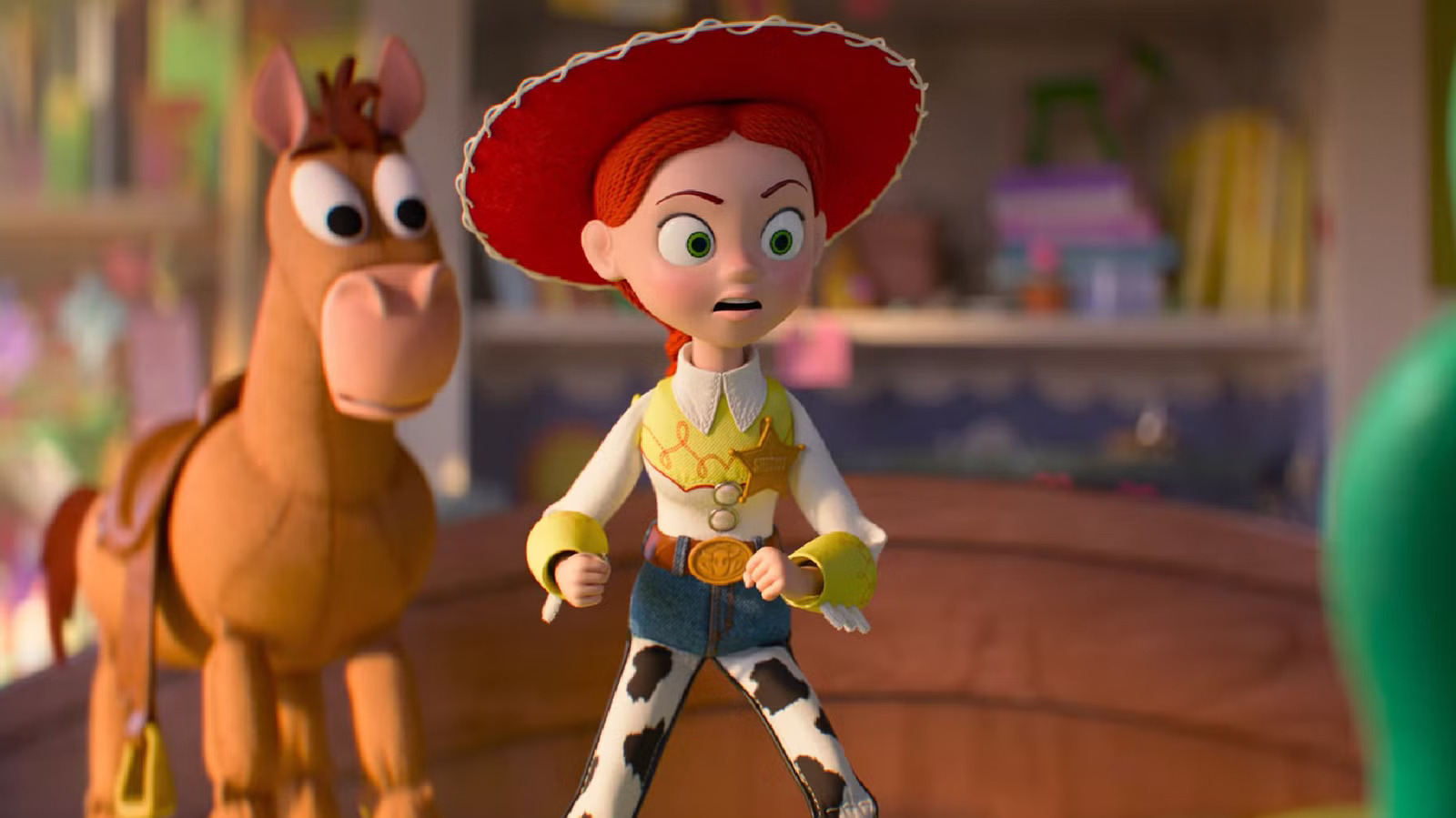
The plot of Toy Story 5 takes a bold turn when Jessie and her loyal companion, Bullseye, are inadvertently separated from Bonnie’s collection. Through a series of events, they find themselves back at the doorstep of Emily’s old house. While the original owner has long since moved on, the house serves as a physical manifestation of Jessie’s unresolved grief.
The film utilizes this setting to explore a "what if" scenario that avoids the pitfalls of a simple, contrived reunion. Instead of meeting an older Emily—a narrative choice that was previously considered and discarded by the writers—the film opts for a more poignant discovery. Jessie finds a hidden cache of items near a tire swing where she and Emily once played. Among these items is a revelation that Emily’s own daughter has inherited the joy that her mother once shared with the toy.
This discovery is the emotional pivot point of the film. It serves as a validation of Jessie’s existence: the love Emily once had for her was not erased by the act of abandonment. Instead, that love was a foundational part of a family’s history, passed down through generations.
Implications of the "Jessie-Centric" Approach
By positioning Jessie as the protagonist, Pixar has made a strategic choice that reshapes the legacy of the franchise. While Woody and Buzz have traditionally held the spotlight, Toy Story 5 proves that the supporting cast possesses enough depth to carry the emotional weight of the entire series.
1. The Validation of Toy Purpose
The film asserts that a toy’s purpose is not merely to be played with until a child turns twelve, but to leave a lasting imprint on the human experience. Jessie’s realization that she was a formative part of Emily’s childhood, and that her legacy lived on, provides a sense of closure that the series has been building toward since 1999.
2. The Critique of Modern Distraction
Toy Story 5 does not shy away from criticizing the isolation caused by digital devices. By contrasting the imaginative, physical play of the past with the screen-addicted present, the film positions toys as a necessary tool for human connection. The "threat" of the tablet is handled with nuance; it is not demonized, but it is presented as a challenge to the patience and creativity that traditional toys require.
3. Strengthening the "Toy Story 2" Connection
Critics have often argued about the necessity of a fifth installment in a franchise that seemed to have ended perfectly with Toy Story 3 and Toy Story 4. Toy Story 5 justifies its existence by serving as a bookend to Toy Story 2. It takes the wound opened in 1999 and performs the cinematic equivalent of surgery, healing it with a sense of perspective that only time can provide.
Critical Reception and Industry Impact
The film’s reception has been largely positive, particularly regarding its willingness to take risks. While some critics have noted that the film’s narrative structure is somewhat uneven, the consensus remains that the emotional payoff—specifically regarding Jessie’s arc—is among the best in the franchise.
Industry analysts suggest that by focusing on a legacy character like Jessie, Pixar is attempting to appeal to the "nostalgia demographic"—the parents who grew up watching Toy Story 2 and are now bringing their own children to the theaters. This dual-layered appeal is the hallmark of Pixar’s success, and Toy Story 5 executes this balance with remarkable precision.
Conclusion: The Heart of the Series
Ultimately, Toy Story 5 serves as a reminder that these films have never truly been about the toys themselves. They are about the people who hold them, the children who grow up, and the indelible marks we leave on one another. By returning to the roots of Jessie’s story, the film honors the franchise’s past while making a strong case for its continued relevance in a digital world.
The image of the carving on the tree—"Jessie was here"—is a testament to the idea that love and play are not fleeting. They are cumulative. Even as the world shifts toward tablets and virtual realities, the core message of Toy Story remains unchanged: as long as a toy is remembered, its story is never truly over.
Toy Story 5 is currently playing in theaters nationwide, offering audiences both young and old a chance to revisit the magic that started it all.


 Nana Muazin
 Nana
Nana