Asep Darmawan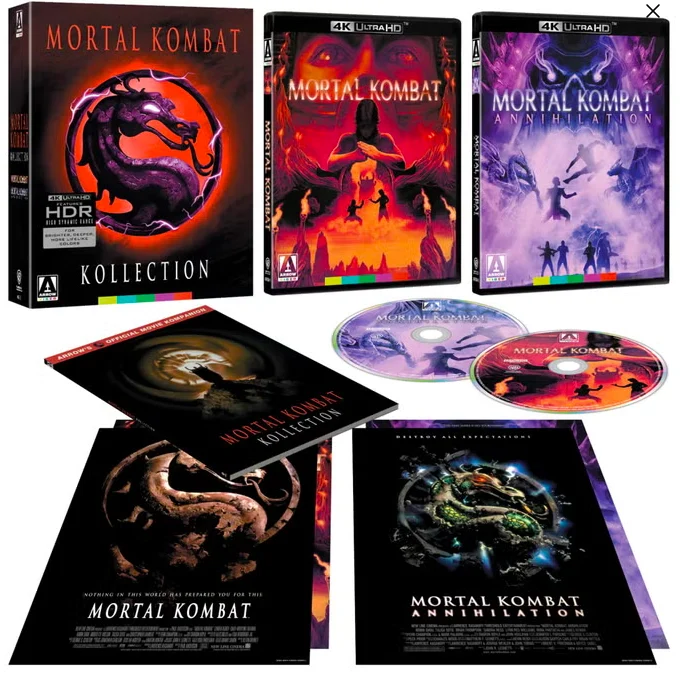
With the recent theatrical release of Mortal Kombat II igniting a fresh wave of digital discourse, cinephiles and gamers alike have turned their gaze backward to the 90s—a decade that defined the cinematic identity of the iconic fighting franchise. Just as the nostalgia cycle reaches its peak, boutique home media titan Arrow Video has delivered the ultimate retrospective: a lavish 4K Ultra HD collection that serves as a love letter to the original films.
Having spent extensive time with these new transfers, it is clear that while these films remain products of their specific, experimental era, they possess a unique, unreplicable charm. In today’s risk-averse theatrical landscape, where massive budgets and sanitized IP management dominate, the raw, often eccentric spirit of these 90s adaptations feels like a relic of a bygone age.
A Cultural Snapshot: The Summer of 1995
To understand the significance of the original 1995 Mortal Kombat, one must step back into the mid-90s cinema experience. For many, that summer was a pinnacle of communal entertainment. I vividly recall the opening weekend of the first film; the theater was packed with fans who had spent countless quarters at the arcade, breathlessly awaiting the jump from joystick to silver screen.
Before the feature began, the local General Cinemas management staged a brief, live-action martial arts demonstration in the aisles, featuring staff members donning costumes inspired by the game’s roster. It was a piece of grassroots marketing that felt electric, mirroring similar efforts they undertook for Batman Forever. These experiences cultivated a sense of occasion that defined the era. Returning to these films today through the lens of Arrow’s high-fidelity 4K restoration, that nostalgia is not just preserved—it is elevated.

Technical Excellence: Arrow Video’s 4K Restoration
Arrow Video has built its reputation on treating cult cinema with the reverence usually reserved for Criterion-level prestige dramas, and this Mortal Kombat set is no exception. The 4K transfer is nothing short of a revelation. The practical effects and the hauntingly beautiful matte paintings look pristine, benefitting immensely from the increased dynamic range.
While the early-era CGI—particularly the infamous rendering of Reptile—remains a stark reminder of the limitations of 1995 digital technology, other elements shine. Scorpion’s spear, for instance, retains a tactile, visceral quality that perfectly matches the memory of seeing it on the big screen nearly thirty years ago.
The disc is packed with an exhaustive suite of special features, a hallmark of Arrow’s current production philosophy. The inclusion of an image gallery featuring nearly 600 production stills provides a granular look at the film’s development, offering a treasure trove for fans of practical effects and costume design. It is a significant leap forward in home media, proving that even films with narrative imperfections can be presented as masterfully crafted artifacts.
The Curious Case of ‘Mortal Kombat: Annihilation’
If the first film is a nostalgic triumph, its 1997 sequel, Mortal Kombat: Annihilation, serves as a fascinating study in cinematic excess and tonal whiplash. The film remains a polarizing entry in the franchise, frequently cited as a "bad" movie—a reputation it has earned through questionable acting and erratic pacing.

Yet, there is an undeniable, infectious charm to its failure. The performances, which often feel as though they were lifted from a low-budget Power Rangers episode, likely stemmed from a misguided attempt to pivot toward a more family-friendly, Saturday-morning-cartoon aesthetic. It backfired, of course, effectively stalling the franchise’s momentum on the big screen for decades.
However, viewing it today, stripped of the original disappointment, one can appreciate it as a bizarre, kaleidoscopic artifact of late-90s pop culture. The practical set designs, which Arrow’s transfer highlights with surprising clarity, possess a gritty, surreal quality. While it may not hold up as a narrative success, it is undeniably watchable—a "so-bad-it’s-good" classic that serves as a cautionary tale for film studios attempting to translate video game mechanics into live-action spectacle.
Implications for the Modern Adaptation Landscape
The existence of this set raises an important question regarding the evolution of "the video game movie." The original Mortal Kombat film, despite its flaws, was markedly more faithful to the source material than its contemporaries, such as the 1993 Super Mario Bros. movie.
In today’s market, we rarely see films of this specific mid-budget, high-concept nature receive wide releases. The industry has shifted toward either hyper-inflated, franchise-anchored blockbusters or low-budget streaming fodder. The Mortal Kombat films occupy a middle ground—a space where creative risks were taken, and where the aesthetic language of the game was allowed to bleed into the cinematography. Arrow’s decision to package these together is a stroke of brilliance, allowing viewers to trace the trajectory of the franchise’s cinematic history from its promising inception to its spectacular, campy collapse.

Detailed Breakdown: The Collector’s Experience
Arrow has ensured that this set is worthy of a permanent spot on any collector’s shelf. The technical specifications and supplemental content are as follows:
Disc 1: Mortal Kombat (1995)
- 4K Restoration: A stunning presentation of the film from the original camera negative.
- Audio Commentary: Insightful tracks that delve into the production hurdles of the mid-90s.
- Retrospective Featurettes: Interviews with key crew members discussing the design of the iconic arenas.
- Archival Footage: Rare behind-the-scenes glimpses into the stunt choreography.
Disc 2: Mortal Kombat: Annihilation (1997)
- 4K Restoration: Enhanced color grading that brings out the vibrancy of the more fantastical elements.
- The Making of a Sequel: A deep dive into why the production choices shifted so drastically from the original.
- Cast Interviews: Reflective pieces from the actors on the unique challenges of the film’s production.
- The "Godzilla" Comparison: A series of essays and featurettes analyzing the film’s practical creature effects and their place in the "monster movie" lineage.
A Final Verdict
For fans of the franchise, this collection is an essential purchase. It is not merely a nostalgia grab; it is a masterclass in how to treat historical genre cinema. Arrow Video has proven that even the most uneven films deserve the best possible treatment, allowing new generations to understand exactly why these movies mattered in 1995 and why they continue to fascinate us today.
While the Mortal Kombat series has since been rebooted with modern digital technology, there is something to be said for the tangible, handcrafted energy of the original films. They were, in their own way, pioneers. They paved the way for the current golden age of video game adaptations, even if they had to crash and burn to show us the way forward.
For those interested in securing this limited edition 4K set, it is currently available via Arrow Video’s official store. Furthermore, Arrow is currently running their "Camp Arrow" summer sale, offering 50% off hundreds of titles. While the Mortal Kombat set is not part of this specific promotion, the sale represents an excellent opportunity to explore the rest of their catalog.

In the end, whether you view these films as foundational pieces of cinema or glorious, chaotic relics, this 4K set is a flawless victory for home media collectors. It reminds us that cinema is a record of our own evolution—and that sometimes, the most flawed stories are the ones that leave the deepest mark on our cultural memory.


 Evan Lee Salim
 Nana Wu