

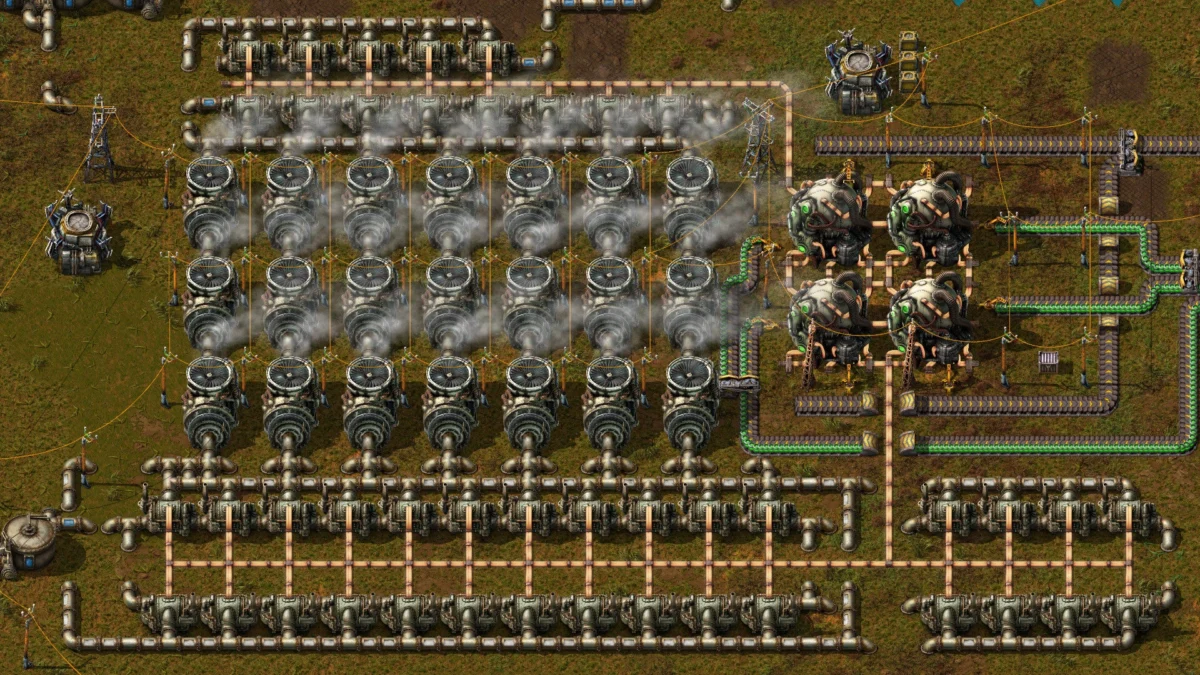
The rhythmic, industrial soundscape of Factorio—the clinking of conveyor belts, the steady thrum of steam engines, and the persistent hiss of steam—is approaching a milestone of finality. After years of relentless iteration, Wube Software has officially announced that Version 2.1 will serve as the final "major" content update for the iconic factory-building simulator. While the game will remain operational and receive long-term technical support, the era of massive, transformative expansions is drawing to a close as the studio shifts its focus toward new horizons.
The Core Facts: What Version 2.1 Entails
For the uninitiated, Factorio is a game about resource management, automation, and the logistical struggle to build an interstellar rocket on a hostile, alien planet. Since its 2020 full release, following a highly successful early access period, the game has been refined through constant developer intervention. However, the announcement of 2.1 signals a pivot in the studio’s philosophy.
According to the latest Factorio Friday Facts (FFF-440), the team is satisfied with the current state of the game’s design, particularly following the release of the massive Space Age expansion. Version 2.1 is explicitly not intended to be a vehicle for "grand designs." Players should not expect new planets, additional enemy types, expanded research trees, or complex new resource chains.
Instead, the update is slated to focus on:
- Quality of Life (QoL) Enhancements: Streamlining existing UI/UX elements to improve the player experience.
- Minor Feature Additions: Smaller mechanics that round out the existing gameplay loop.
- Modding API Improvements: Strengthening the underlying architecture to ensure the modding community—the lifeblood of the game’s longevity—can continue to flourish.
The update is scheduled to hit experimental branches by the end of June. In a move consistent with the studio’s tradition, this version will remain in an experimental state throughout the summer, providing modders with ample time to adjust their creations to the new technical landscape.
A Chronology of Industrial Growth
The journey of Factorio is a masterclass in independent game development. To understand why this final update is significant, one must look at the timeline of the game’s evolution:
- 2013: The initial Indiegogo campaign launches, promising a game where players could build and automate massive factories.
- 2016: Factorio enters Early Access on Steam, rapidly becoming a cult phenomenon known for its "addictive" logistical puzzles.
- 2020: After four years of intense development and community feedback, version 1.0 officially launches, marking the end of its early access status.
- 2024: The Space Age expansion is released. This transformative update expanded the game beyond the confines of a single planet, introducing orbital platforms, new environments like rotting jungles and frozen worlds, and advanced space-faring logistics.
- 2025 (Mid-Year): The projected release of version 2.1, marking the transition from "active development" to "long-term maintenance."
This trajectory represents a decade of sustained, obsessive polish. Unlike many titles that are abandoned by developers shortly after launch, Wube Software maintained a rigorous, transparent development blog for years, creating a direct line of communication between the engineers and the player base.
Supporting Data: Why the Studio is Moving On
The decision to cease major development is not a result of declining interest or failure; rather, it is a deliberate choice based on design completeness. In their official statement, Wube Software noted that the game’s progression is well-balanced, and the mechanics feel cohesive.
"There isn’t anything we feel is majorly missing," the studio stated. This sentiment is backed by the current state of the game’s metrics. Factorio consistently maintains a "Very Positive" rating on Steam, with player counts remaining remarkably stable years after its launch. The Space Age expansion effectively "topped off" the experience, adding the necessary endgame complexity to satisfy the most hardcore players.
Furthermore, the team composition at Wube is undergoing a natural evolution. As is common in the gaming industry, the completion of a major product lifecycle often triggers a reassessment of talent. The studio confirmed that it is currently navigating a period of team rotation, with some members departing for new challenges and new talent being brought in to assist with the next generation of prototypes.
Official Responses: The Shift to Long-Term Support
The official word from the developers is one of pride and pragmatism. Wube Software has been explicit about their intentions:
"We envision 2.1 as our last major update of Factorio, and we will shift the focus onto long-term support," the developers wrote. "Things like bug fixes, platform support/compatibility, modding features, etc. Other than that, we feel we’ve reached a good place to conclude the active gameplay development."
This transition is critical for the player base. It means that while the core game is "finished," it is not "dead." The studio remains committed to ensuring the game runs on future hardware and that the modding community retains the tools necessary to expand the game’s functionality indefinitely. This is a crucial distinction: Factorio is entering a "maintenance mode" that is more akin to a stable service than an abandoned project.
Regarding the future of the studio, the developers were transparent, if vague: "Various Wube team members will be kicking their work on ‘other game prototypes/experiments’ into a higher gear." They cautioned, however, that there is nothing to share regarding these new projects for a "long time."
Implications for the Industry and the Player Base
What does this mean for the future of the factory-sim genre?
1. The Power of "Done"
In an era where "Games as a Service" (GaaS) often demands perpetual, endless updates that can sometimes dilute the core experience, Wube’s approach is refreshing. By declaring a project "complete," they avoid the trap of feature creep. This provides players with a definitive version of the game—a masterpiece that is polished to a mirror finish.
2. The Legacy of Modding
By focusing the final update on modding improvements, Wube is effectively handing the keys of the factory over to the community. Factorio has one of the most dedicated modding scenes in gaming, with mods like Bob’s Mods and Angel’s Mods essentially creating entirely new games within the existing engine. By prioritizing the API, Wube is ensuring that the community will be able to generate fresh content for years, even if the studio itself is building something new.
3. Professional Evolution
The departure of staff to work on "new prototypes" suggests that Wube has reached the limits of what they want to achieve with the Factorio engine. After a decade of refining conveyor belts and inserters, the developers are clearly eager to apply their expertise in simulation, logic, and systems design to new, unexplored challenges. Whether these new projects involve another simulation game or a total departure into a new genre remains to be seen.
Conclusion
The clanking of the factory will continue, but the blueprints are no longer changing. As Factorio approaches the release of version 2.1, it serves as a testament to what a small, focused team can achieve when they prioritize design integrity over industry trends. The game is not ending; it is simply settling into a permanent, stable state of operation.
For the players, the message is clear: enjoy the last major expansion, prepare for the final round of tweaks, and look forward to whatever Wube Software chooses to build next. The factory has been perfected, and it is time for the architects to start building something new.











No comments yet. Be the first to join the conversation!