Raul Delapena Setiawan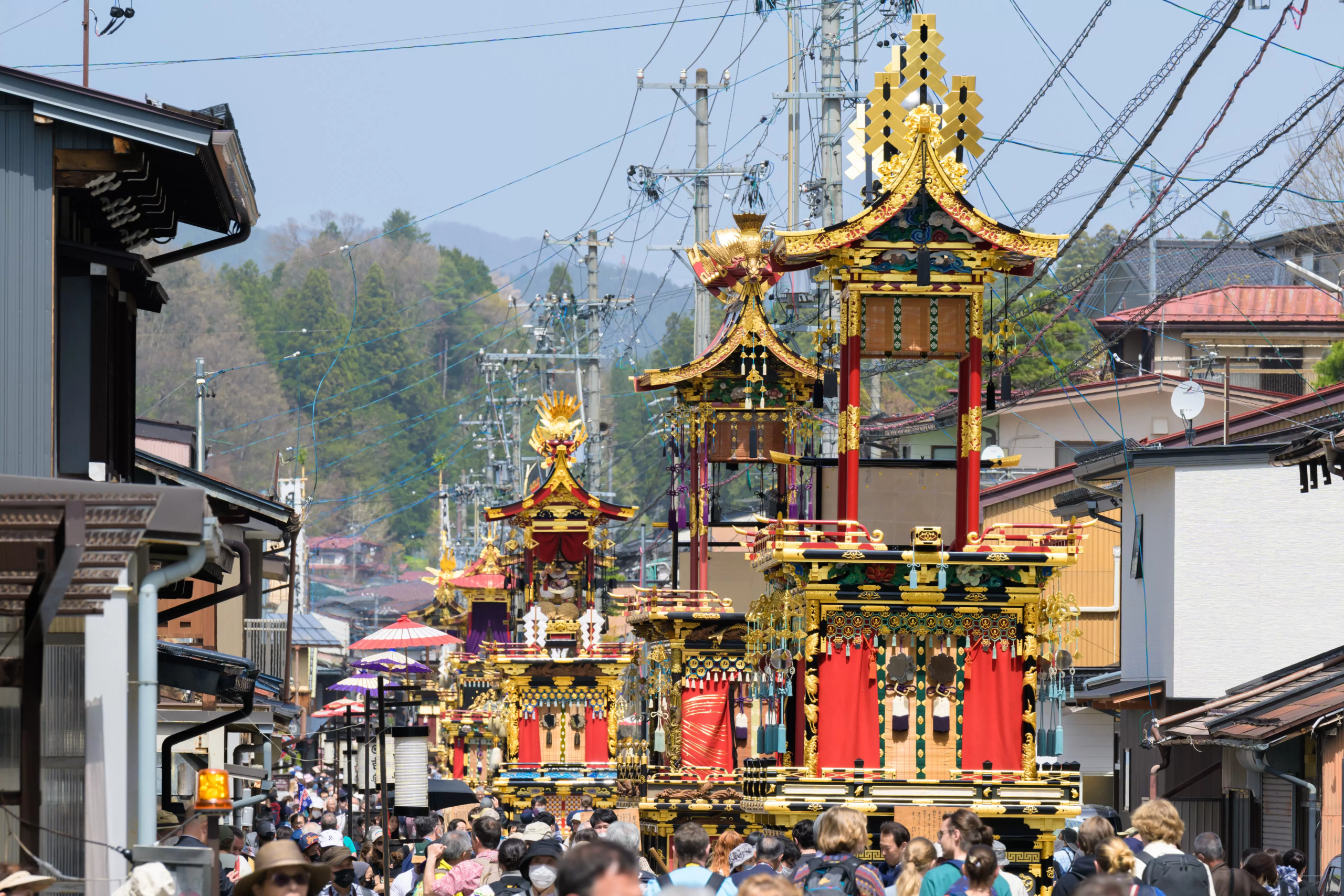
Steeped in the crisp air of the Japanese Alps, the city of Takayama serves as the custodian of one of the nation’s most enduring cultural treasures. Twice a year, the streets of this historic town in Gifu Prefecture are transformed into a stage for the Takayama Festival, an event celebrated as one of Japan’s "Three Most Beautiful Festivals." Combining the Sanno Festival in spring and the Hachiman Festival in autumn, this grand tradition is more than a tourist attraction; it is a profound testament to the resilience, artistry, and spiritual devotion of the Hida region.
I. Main Facts: The Dual Soul of Takayama
The term "Takayama Festival" is an umbrella designation for two distinct, yet equally magnificent, annual celebrations tied to the city’s major Shinto shrines.
- The Sanno Festival (Spring): Held every April 14th and 15th, this is the annual festival of Hie Shrine. It heralds the arrival of spring in the southern half of the former castle town, specifically in the district of Kamimachi.
- The Hachiman Festival (Autumn): Occurring on October 9th and 10th, this is the annual festival of Sakurayama Hachiman Shrine, located in the northern half of the town.
While the shrines and the districts differ, the essence remains the same: a spectacular display of twelve (in spring) or eleven (in autumn) elaborate festival floats—yatai—that represent the pinnacle of 17th-century Japanese craftsmanship. These floats, often referred to as "moving Yomeimon Gates" due to their ornate architecture, are designated as Important Tangible Folk Cultural Properties of Japan.
![[April 14th and 15th] Takayama Festival, one of Japan's three most beautiful festivals, the Spring Takayama Festival (Sanno Festival)](https://resources.matcha-jp.com/resize/720x2000/2023/12/27-160081.webp)
II. Historical Chronology: From Feudal Origins to Modern Preservation
The roots of the Takayama Festival stretch back to the late 16th century, emerging during the era of the Kanamori clan, who ruled Hida Province between 1585 and 1692. The Kanamori were patrons of the arts, and their influence fostered an environment where local artisans could refine their skills.
- Late 16th–17th Century: The festivals began as humble religious processions to honor the tutelary deities of the local shrines.
- Circa 1718: This period marked a turning point in the evolution of the festival, as the first of the elaborate yatai floats were constructed. This era saw the fusion of Shinto piety with the burgeoning wealth and aesthetic sensibilities of the Hida merchant class.
- Edo Period to Meiji Restoration: Over the subsequent centuries, the festivals grew in complexity. Guilds of carpenters, metalworkers, and lacquer artists competed to outdo one another, resulting in the architectural marvels seen today.
- Modern Era: Throughout the 20th and 21st centuries, the festival has been meticulously preserved by the people of Takayama. Despite the rapid modernization of Japan, the traditions—from the specific knots used to secure the ropes for puppet performances to the traditional music played during processions—have been passed down through generations with rigid, reverent precision.
III. Supporting Data: Anatomy of the Festival
To understand the Takayama Festival is to appreciate the technical mastery required to sustain it.
The Art of the Karakuri
The most anticipated aspect of the Sanno Festival is the Karakuri performance. Three of the twelve spring floats feature sophisticated mechanical puppets. These are not merely marionettes; they are intricate clockwork-like marvels manipulated by expert rope operators hidden within the structure of the float.
![[April 14th and 15th] Takayama Festival, one of Japan's three most beautiful festivals, the Spring Takayama Festival (Sanno Festival)](https://resources.matcha-jp.com/resize/720x2000/2023/12/27-160114.webp)
The performances of Sanbaso, Ishibashidai, and Ryujindai require a symphony of coordination. Operators manipulate dozens of ropes to animate the puppets, which exhibit human-like movements—bowing, dancing, and even changing masks—with startling fluidity. The success of these performances depends entirely on the human element; if a rope is pulled a fraction of a second too late, the illusion is broken.
The Grand Procession
The festival is a sensory overload. A procession of several hundred participants, dressed in authentic period attire—including kamishimo (samurai formal wear) and traditional court music costumes—marches through the streets. The parade is accompanied by the rhythmic beat of drums, the haunting melodies of gagaku (court music), and the energetic leaps of lion dancers (shishi-mai).
Nighttime Illuminations
Perhaps the most iconic imagery of the festival is the Yoimatsuri (Night Festival) on the 14th of April. As dusk falls, the twelve floats are illuminated by approximately 100 lanterns each. The glow from these lanterns against the dark, timber-framed backdrop of Takayama’s historic streets creates a hauntingly beautiful, ethereal atmosphere. As the floats return to their storage sheds, the air is filled with the traditional farewell song, "Takaiyama," signaling the end of the night’s festivities.
![[April 14th and 15th] Takayama Festival, one of Japan's three most beautiful festivals, the Spring Takayama Festival (Sanno Festival)](https://resources.matcha-jp.com/resize/720x2000/2023/12/27-160115.webp)
IV. Official Perspectives: Preserving a Living Legacy
Local authorities and the Hida Takayama Tourism Board emphasize that the festival is not merely an exhibition, but a religious act. The primary function of the procession is to transport the deity from the main shrine to an otabisho (temporary shrine), where the deity stays for the duration of the event.
According to municipal representatives, the "festival is the unwavering pride of Takayama." The logistical effort to host the event is massive. It requires the cooperation of the entire town, from the local neighborhood associations that maintain the floats to the municipal police who manage the flow of visitors.
- Safety and Crowd Control: Given the narrow streets of the old town, officials strictly monitor crowd density. During the Karakuri performances at the plaza near Nakabashi Bridge, entry is often restricted to ensure the safety of both the spectators and the delicate centuries-old floats. Visitors are consistently reminded that these are not museum pieces behind glass, but active participants in a fragile, ancient ceremony.
V. Implications: Why Takayama Matters
The Takayama Festival serves as a vital case study for the preservation of Japanese cultural identity. In an age where many traditional festivals are dying out due to depopulation in rural areas, Takayama has managed to leverage its festival as a pillar of its community identity.
![[April 14th and 15th] Takayama Festival, one of Japan's three most beautiful festivals, the Spring Takayama Festival (Sanno Festival)](https://resources.matcha-jp.com/resize/720x2000/2023/12/27-160117.webp)
Cultural Continuity
The festival acts as a bridge between the feudal past and the modern globalized world. It forces the local youth to learn the skills of their forebears—whether it is the musical scores of the festival band or the complex maintenance required for the lacquer and gold leaf on the floats.
Economic and Social Impact
Economically, the festival is the lifeblood of Takayama’s tourism sector. However, the social implication is arguably more significant: it fosters a strong sense of civic duty. The "float groups" operate like specialized family units; their loyalty to their specific float and their commitment to its annual debut is a form of social glue that binds the community together.
Challenges Ahead
The primary challenge facing the festival is sustainability. Climate change and the potential for severe weather can disrupt the movement of the floats, which are highly susceptible to rain. Furthermore, the physical labor involved in operating the floats is intensive. As the population of Japan ages, the challenge will be to ensure that the younger generation remains as committed to the physical rigors of the festival as their ancestors were.
![[April 14th and 15th] Takayama Festival, one of Japan's three most beautiful festivals, the Spring Takayama Festival (Sanno Festival)](https://resources.matcha-jp.com/resize/720x2000/2023/12/27-160131.webp)
A Final Note for Travelers
For those planning to witness this spectacle in 2027, preparation is essential. The festival is a high-demand event that tests the capacity of the city’s infrastructure. Travelers are encouraged to utilize the resources provided by the Hida Takayama Travel Guide to stay informed about traffic restrictions and viewing protocols. By approaching the event with patience and respect for the local customs, visitors contribute to the longevity of a tradition that has, for over 400 years, illuminated the night sky of the Hida region.
The Takayama Festival is more than a date on a calendar; it is a profound, living, and breathing piece of history. As the lanterns sway in the April breeze, one sees not just the artistry of the past, but the living soul of a city that refuses to let its heritage fade into the shadows.


 Neng Nana
 Asro
Asro