Lina Hope
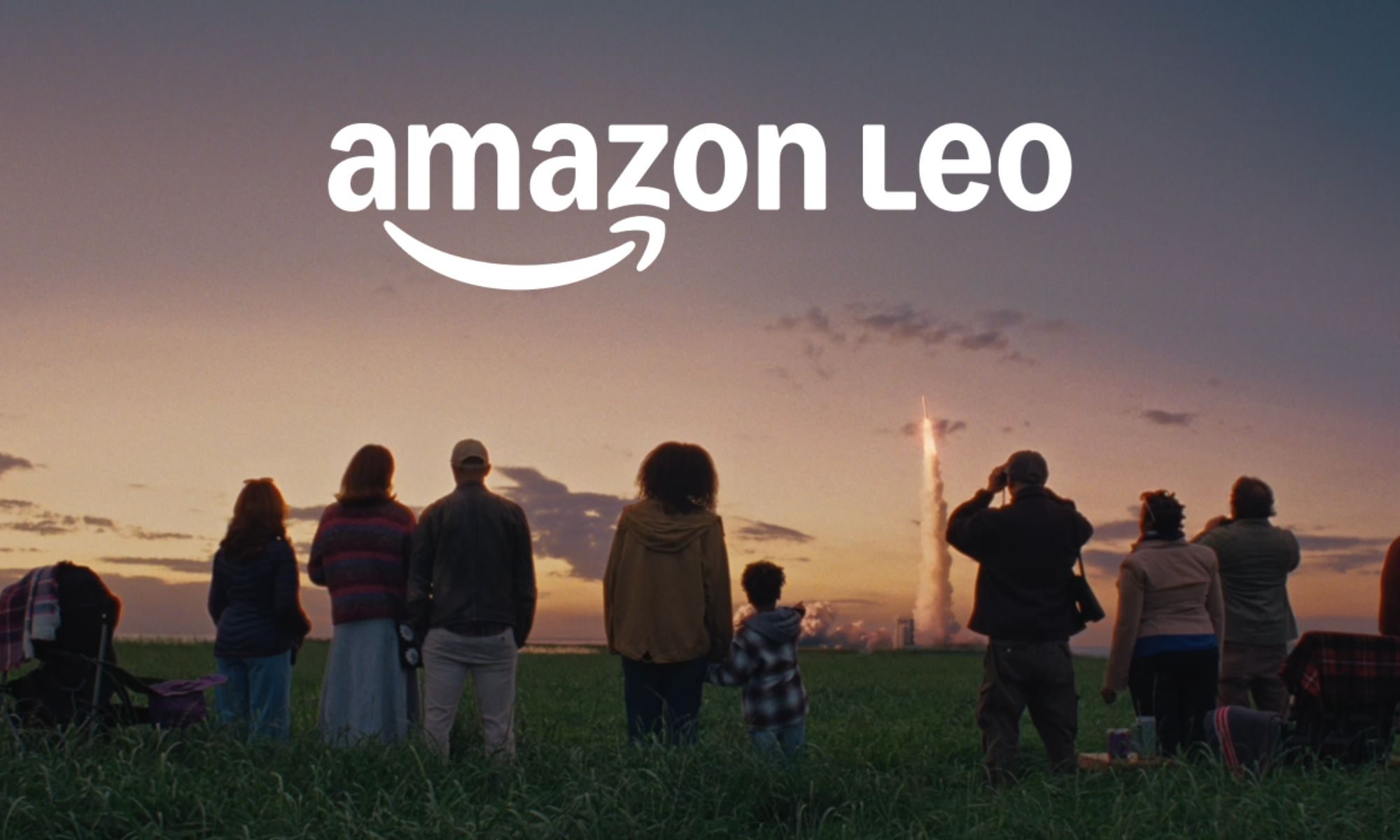
The race to bridge the digital divide from the heavens has reached a critical inflection point. Amazon, the e-commerce and cloud computing behemoth, has confirmed that its long-gestating Low Earth Orbit (LEO) satellite internet service is finally poised to transition from a conceptual project into a commercial reality. Following a successful mission that saw the deployment of 29 additional satellites via a United Launch Alliance (ULA) Atlas V rocket, Amazon’s constellation now numbers 394 units. With this milestone achieved, the company has officially signaled its intent to launch initial service by the end of 2026.
This development marks a decisive shift for "Project Kuiper," the internal moniker for Amazon’s satellite initiative, which has spent years meticulously building the infrastructure required to challenge the current market leader, SpaceX’s Starlink. As the company prepares to open its digital doors, the implications for global telecommunications, remote connectivity, and the burgeoning space economy are profound.
The Architecture of Connectivity: How Amazon’s Leo Service Works
To understand the significance of this launch, one must look at the fundamental shift in how satellite internet is being delivered. Traditional satellite internet—often criticized for its sluggish speeds and high latency—relied on massive geostationary satellites orbiting approximately 22,000 miles above the Earth. Because of the vast distance signals had to travel, real-time activities like gaming, video conferencing, or cloud-based professional work were largely impossible.
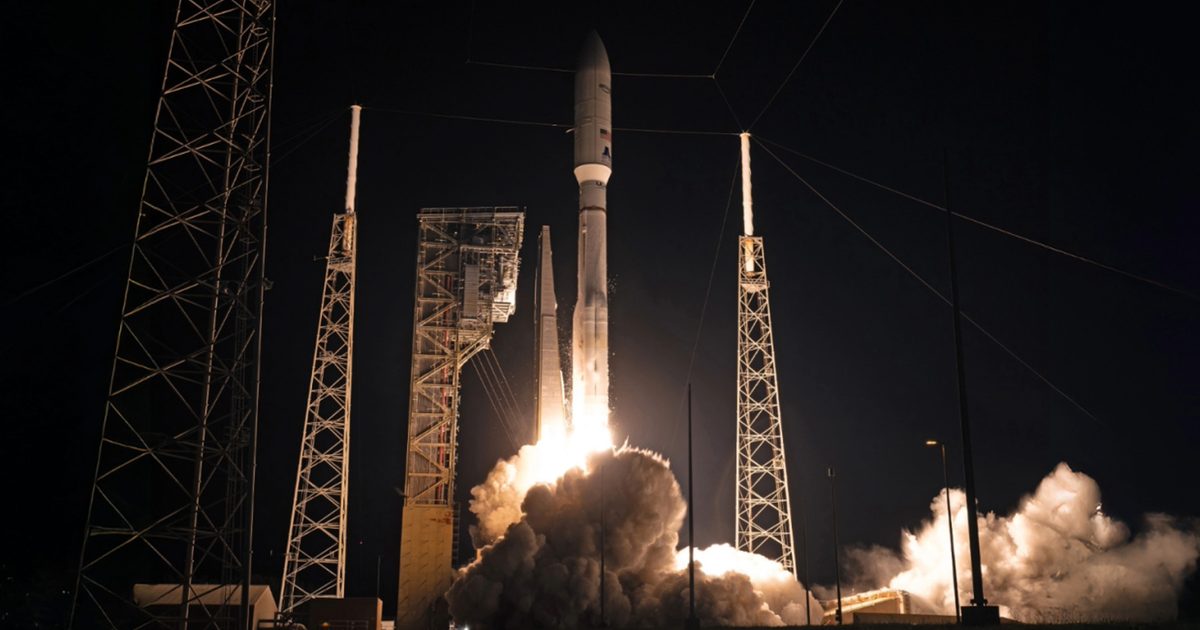
Amazon’s Leo service, like its competitor Starlink, operates on a fundamentally different principle. By positioning thousands of smaller satellites in Low Earth Orbit (roughly 300 to 1,200 miles above the planet), the round-trip time for data packets is reduced to milliseconds. This proximity allows for fiber-like speeds and low latency, making the service a viable alternative to terrestrial broadband for rural, maritime, and aviation customers.
The network is designed to be massive in scale. While the current fleet of 394 satellites is sufficient to initiate "continuous service across initial latitudes," the full vision involves a constellation of over 3,200 satellites. This redundancy ensures that as one satellite moves out of a user’s range, another immediately picks up the connection, maintaining a seamless flow of data.
A Chronology of Progress: From Blueprint to Liftoff
The journey of Project Kuiper has been defined by a measured, systematic approach to aerospace engineering and regulatory compliance.
- 2019: The Announcement. Amazon officially unveils its plans to build a constellation of 3,236 satellites to provide low-latency, high-speed broadband to unserved and underserved communities globally.
- 2021-2022: Scaling and Procurement. The company secures massive launch contracts with industry leaders like ULA, Arianespace, and Blue Origin, ensuring a diversified launch manifest that wouldn’t be reliant on a single provider.
- 2023: The Prototype Phase. Amazon launches its first two prototype satellites, KuiperSat-1 and KuiperSat-2, to test the hardware, software, and laser-linked communications systems in orbit. The tests were deemed a resounding success.
- 2025: The Acceleration. With the prototype data validated, Amazon shifts into full-scale manufacturing. Production lines in Kirkland, Washington, begin churning out satellites at a rate designed to sustain a rapid, multi-year launch cadence.
- 2026: The Operational Milestone. The deployment of 29 satellites brings the total count to 394, triggering the company’s decision to initiate commercial service.
Supporting Data: The Logistics of a Global Network
While 394 satellites represent a significant technical achievement, they are only the foundation. Amazon’s strategy relies heavily on the "vertical integration" that has defined the company’s success in other sectors.
By leveraging its own logistical expertise and cloud infrastructure (AWS), Amazon is positioning its satellite service to be more than just a "pipe" for the internet. It is creating a hybrid ecosystem where satellite connectivity integrates directly with AWS data centers. This "edge computing" capability means that data can be processed closer to the user, further reducing latency and enhancing performance for enterprise clients.
The technical specifications of the user terminals are also a point of focus. Amazon has revealed a family of user terminals designed to be smaller, more efficient, and cheaper to produce than the first generation of competing hardware. By reducing the "barrier to entry" for consumers, Amazon hopes to capture the mass-market share that has historically eluded satellite providers.

Official Perspectives: The Leadership Vision
Chris Weber, vice president of Amazon Leo, has been the public face of this transition. In a recent statement following the latest successful ULA launch, Weber emphasized that the company is currently in the "fine-tuning" phase.
"Last few launches were big for the team—bringing us to 390+ satellites deployed, enough to support continuous service across initial latitudes," Weber noted on social media. "Still lots of work ahead—including raising all these new satellites to their assigned altitude—but we’ve completed enough to start the initial rollout."
Amazon’s leadership has been notably quiet regarding specific launch markets, likely to avoid over-promising and under-delivering. However, industry analysts suggest that the initial rollout will focus on the extreme northern and southern latitudes. This is due to the orbital mechanics of the constellation, which provides higher density and more frequent coverage at the poles, areas that have long suffered from a lack of reliable, high-speed terrestrial infrastructure.
The Competitive Landscape: Amazon vs. Starlink
The entry of Amazon into the LEO market creates a high-stakes duel between the two wealthiest men in the tech world—Jeff Bezos and Elon Musk. SpaceX’s Starlink, which currently boasts a fleet of over 10,000 satellites, has already established a dominant market position. Starlink has become a critical lifeline in conflict zones, remote wildernesses, and developing nations.
However, Amazon brings a unique set of competitive advantages:
- The Amazon Ecosystem: With millions of Prime subscribers, Amazon has an existing customer acquisition channel that no other satellite provider can match.
- AWS Integration: For businesses and governments, the ability to link satellite internet directly into the AWS cloud is a compelling value proposition that simplifies IT infrastructure.
- Capital Reserves: Amazon’s ability to sustain long-term losses while building out the constellation allows it to compete on price in a way that smaller startups simply cannot.
Implications for the Future of Connectivity
The launch of Amazon’s Leo service is not merely a corporate battle; it is a catalyst for the democratization of information. As more of the world moves toward a digital-first economy, the "digital divide" has become a matter of socioeconomic inequality. Students without broadband cannot keep up with curriculum requirements; businesses without connectivity cannot participate in the global marketplace.
Furthermore, the expansion of these constellations raises important questions about space sustainability. With thousands of satellites now occupying low orbits, the risk of "Kessler Syndrome"—a chain reaction of orbital collisions—is a legitimate concern for regulators. Amazon has publicly committed to responsible debris mitigation, including atmospheric re-entry plans for decommissioned satellites, but the sheer volume of hardware being sent into orbit remains a subject of intense debate among astronomers and space agencies.
Conclusion: A New Frontier
As we look toward the end of 2026, the arrival of Amazon’s Leo service represents a defining moment for the telecommunications industry. Whether it successfully disrupts the Starlink monopoly or finds its own niche in the enterprise and government sectors remains to be seen. What is certain, however, is that the sky above us is becoming as connected as the cities below.
For the average consumer, this competition is a net positive. Increased supply, aggressive pricing strategies, and technological innovation in hardware are the natural byproducts of such a fierce rivalry. As Amazon prepares for its first commercial "handshake" in orbit, the promise of global, high-speed, and reliable internet for all is finally inching toward becoming a reality. The space race of the 21st century is no longer just about getting to the stars—it’s about connecting the world from them.

 Neng Nana
 Sagoh
Sagoh