SPOILER WARNING: This feature contains discussion of specific mechanics, item usage, and thematic outcomes within Pokémon Pokopia.
In the modern landscape of gaming, few titles have managed to weave environmental philosophy into their core loops as effectively as Pokémon Pokopia. While many entries in the storied franchise focus on the accumulation of power and the prestige of competition, Pokopia pivots toward the humble, the discarded, and the overlooked. At the center of this thematic revolution is Trubbish—a Pokémon often dismissed as mere refuse, but one that serves as an essential metaphor for the game’s primary message: trash is simply a resource awaiting a new purpose.
For a PhD student navigating the dense, often abstract worlds of videogame preservation and digital rhetoric, the allure of Trubbish is profound. Just as I spend my days sifting through academic archives, crumbling game ephemera, and the ephemeral noise of social media to extract meaning, Trubbish performs a similar labor in Pokopia. It processes the discarded remnants of a former civilization into the building blocks of a new one.
The Intersection of Academia and Artisanal Recycling
My journey toward this realization began on a quiet Sunday evening in a university library. I was deep in the throes of a dissertation proposal, utilizing the "Pomodoro" method—working in 45-minute bursts followed by 15-minute intervals of rest. My research material that night was André Brock’s Critical Technocultural Discourse Analysis (CTDA). As I parsed through the heavy theoretical frameworks of digital identity, my mind began to mirror the gameplay loop of Pokopia: ingest raw, "crusty" data, process it into a refined output, and then take a momentary pause to reset.

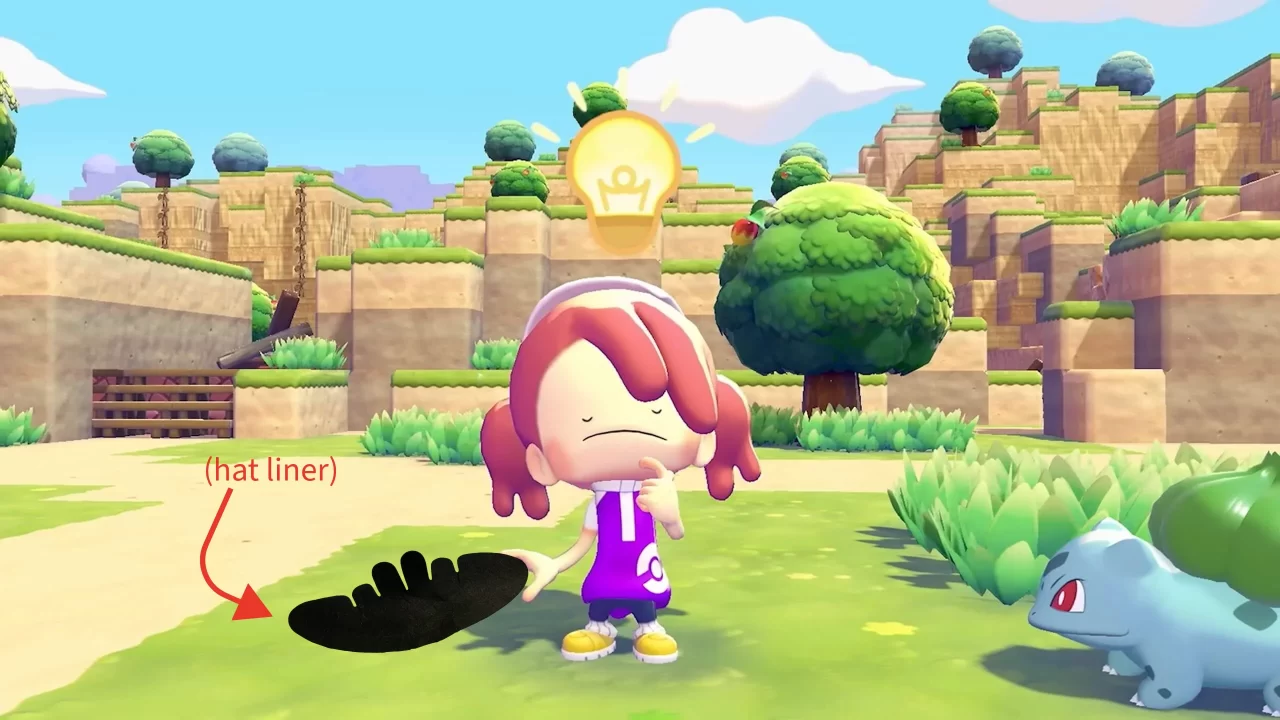
However, the intersection of my academic life and my gaming habit manifested in an unexpected physical form. While adjusting my hat—a black, satin-lined cap—I felt an incessant itching. Upon removing it, I discovered a rigid felt liner hidden within the brim. My immediate impulse was to discard it. It was, by all accounts, "advertising ephemera"—a piece of branding material designed to keep the hat’s shape during shipping, now rendered useless to the consumer.
Yet, as I held this piece of felt, I saw it through the lens of Pokopia. In the game, that same piece of "trash" could be repurposed into a makeshift dish for berries, a component for a sprawling carpet, or a structural element for a habitat. I stopped, reconsidered, and decided to keep it. This singular moment of pause highlighted a critical flaw in our modern consumerist conditioning: the reflex to define objects as "waste" the moment their primary commercial function is fulfilled.
Chronology of a Household Artifact
To understand why we so reflexively cast objects aside, I began a small-scale social experiment, treating this hat liner as a piece of digital text to be analyzed. I asked a fellow library-goer to identify the object. Their assessment was immediate: "The thing that goes in the front of a hat."
I then polled my social circle. My partner suggested it could be a glove insert or a shoe liner. My cousin, a veteran of the underwear packaging industry, offered a more surreal take, noting it resembled a mineral sprite from Stardew Valley. Finally, I turned to the internet. Searching through Reddit threads regarding hat care, I found a polarized community. Some users lamented the "disposable" nature of these liners, while others had developed clever, if unconventional, maintenance routines—such as washing their hats in a dishwasher to preserve the integrity of the inserts.
This community-driven discourse forms a fascinating "meaning-making" project. We take a piece of plastic-and-felt detritus and, through collective conversation, construct its identity. We move from technological determinism—where the manufacturer dictates that the item is garbage—to a community-based model where the object is a tool, a craft supply, or a relic.
The Rhetoric of Consumption: What Does the Manufacturer Say?
When we move from communal conjecture to the official source, the narrative becomes more clinical. A check of Lululemon’s website regarding their "classic satin-lined ball cap" reveals a commitment to sustainability, specifically citing that "100% of the polyester and nylon in this product is recycled."
However, the "product details" are conspicuously silent regarding the liner itself. There is no mention of its recyclability, its chemical composition, or its environmental footprint. Under the "care" instructions, the company advises against washing the hat, effectively signaling that the product has a finite lifespan before it becomes "food for Trubbish." This lack of transparency regarding the "hidden" components of our clothing is precisely why the Pokopia approach—a radical re-evaluation of items regardless of their original intent—is so necessary.
If we view the hat liner as an extension of e-commerce ad rhetoric, we can apply the principles of CTDA. We are not just analyzing the hat; we are analyzing the system that produced it. When the manufacturer ignores the liner in their documentation, they are essentially scrubbing its existence from the "official" record of the product. By choosing to reuse the liner, I am subverting that rhetoric.

Implications for Gameplay and Life
Pokémon Pokopia is not merely a game about creatures; it is a game about the archaeology of the anthropocene. In its opening level, the player is tasked with constructing a "Rain Dance" site using household objects abandoned in a desolate landscape.
Unlike traditional RPGs where items are consumed and destroyed to facilitate progress, Pokopia demands that we assign value to what is left behind. Professor Tangrowth, Bulbasaur, and Slowpoke serve as guides, offering feedback on how these artifacts can be repurposed. A discarded nugget becomes a treasure for a Tyranitar; a broken electronic screen becomes a gallery for the world’s new history.
The Power of Subversion
The game’s brilliance lies in its subversion of labor and production. In one late-game quest involving the reconstruction of the Silph Co. tower, players are given the agency to choose between replicating corporate cubicles or building spaces centered on nourishment, community, and play. The game consistently asks: Does this item have to serve its original, intended function?
The implications are clear:
- Reframing Consumption: We must learn to look past the "packaging" of our lives.
- Communal Meaning-Making: The value of an object is defined by its utility to our community, not by its market price.
- Technological Skepticism: We must interrogate the technology that produces waste, rather than accepting that waste as an inevitable byproduct of existence.
Conclusion: A World That Is Huge
Ultimately, Pokémon Pokopia acts as a mirror to our own habits. By gamifying the act of recycling, it teaches players that the world is not a finite resource to be burned through, but a vast collection of materials that can be rearranged to foster comfort and happiness.
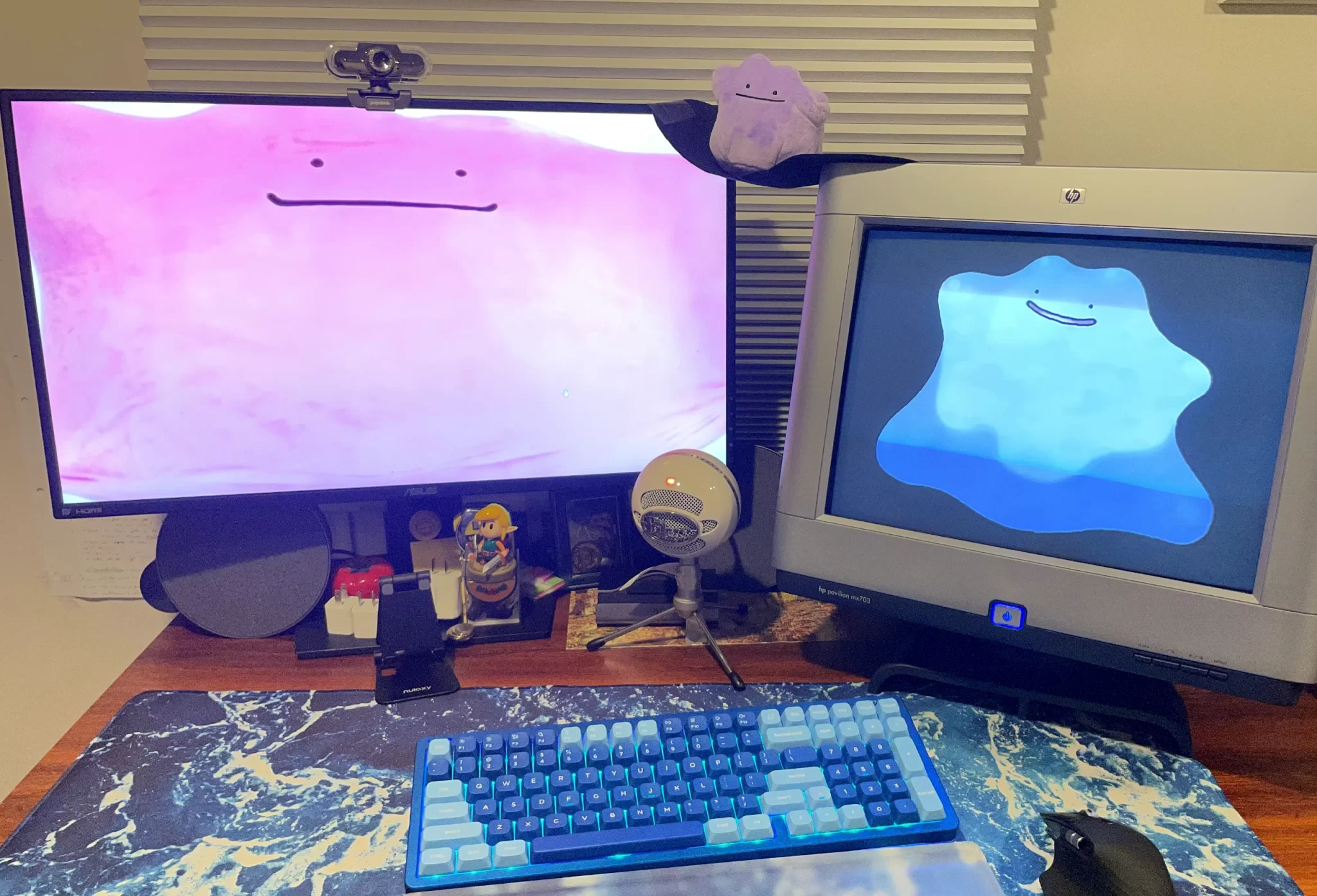
My hat liner now serves as a hammock for a Ditto plush on my desk, bridging the gap between my two monitors. It is a small, silly, but meaningful act of defiance against the "disposable" culture that dictates our lives. As I continue my research, I am reminded of the words of the original Brock, the iconic Gym Leader who once told a young trainer, "The world is huge, yo."
In the context of Pokopia, that sentiment takes on a new weight. The world is huge, and its potential for renewal is even greater. If we can apply even a fraction of the critical, playful, and compassionate mindset found in Pokopia to the "trash" in our own lives, we might find that we aren’t just saving the environment—we are actively building a better history for the objects we touch every day.